UNSOLICITED ADVICE to my grandchildren, when they are old enough:
Have you ever been told that you see the world in “Manichean terms”? I have, many a time, and with derision. Which sent me on an expeditionary travel down the proverbial rabbit hole to understand exactly what this meant, other than the simplistic dualistic way of seeing things good or evil.
I realized that if someone tells you you see the world in “Manichean terms”, they are, in essence, sophists looking for an easy and superficial way to insult your intelligence and bring you down. Don’t be fooled and fall for it! Not all of us have the gift of gab, so it can be difficult to have a quick and clever retort. It is especially so for those of us who speak more than 1 language! Trust me on this.
In general, lawyers are always labeled as sophists, because they are seen as engaging in the whys and what-ifs and what-thens, and as the devil’s advocates. Again, it is a superficial rendering of a profession that, although flawed, provides an alternative to war!
However, I also concluded that the reality is that modern-day sophists (who have no clue of the Platonic/Socratic/Protagoras discourses) have no real knowledge: they are just clever users of arguments that are presented as true but are really false, in order to deceive others. (If you like simpler rabbit holes, check Britannica).
They are obfuscators, who know how to lie and confuse with great finesse, use clever words, ominous labels, or grandiose terminology because they know the average person may not necessarily understand the whole context.
I found the story amusing, because I have also spent half a century, like his poet friend, wondering which way to take. Now, at the sunset years of my life, I have come to yet another crossroad, but this time I have decided to take the liberty of amending Frost’s last stanza:
HIS OPUS:
I shall be telling this with a sigh
Somewhere ages and ages hence:
Two roads diverged in a wood, and I—
I took the one less traveled by,
And that has made all the difference.
MY REFRAME:
I am now telling this with a sigh
As it has been ages and ages hence:
Two roads diverged in a wood, and I—
I was foolishly duped and took the wrong turn,
And stumbled and fell and saw hell,
But now I found the one less traveled by,
And that has made and will make all the difference.
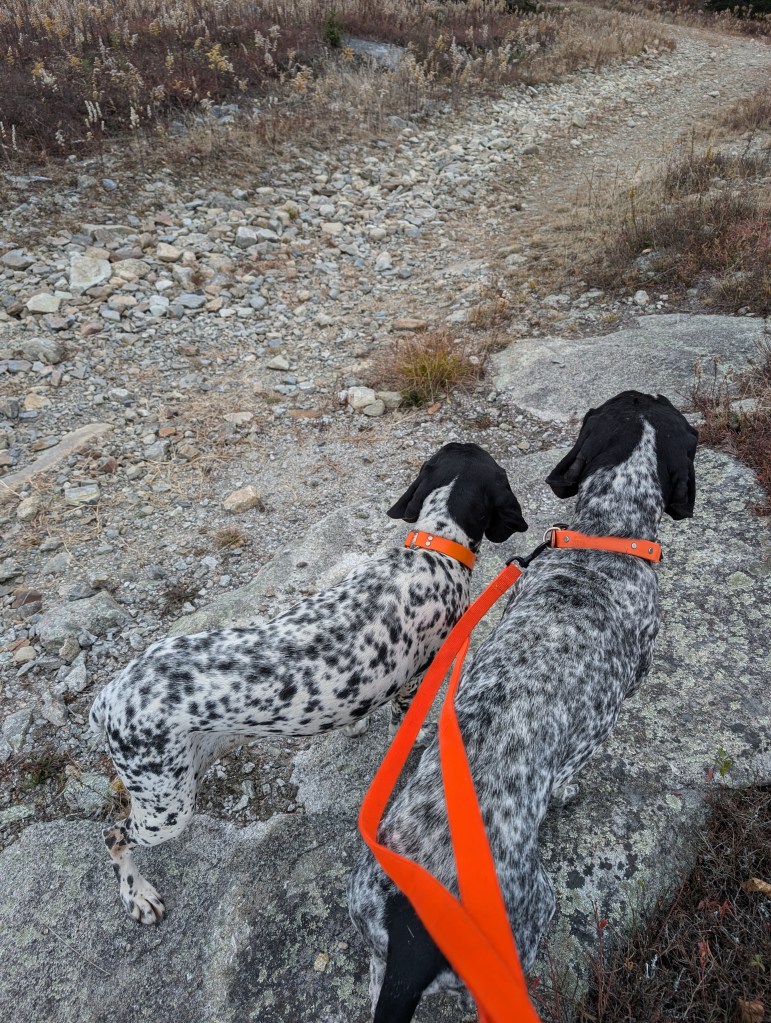
My little friends… Though missing here is the doe with her 2 bambis and one adopted fawn that I have seen early this September. I see the foursome early morning and they greet me by not running away. They just stare. Just like these guys. They don’t care. They feel safe.
Ah…my little friends… well… I am evaluating what the terms “friendship” and “friends” truly mean. I have had joys and disappointments with friends throughout my life, but it has only been recently, these last couple of years or so, when I have seriously pondered about what being a friend is all about.
And, like I have always said to my kids, ad nauseum, there’s nothing new under the sun and all clichés and stereotypes have a basis in truth. So, fairweather friends? Yes, I’ve known them all.
However, for the first time in my life I am faced with a conundrum: “friends” who chose betrayal rather than truth. And the perennial question is: Why? Why lie? Why betray? I will never know the truth. My biggest shock: “friends” I have known for half a century have been weak, feeble and ugly. “Acquaintances” of recent years have been solid, stolid and strong. Go figure! Another lesson to write about to my grandkids.
For some reason, my little friends remind me of guanacos!
Today I discovered that Québec’s motto is Je Me Souviens, or, I Remember. Funny that I was remembering that beautiful city, which I’ve had the great fortune to visit twice, and the last time was exactly a year ago, to the day.
I remember its magnificent buildings, churches, monasteries, museums, history, food and friendly people. Time to plan another visit. It is closer to where I live than going to New York City!
Memories can play tricks on one’s mind. Some of the many sweet things I remember nowadays remain warm and pleasant and charming and fun or bittersweet, because time flies. But every now and then, there are sweet memories that pop up and are tainted by the realization that I might have been under a delusion. My conundrum: would I have been better off knowing that I was under a delusion? Or would it have been better to know the harsh realities right then and there? I don’t know.
I once returned to the Bahamas, to a place that had been idyllic and gorgeous in every sense of the words. But, between the memories and the reality of the return, the place had deteriorated to an ugly and disaster-ridden spot. It was totally depressing to accept that sometimes, you are better off not going back!
The same is true with memories of people. An old friend who had been a cherished friend, turned out to be deranged. Many years had gone by since we had last seen each other, but the reunion was special and it seemed we were continuing where we had left off. However, within a few days, the ugly truth became quite apparent, and the heartache and sadness were too much to bear.
Such is life, I guess. My parents would say, time to read Balzac’s The Human Comedy. Or go listen to Pavarotti and laugh!
One of the things that has always bothered me about Monitoring and Evaluation (M&E) of international Rule of Law programs has been the innumerable risks involving incorrect data collection and input, and the ever present danger of conflicts of interest, not to mention lack of experience and expertise. Add to all this the challenges of violence, a hostile host government, war, and other calamities, and the writing on the wall is quite clear.
Oversight of a project does not mean that M&E is actually being carried through. A while ago, I gathered some of my thoughts. I wonder how current they are. My review of reports and audits makes me think that not much has changed.
Historically, some U.S. Government agencies were late in understanding the importance of M&E to determine the impact that foreign assistance programs were having. In the last few years, I always kept hearing that we needed to answer then Secretary of State Hillary Clinton’s “so what?” question regarding how effective our international aid projects were.
Many multi-million dollar programs had no internal nor external M&E experts to provide guidance. In Afghanistan, for example, the U.S. Embassy’s 2013 rule of law strategy failed to incorporate any performance measures. (For an interesting report that reveals what the problems relating to M&E were at the time, I suggest you read the Special Inspector General for Afghanistan Reconstruction (SIGAR) audit).
Through evaluation tools, M&E programs aim to demonstrate program impact. This, in turn, provides feedback to guide program implementation staff to enhance future programming by identifying planned and unplanned results to allow donors, implementers and host country beneficiaries to understand what works and does not work, how to maximize efficiencies, and address any issues that might arise before they become a problem or a cataclysmic risk.
In government contracts, the Statement of Work (SOW) may provide the indicators to be used. Sometimes, the implementer may develop a series of iterative evaluations as well, which might include a training evaluation and an audit, a trainee-satisfaction survey, a mentoring plan, and -depending on the program- a public outreach component.
Performance indicators may combine the Foreign Assistance Framework Indicators (F-Indicators), as well as customized indicators, with the goal to develop and utilize indicators that measure outputs and impact in the short, medium and long-term of the project.
Of course, the most perfect and all-encompassing M&E plan will not work unless both donors, implementers and beneficiaries take into account the critical risks inherent in, or coming from, the place of performance, and agree on some critical assumptions that, at the very least, encompass three contexts: political, security, and operational.
What I have learnt is that decision-makers and bureaucrats from both the government side and the corporate side make choices and issue “diktats” without having had the benefit of operating in the environment where the program is being carried out. I never gave it much thought until I witnessed it first-hand. Therefore, it is imperative that the “experts” who are hired to handle M&E issues understand that they may be dealing with people who have little or no knowledge of the hurdles the technical staff face day in and day out.
Sometimes, the mere fact that electricity is not available or the internet connection does not work, may mean that M&E data cannot be incorporated into a database.
While I applaud the importance of M&E in program management, I see some problem areas:
Who monitors and evaluates the authenticity and the accuracy of the M&E plan and its implementation in-house? In other words, if I am the donor, would I fully trust the contractor or grantee to monitor and evaluate itself?
Through my own observations, I came to the conclusion that the Chief of Team of a project would have to have not only “Rule of Law” and international development experience, but a keen understanding of the host country – for example Afghanistan -, business development, human resources, management, accounting, psychology, history, security, culture, philosophy, and -most importantly- an understanding of how the State Department works. Who can meet all those requirements?
If the donor hires a third-party to do an indepent M&E of a program, how comfortable can the donor and implementer be that the third-party will do an unbiased and truly objective M&E assessment? What are the chances that the M&E firm will have a former implementer employee evaluating the very same program that person put in place?
Rule of Law programs are not immune from a myriad of conflicts of interest. Who pays attention to these things?
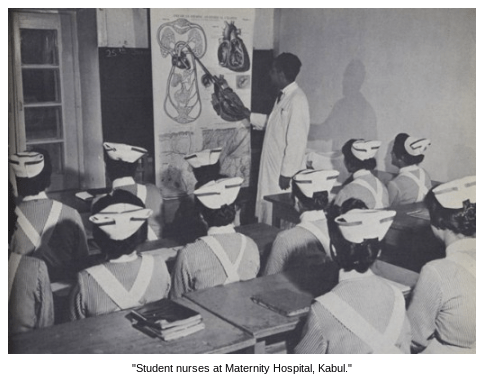
When I first started working with Afghanistan, one of my job requirements was to prepare a presentation for future advisors in the justice sector. These advisors were primarily American and international lawyers, judges, corrections officers, and a sprinkling of other experts.
My research uncovered amazing stories and records of a time in the mid-20th century that seemed surreal. The shock of what had been versus what was. To wit, Once upon a Time in Afghanistan.
This research led me to a jewel of a movie, that I considered a love feast for the eyes, because in a short time, it captured the beauty of the country and its people. I had witnessed it myself, despite my being confined to a limited area in Kabul. This was around October 2012.
I never forgot that film, and that’s why I share it today.
I always think of Afghanistan, and everyone I met there, and I still feel sadness at how all our efforts seemed to go up in flames. Sometimes I wonder whether it was all for nought. Maybe, maybe, I am too pessimistic and there’s a glimmer of hope. Miracles do happen.
I have journaled much about the role of friends, especially as it involves those “old old” friends that disappoint to the core. I am learning that the sting of disappointment is like being stuck with porcupine quills.
The barbed tip hurts, and removing by yanking on the quill is painful. However, like everything else in life, you begin to evaluate how to ease the pain of extrication. If I had only known when Milly got these quills what I do now, she would not have suffered so much. Tip: you first have to cut them in half so that they go limp, the fish-hook tip relaxes, and you can pull them out softly and with reduced pain because the quills become flaccid and pliable!
I am spending much time with good friends. Some I have known for a few months. Others, for a couple of decades. And some, for a few weeks. I value their support, compassion, and their reaching out when you least expect it. Most of all, I cherish the laughter we share together. A hearty good laugh is a balm for the soul.
Recently, I heard from friends from my youth. They brought back a torrent of emotions, for they helped me remember some of the “good old days” of yore, when we were studying and working and carefree. How lucky can one be?
I am blessed.
The Arrow And The Song
Long, long afterward, in an oak I found the arrow, still unbroke; And the song, from beginning to end, I found again in the heart of a friend.
An amazing photographer, Kim Allen Goff, posted this beautiful photo on social media and commented,
“I’ve loved to peer into windows since I was a child and the older the house the better! The reflections on these windowpanes spoke the language of November.”
Immediately, her comment and photo reminded me of this Robert Frost poem, below. I read somewhere that, in this particular poem, “Sorrow finds beauty in its desolation”.
It is true.
Sorrow does bring forth reflection, and from that reflection springs clarity of understanding, and from that clarity -eventually- those turbulent waters reach their destination and may turn into a beautiful and calm and crystalline cove or lake. So there. I have to thank Kim for making me be happy about my birthday month! There is beauty in those reflections of the bare, the withered tree…
My Sorrow, when she's here with me, Thinks these dark days of autumn rain Are beautiful as days can be; She loves the bare, the withered tree; She walks the sodden pasture lane.
Her pleasure will not let me stay. She talks and I am fain to list: She's glad the birds are gone away, She's glad her simple worsted grey Is silver now with clinging mist.
The desolate, deserted trees, The faded earth, the heavy sky, The beauties she so truly sees, She thinks I have no eye for these, And vexes me for reason why.
Not yesterday I learned to know The love of bare November days Before the coming of the snow, But it were vain to tell her so, And they are better for her praise.
Many a time I reflect on the true meaning of a cultural divide. It is so much more than one loving cilantro and spicy foods, the other loving bland and simple concoctions. Or preferring novels to autobiographies. Or fancying opera to rock and roll.
We dismiss that cultural divide to our peril. Sometimes, it can easily be bridged. But other times, we don’t realize that, while the crack to cross appears narrow, when you get close to it you discover it is an abyss, wider and deeper than expected.
Take the Argentine tango. Al Pacino in A Scent of a Woman, Arnold Scharzenegger in True Lies, for example. The truth is that the famous Argentine singer of yore, Carlos Gardel, composed this song, which actually refers to a gambler losing a horse’s race “por una cabeza”(by just a head).
Today, some would say the Hollywood movies engaged in “cultural appropriation” and some would be crying crocodile tears. The truth is that beautiful music transcends cultures and is universal. However, while we all can appreciate the rhythm, the exotic movements, the bandoneon, we might have a harder time fully understanding the meaning behind the lyrics.
Which leads me to another rumination of mine. Many times I find that certain melodies, lyrics, stories and poems that I used to love or made me ponder then, were somewhat pointing me to “something” that only now, at this stage in my life, I can finally begin to understand.
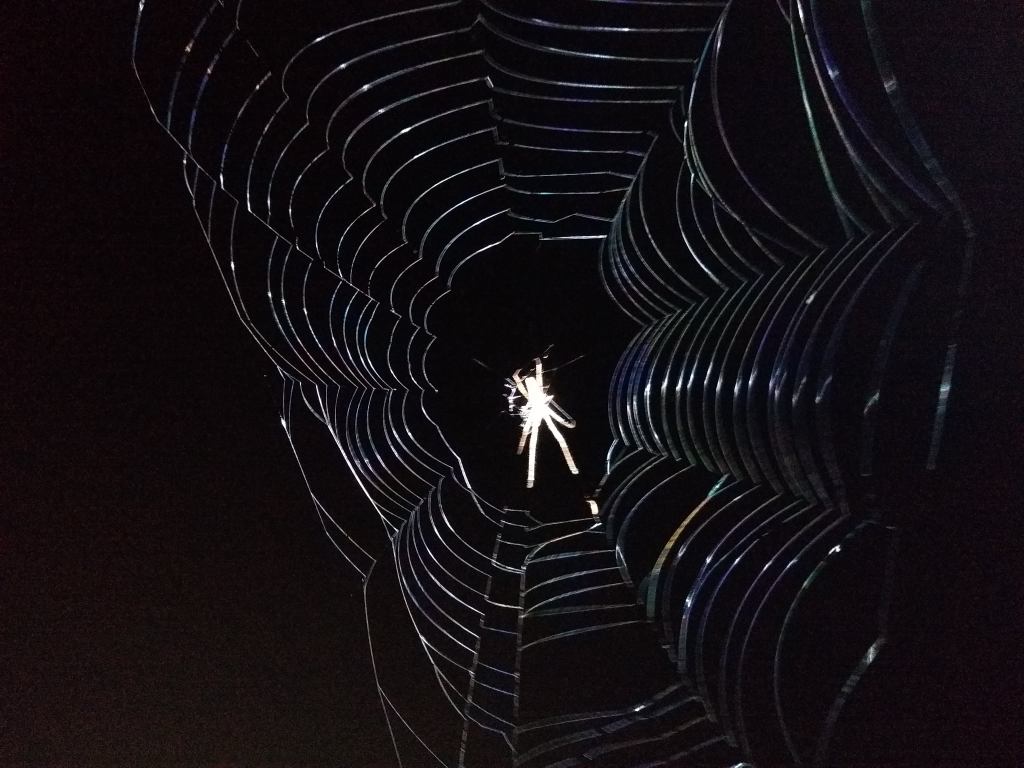
Were they part of what I call the tender tendrils of the cobweb of life that we don’t see until the sun hits the morning dew on that cobweb and then, BINGO, it appears in all its majesty? I’ve encountered this phenomenon countless times, ergo my conclusion that we, life, experiences are all linked in some way through those almost unseen tendrils until that light gives me that “Eureka” moment.
The song, raw and brutal, is the realization that a betrayal brought forth depredation. That devastation does not end in a “Hah, revenge is best served cold” moment. It only highlights the horrors of Dorian Gray.
The tango crooner (Carlos Gardel) cannot handle the awareness that he is now without friends, having lived a wrong and wicked moment, without honor. And the object of his downfall is devastatingly pitiful.
Whether man or woman, I think we can understand the angst. At the end of it all, I guess, when we sow with meanness and lies we reap bitterness, sadness and sorrow, and when reality hits it is but the awareness that its genesis is the grotesque and rotten fruit of an obsessive and wrongful yearning.
Unfortunately, no English translation captures the essence of the words. You have to understand the language, the slang, the setting, the idiosyncrasies. However, I merged a couple of translations below, to try and convey the tango’s ferocious punch to the solar plexus.
And, for the life of me, I know for a fact that I would not like to be remembered as a featherless rooster!
Alone, faded, worn out, I saw her this dawn Leaving a cabaret,
A full yard long of neck and A hanger of a neckline under the chin. Bow-legged, dressed like a young broad, Dyed and flirting her nudity.
Seemed like a featherless rooster Mockingly showing off her pecked hide.
I, that know when I can't take it anymore, Just ran away from there seeing her like that, Trying not to cry.
And to think that ten years ago she was my madness That I went as far as betrayal for her beauty. That what is now a wreck Was my sweetheart, where I lost my dignity.
That nuts for her beauty, I stole my mother's bread I became mean and sinful. That I was left without a friend, That I lived in bad faith.
That she had me on my knees Without morals, like a beggar when she left. I never thought I would see her in a requiescat in pace As cruel as today.
Look, if it's not to commit suicide, that for that old junk I was left as what I am now. Fierce revenge that of time That makes you see destroyed what you loved.
This encounter has hurt me so much That if I think about it more, I end up poisoned, Tonight I get drunk well, Thoroughly drunk, So I wont think..
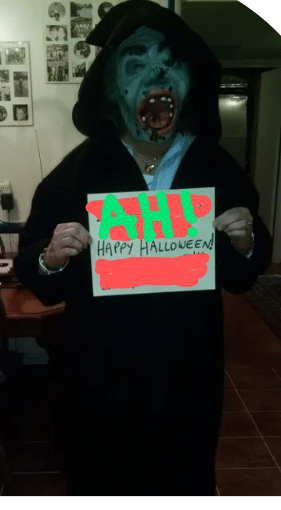
On this Halloween Night, I reflect on All Hallows Eve, a precursor of All Saints Day (or Day of the Dead), which is followed by All Souls Day, when people pray for the souls of the dead.
Since death is the one thing we all have awaiting, and tonight we play spooky games with death props of ghosts, ghouls, skeletons, cemeteries, spiders and flies, I am ever conscious of what the Spaniards like to say, “A cada chancho le llega su San Martín”. This translates to “St. Martin will arrive for every pig” or “every pig gets its own St. Martin”.
The day of St. Martin of Tours was the date of the slaughter of the pigs, a festival to prepare the meat and sausages for the winter.
The popular saying then developed a secondary meaning: “those who do evil, sooner or later, will receive their well-deserved punishment.” In other words: karma.
So, wishing everyone, young and old, ghouls, ghosts, skeletons, grun reapers, devils and saints, a happy evening of fun and horror, I leave you with a few quotes. Enjoy!
“Everyone is a moon and has a dark side, which he never shows to anybody.” – Mark Twain
“We all go a little mad sometimes.”- Wise words from Norman Bates – Psycho
“Is evil something you are? Or is it something you do?” – American Psycho
“Normal is an illusion. What is normal for the spider is chaos for the fly.” – Charles Addams (cartoonist)
“Despite my ghoulish reputation, I really have the heart of a small boy. I keep it in a jar on my desk.” – Robert Block (writer)
“Wendy, darling, light of my life, I’m not gonna hurt you. I’m just gonna bash your brains in.” – Stephen King – Imagine a loving Jack Nicholson in The Shining.
“Hell is empty. All the devils are here.” – Shakespeare – The Tempest
“Demons are like obedient dogs; they come when they are called.” – Rémy de Gourmont (French poet)
“Hope not ever to see Heaven. I have come to lead you to the other shore; into eternal darkness; into fire and into ice.” Dante