I found the story amusing, because I have also spent half a century, like his poet friend, wondering which way to take. Now, at the sunset years of my life, I have come to yet another crossroad, but this time I have decided to take the liberty of amending Frost’s last stanza:
HIS OPUS:
I shall be telling this with a sigh
Somewhere ages and ages hence:
Two roads diverged in a wood, and I—
I took the one less traveled by,
And that has made all the difference.
MY REFRAME:
I am now telling this with a sigh
As it has been ages and ages hence:
Two roads diverged in a wood, and I—
I was foolishly duped and took the wrong turn,
And stumbled and fell and saw hell,
But now I found the one less traveled by,
And that has made and will make all the difference.
Many a time I reflect on the true meaning of a cultural divide. It is so much more than one loving cilantro and spicy foods, the other loving bland and simple concoctions. Or preferring novels to autobiographies. Or fancying opera to rock and roll.
We dismiss that cultural divide to our peril. Sometimes, it can easily be bridged. But other times, we don’t realize that, while the crack to cross appears narrow, when you get close to it you discover it is an abyss, wider and deeper than expected.
Take the Argentine tango. Al Pacino in A Scent of a Woman, Arnold Scharzenegger in True Lies, for example. The truth is that the famous Argentine singer of yore, Carlos Gardel, composed this song, which actually refers to a gambler losing a horse’s race “por una cabeza”(by just a head).
Today, some would say the Hollywood movies engaged in “cultural appropriation” and some would be crying crocodile tears. The truth is that beautiful music transcends cultures and is universal. However, while we all can appreciate the rhythm, the exotic movements, the bandoneon, we might have a harder time fully understanding the meaning behind the lyrics.
Which leads me to another rumination of mine. Many times I find that certain melodies, lyrics, stories and poems that I used to love or made me ponder then, were somewhat pointing me to “something” that only now, at this stage in my life, I can finally begin to understand.
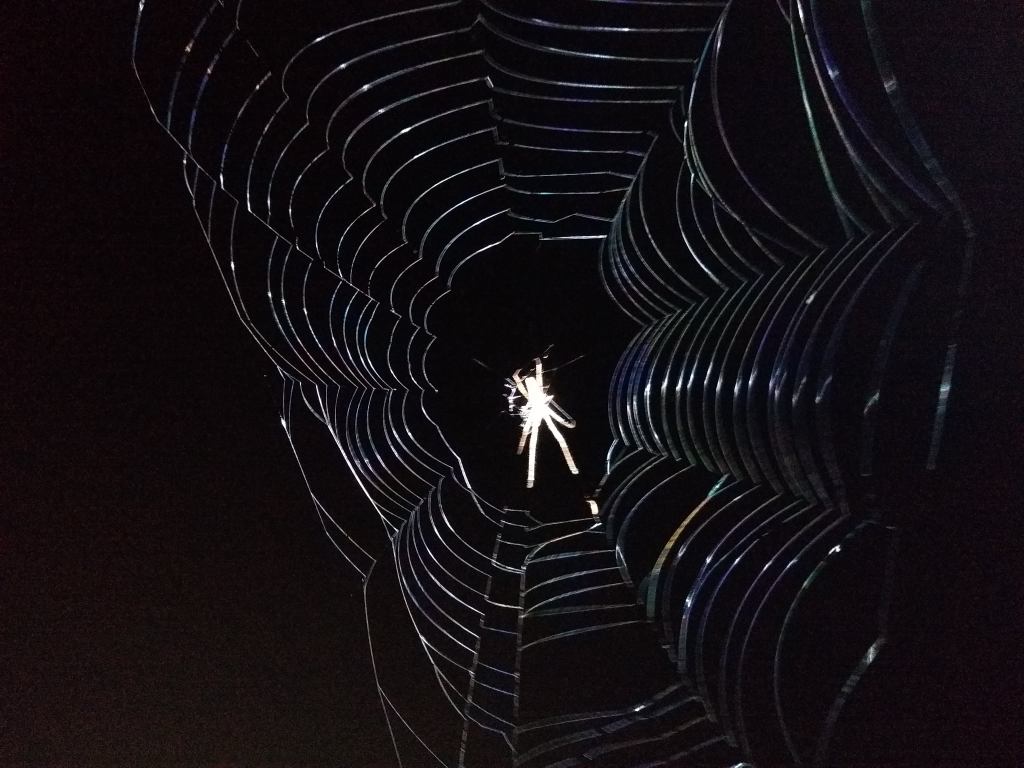
Were they part of what I call the tender tendrils of the cobweb of life that we don’t see until the sun hits the morning dew on that cobweb and then, BINGO, it appears in all its majesty? I’ve encountered this phenomenon countless times, ergo my conclusion that we, life, experiences are all linked in some way through those almost unseen tendrils until that light gives me that “Eureka” moment.
The song, raw and brutal, is the realization that a betrayal brought forth depredation. That devastation does not end in a “Hah, revenge is best served cold” moment. It only highlights the horrors of Dorian Gray.
The tango crooner (Carlos Gardel) cannot handle the awareness that he is now without friends, having lived a wrong and wicked moment, without honor. And the object of his downfall is devastatingly pitiful.
Whether man or woman, I think we can understand the angst. At the end of it all, I guess, when we sow with meanness and lies we reap bitterness, sadness and sorrow, and when reality hits it is but the awareness that its genesis is the grotesque and rotten fruit of an obsessive and wrongful yearning.
Unfortunately, no English translation captures the essence of the words. You have to understand the language, the slang, the setting, the idiosyncrasies. However, I merged a couple of translations below, to try and convey the tango’s ferocious punch to the solar plexus.
And, for the life of me, I know for a fact that I would not like to be remembered as a featherless rooster!
Alone, faded, worn out, I saw her this dawn Leaving a cabaret,
A full yard long of neck and A hanger of a neckline under the chin. Bow-legged, dressed like a young broad, Dyed and flirting her nudity.
Seemed like a featherless rooster Mockingly showing off her pecked hide.
I, that know when I can't take it anymore, Just ran away from there seeing her like that, Trying not to cry.
And to think that ten years ago she was my madness That I went as far as betrayal for her beauty. That what is now a wreck Was my sweetheart, where I lost my dignity.
That nuts for her beauty, I stole my mother's bread I became mean and sinful. That I was left without a friend, That I lived in bad faith.
That she had me on my knees Without morals, like a beggar when she left. I never thought I would see her in a requiescat in pace As cruel as today.
Look, if it's not to commit suicide, that for that old junk I was left as what I am now. Fierce revenge that of time That makes you see destroyed what you loved.
This encounter has hurt me so much That if I think about it more, I end up poisoned, Tonight I get drunk well, Thoroughly drunk, So I wont think..
I just found a sermon a Presbyterian pastor once shared with me, because it made such an impact on me after the many deaths I had witnessed. It was his love song about the famous Psalm 23, The Lord is my Shepherd.
Beholding a most beautiful sunrise over calm waters this morning, the serendipitous encounter with the sermon I received in March 2019 made me reflect on a myriad of things. I share one paragraph of a series of many that the Reverend encapsulated as the essence of life:
“Surely goodness and mercy shall follow me all the days of my life”…
So what about the mess I have made of my life from time to time? What about the loved ones I disappointed, the people I deceived, the compromises I made with my conscience, the scars I left on those I harmed? No one likes to be followed, but in this case I take comfort in the possibility that goodness and mercy might not get too far out ahead of me, but might follow me, picking up the broken pieces of my past and putting them back together again. The assurance here is that goodness, which is the benefit of forgiveness; and mercy, which is the basis of every new chance at life, will follow me all the days of my life.



 Dum Spiro Spero