This past week I was greeted by a line. A vivid pink line. I marveled at it, thinking it reminded me of something, although “the what” escaped me. And yet, I kept observing, because I kept thinking of “crossing a line”. We cross so many lines in our lives, and seldom do we contemplate why. At least that’s me.
I turned away for a few minutes, and when I returned to keep observing, I was greeted with a different image altogether. Gone was the line and the pink. Instead, there was a silvery sun with its silvery reflection. It is times like these that I wish I were an artist, and could capture the beauty of a sunrise like this one.
Sea, sun, sky and a straight line. Crossing a line. I always think about my family and friends and acquaintances who are no longer here. Someone once said to me that I was “tetric” (meaning gloomy). Well, it is a common word in Spanish, and we used to use it in school in English, when I was growing up. It turns out that apparently, according to the Oxford English Dictionary, it is an obsolete word that has been out of common usage since 1810 or so. Go figure! I still use it, so, baloney.
And then it hit me, my tetrical self. The crossing of that line: a meditation on death! A boat, the sea, the light, the tides, the sand. And yes, the crossing of the bar.
CROSSING THE BAR
By Alfred, Lord Tennyson

Sunset and evening star,
      And one clear call for me!
And may there be no moaning of the bar,
      When I put out to sea,

   But such a tide as moving seems asleep,
      Too full for sound and foam,
When that which drew from out the boundless deep
      Turns again home.

   Twilight and evening bell,
      And after that the dark!
And may there be no sadness of farewell,
      When I embark;

   For tho' from out our bourne of Time and Place
      The flood may bear me far,
I hope to see my Pilot face to face
      When I have crost the bar.
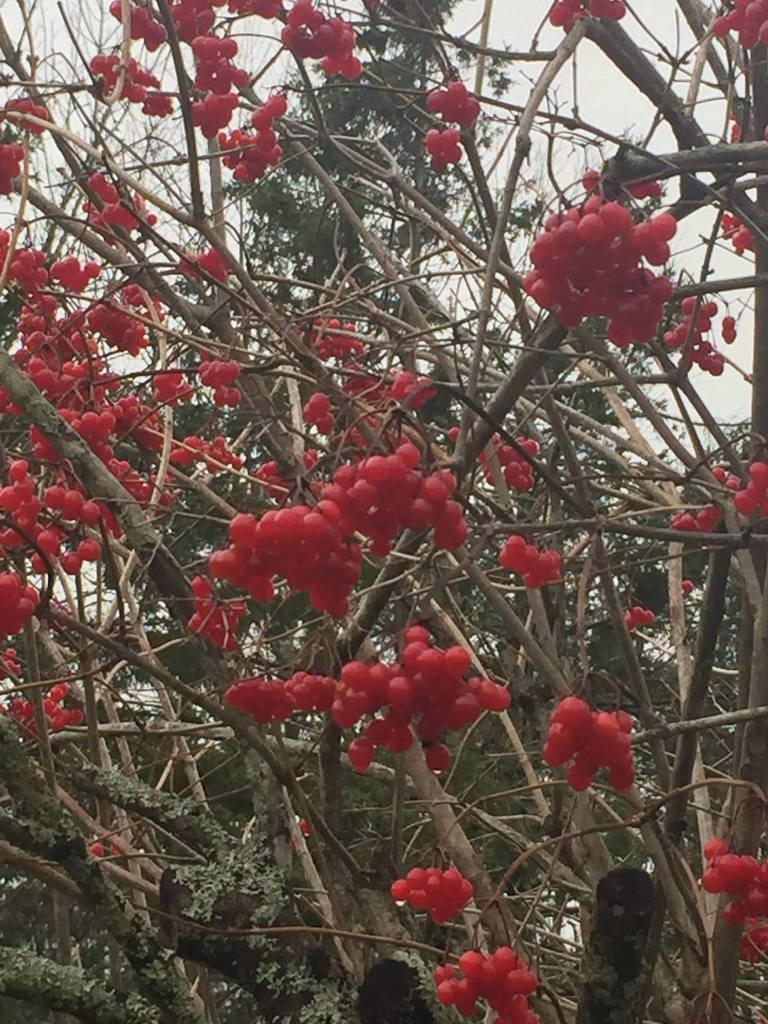
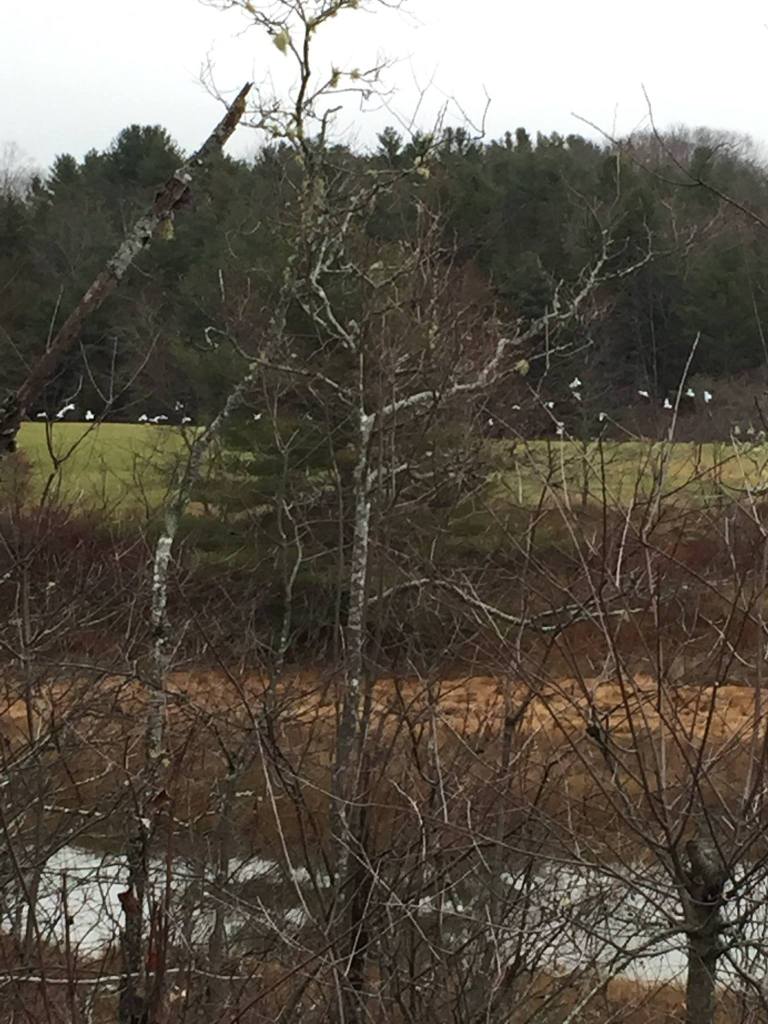
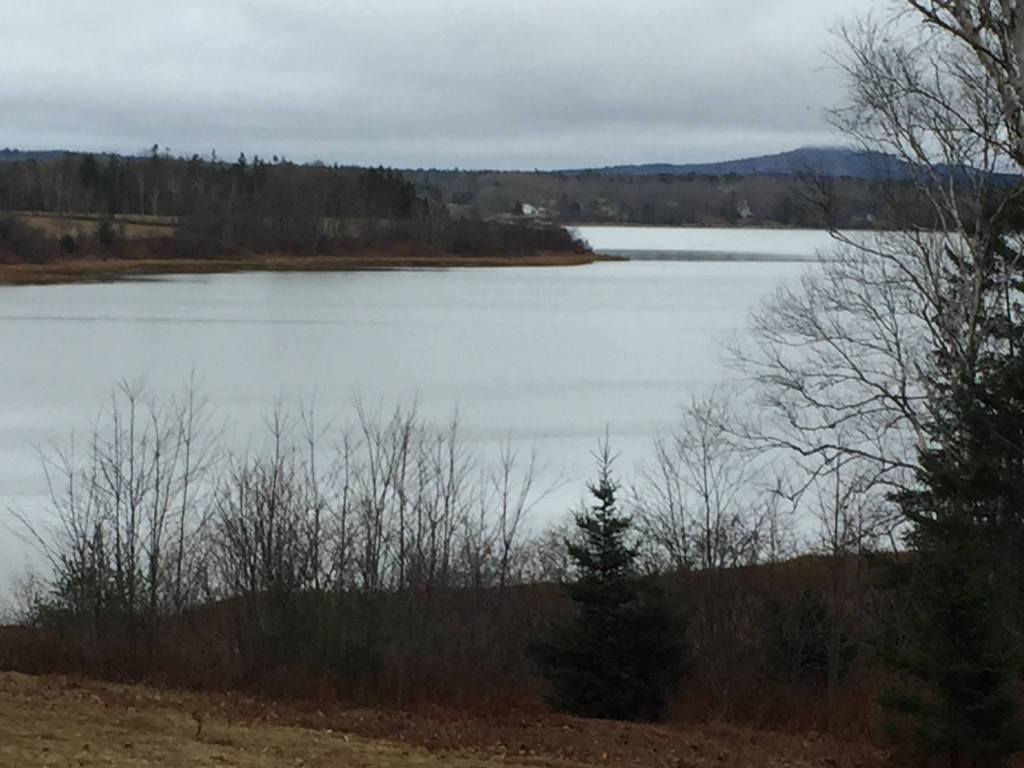
A lifetime ago, November 30, 2016, it was a bit gloomy in Maine. A few berries still sparkled, Millie was a pup having fun with the apples, and a bunch of snow geese were flocking around a little inlet. Millie is older, and other than the pine tree by the water that has grown taller and taller, not much has changed.
I watched a movie the other night about an old man and his daughter, and someone in it quoted this little poem by Edna St. Vincent Millay, which came back to mind as I saw the geese, Millie, and the dormition of the landscape, which lacked a lovely light:
My candle burns at both ends;
It will not last the night;
But ah, my foes, and oh, my friends
—It gives a lovely light!
I realized I had never studied Millay’s poems, and curiosity made me search. I came across one in particular that struck me as providential, and made me think of the magnificence of the rebirth of Notre-Dame de Paris by mere mortals.
Because while it had burnt like a candle, at both ends, I thought how sad it was to see it turn to rubble, or a lonely grave. But just a few years later we are witnessing its majestic “renascence”, a fitting word that the poet reflected on.
All my musings in an hour, all because of a few melancholy and unartistic photos. Go figure. And all because of a little poem!
I found the story amusing, because I have also spent half a century, like his poet friend, wondering which way to take. Now, at the sunset years of my life, I have come to yet another crossroad, but this time I have decided to take the liberty of amending Frost’s last stanza:
HIS OPUS:
I shall be telling this with a sigh
Somewhere ages and ages hence:
Two roads diverged in a wood, and I—
I took the one less traveled by,
And that has made all the difference.
MY REFRAME:
I am now telling this with a sigh
As it has been ages and ages hence:
Two roads diverged in a wood, and I—
I was foolishly duped and took the wrong turn,
And stumbled and fell and saw hell,
But now I found the one less traveled by,
And that has made and will make all the difference.
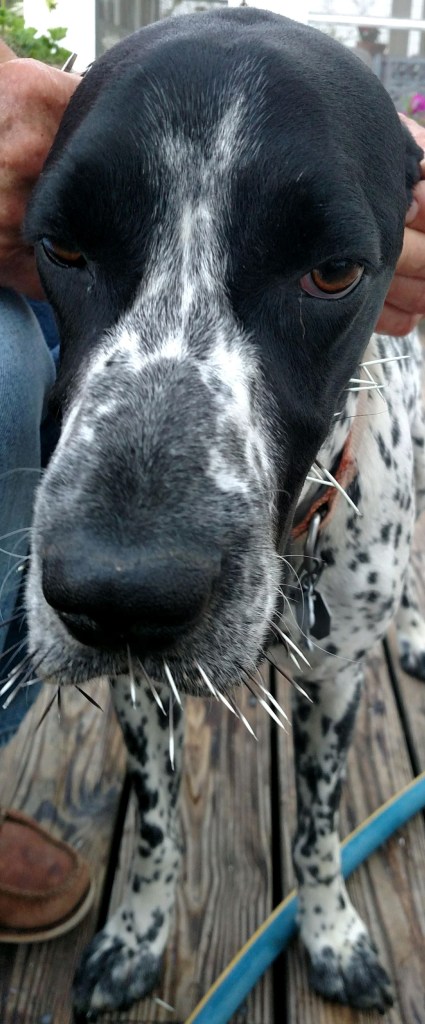
I have journaled much about the role of friends, especially as it involves those “old old” friends that disappoint to the core. I am learning that the sting of disappointment is like being stuck with porcupine quills.
The barbed tip hurts, and removing by yanking on the quill is painful. However, like everything else in life, you begin to evaluate how to ease the pain of extrication. If I had only known when Milly got these quills what I do now, she would not have suffered so much. Tip: you first have to cut them in half so that they go limp, the fish-hook tip relaxes, and you can pull them out softly and with reduced pain because the quills become flaccid and pliable!
I am spending much time with good friends. Some I have known for a few months. Others, for a couple of decades. And some, for a few weeks. I value their support, compassion, and their reaching out when you least expect it. Most of all, I cherish the laughter we share together. A hearty good laugh is a balm for the soul.
Recently, I heard from friends from my youth. They brought back a torrent of emotions, for they helped me remember some of the “good old days” of yore, when we were studying and working and carefree. How lucky can one be?
I am blessed.
The Arrow And The Song
Long, long afterward, in an oak I found the arrow, still unbroke; And the song, from beginning to end, I found again in the heart of a friend.
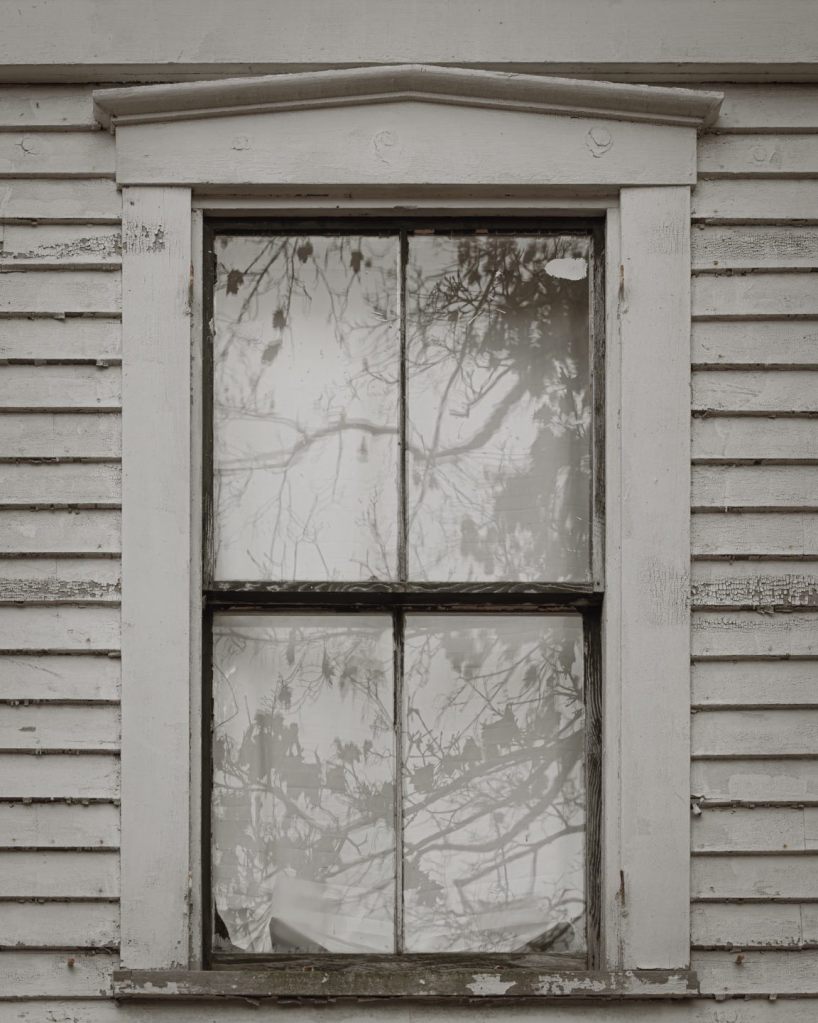
An amazing photographer, Kim Allen Goff, posted this beautiful photo on social media and commented,
“I’ve loved to peer into windows since I was a child and the older the house the better! The reflections on these windowpanes spoke the language of November.”
Immediately, her comment and photo reminded me of this Robert Frost poem, below. I read somewhere that, in this particular poem, “Sorrow finds beauty in its desolation”.
It is true.
Sorrow does bring forth reflection, and from that reflection springs clarity of understanding, and from that clarity -eventually- those turbulent waters reach their destination and may turn into a beautiful and calm and crystalline cove or lake. So there. I have to thank Kim for making me be happy about my birthday month! There is beauty in those reflections of the bare, the withered tree…
My Sorrow, when she's here with me, Thinks these dark days of autumn rain Are beautiful as days can be; She loves the bare, the withered tree; She walks the sodden pasture lane.
Her pleasure will not let me stay. She talks and I am fain to list: She's glad the birds are gone away, She's glad her simple worsted grey Is silver now with clinging mist.
The desolate, deserted trees, The faded earth, the heavy sky, The beauties she so truly sees, She thinks I have no eye for these, And vexes me for reason why.
Not yesterday I learned to know The love of bare November days Before the coming of the snow, But it were vain to tell her so, And they are better for her praise.
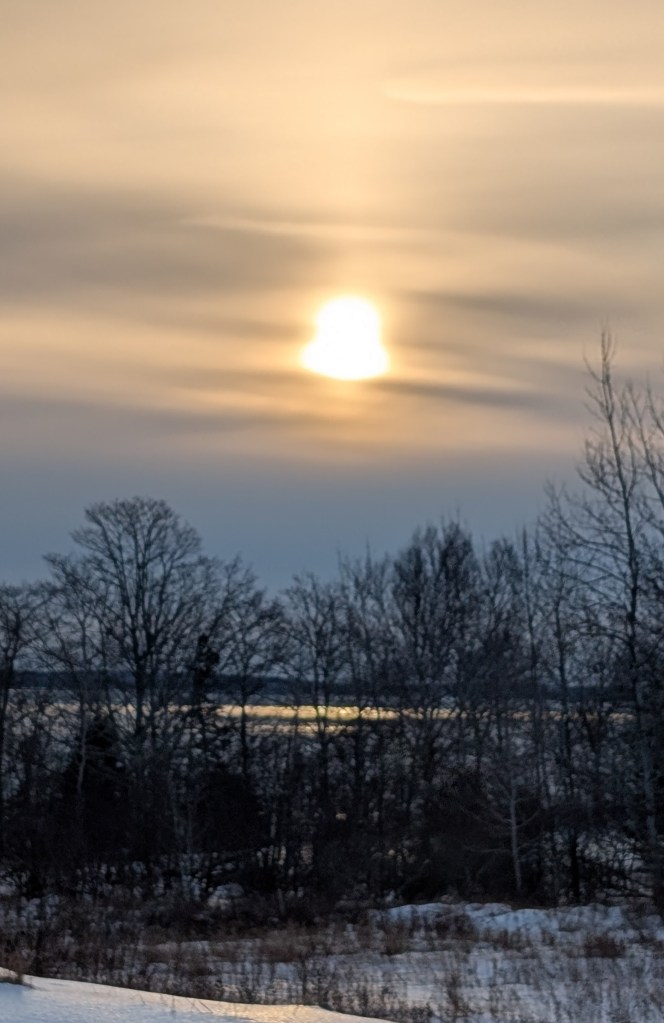
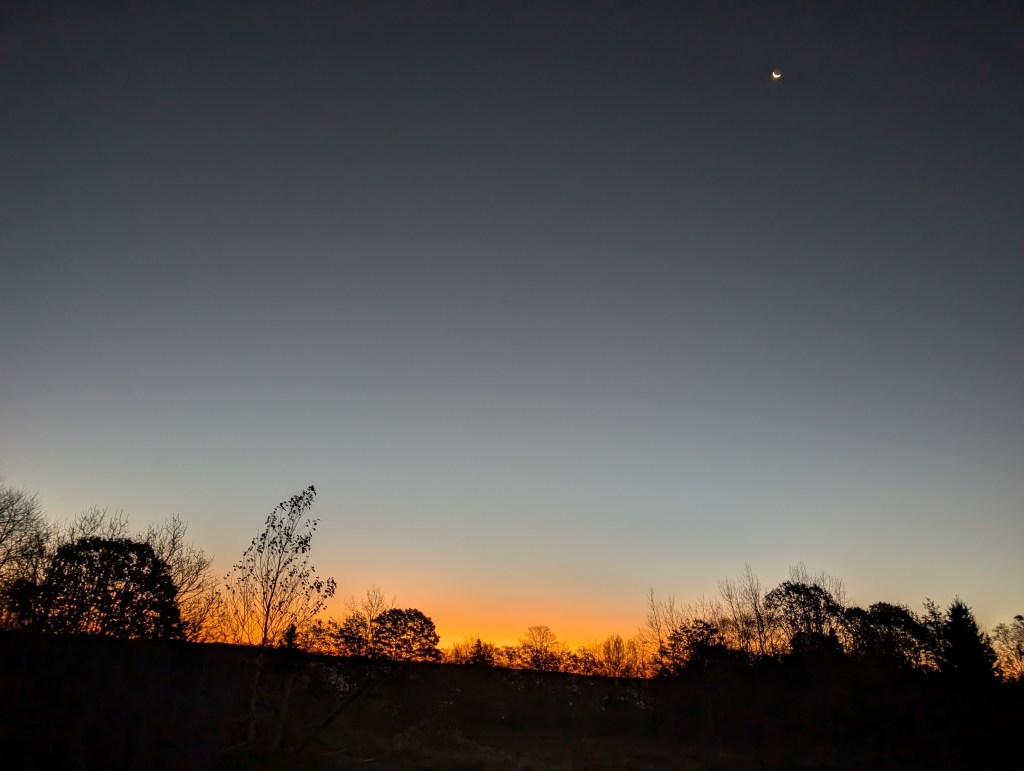
So, after the moon walked the night in her silvery shoon, I caught her last sliver of shine on a gloriously crisp Maine sunrise. I tried to capture the beauty, but the phone did not fulfill its promise. Pretty, yes, but not glorious as I witnessed it. I thought as I stared, how can one be sad peering at such majestic color and scene? And so early in the morning? I am in good company, staring at the moon, with ghost crabs and singing frogs.
Working on a concept paper to help a friend, I had been thinking about what constitutes a “drag” in the business world, as you want to speed things up in order to accomplish as much as you can in the shortest time available. Sometimes you need to do the right thing and get rid of excess baggage, so to speak, whether it is product or humans. As to the latter, it can be quite devastating to contemplate the process. I’ve had my share of having to tell employees that their end date had arrived, and, when the individual was decent and hard working, it was horrible to let go. That’s one of the reasons I opted not to pursue management. As a lawyer, I liked the solitude of research and writing and not the upheaval of directing hiring and firing. It is so very true in one’s personal life as well.
Upon reflection, yesterday morning, I realized that not only am I entering the “death cleanup” stage in my life, trying to sever the balls and chains that tie me to “things” – in itself a huge “drag”- but I am discarding “dead wood” and all that constitutes what I finally see as useless or dangerous detritus. Sometimes, it takes an ugly trauma to accelerate this process. Other times, it just happens.
At the end of the day, I don’t need nor want dead wood, be it memories or people that draw me down to complacency or ennui or despair. More importantly, it is the awareness that some of my dead wood are the so-called “friends” I thought I had, that either were Judas goats and very treacherous, or complete idiots that I put up with because of circumstances of life. I don’t need dead wood, rotten apples belong in composts, and weak idiots are just a drag. It has taken me a long time to finally reach this conclusion, and it is liberating. My only regret is not having figured this out sooner. But then, wisdom sometimes is slow to arrive. Yet, it’s better late than never.
It’s amazing how the above musings are all thanks to staring at the silvery light of the sliver of moon as I savored a serene sunrise and thought of Walter de la Mare!
Silver
Slowly, silently, now the moon Walks the night in her silver shoon; This way, and that, she peers, and sees Silver fruit upon silver trees; One by one the casements catch Her beams beneath the silvery thatch; Couched in his kennel, like a log, With paws of silver sleeps the dog; From their shadowy cote the white breasts peep Of doves in a silver-feathered sleep; A harvest mouse goes scampering by, With silver claws and a silver eye; And moveless fish in the water gleam, By silver reeds in a silver stream.
I just found a sermon a Presbyterian pastor once shared with me, because it made such an impact on me after the many deaths I had witnessed. It was his love song about the famous Psalm 23, The Lord is my Shepherd.
Beholding a most beautiful sunrise over calm waters this morning, the serendipitous encounter with the sermon I received in March 2019 made me reflect on a myriad of things. I share one paragraph of a series of many that the Reverend encapsulated as the essence of life:
“Surely goodness and mercy shall follow me all the days of my life”…
So what about the mess I have made of my life from time to time? What about the loved ones I disappointed, the people I deceived, the compromises I made with my conscience, the scars I left on those I harmed? No one likes to be followed, but in this case I take comfort in the possibility that goodness and mercy might not get too far out ahead of me, but might follow me, picking up the broken pieces of my past and putting them back together again. The assurance here is that goodness, which is the benefit of forgiveness; and mercy, which is the basis of every new chance at life, will follow me all the days of my life.
Silence everywhere Like that of a birds’ nest bereft of birds On the bough of a songless tree. With the lifeless light of the waning moon was now blended The pallor of dawn Spreading itself over the greyness of my empty life. I walked towards your bedroom For no reason. Outside the door Burnt a smoky lantern covered with soot, The porch smelt of the smouldering wick. Over the abandoned bed the flaps of the rolled-up mosquito-net Fluttered a little in the breeze. Seen in the sky outside through the window Was the morning star, Witness of all sleepless people Bereft of hope. From “At the Last Watch“.
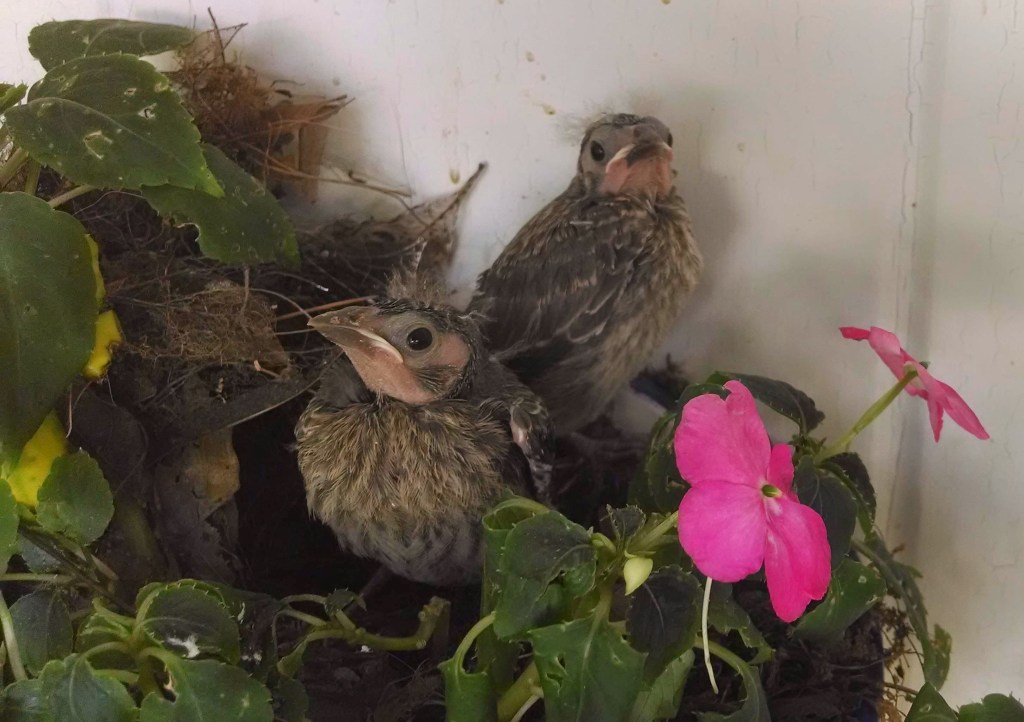
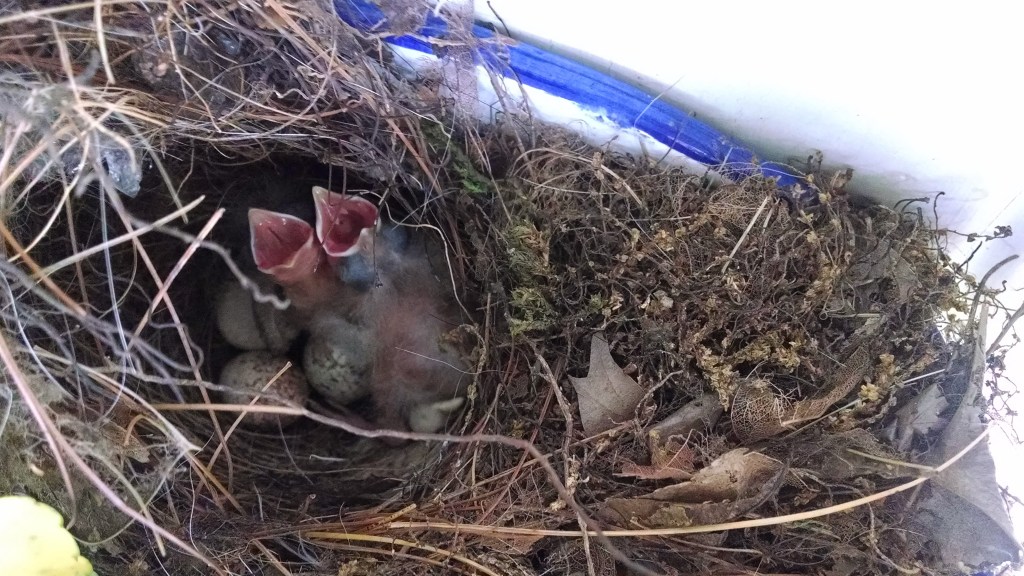
My image of what is a home has always been that of a nest. A carefully protected nest meant to hold fragile beings. I always balked at the idea of having to host individuals of dubious or unsavory character, because I felt the urge to guard my nest against prying eyes, and other ugly intrusions. I was not always successful, and people whom I trusted -or was willing to give them the benefit of the doubt- betrayed my trust, harmed my family, and essentially tried to dismantle my nest. Sometimes, life in the Foreign Service produces some negative personal results. There were some unfortunate incidents abroad. But then, a few nasty surprises also have occurred here at home as well. No one is immune to nefarious behavior.
My Mother kept “mothering” not just her children, but her grand-children as well. And, thanks to her efforts to expose them to what she thought was an important life message, I discovered a rare gem of an author and movie.
My Mother sought to use books and film as a way to expose her grand-children to philosophical, moral, cultural, and historical debate. Ever the perspicacious pedagogue, she realized that movies, accurately chosen, could expand a youngster’s horizon. She undertook this cinematographical pursuit with gusto, and my children were the recipients of her indefatigable research and search for the ultimate examples of the “morals of a story”.
Which brings me back to my strange remembrance of a forgotten author – poet, philosopher, Nobel laureate- of whom I had no deep knowledge. By happenstance, American TV had aired a beautiful Indian film and my Mother recorded it and shared it with us. We were living abroad at the time. The film was based on Rabindranath Tagore‘s novel, Nastanirh or The Broken Nest.
Until that time, I did not know much about Rabindranath Tagore, a friend of Ghandi’s, other than he had been a recipient of the 1913 Nobel Prize in Literature and had visited Argentina, in 1924 before my parents were born. A world famous Argentine poet and writer, Victoria Ocampo, hosted Tagore while he was recovering from influenza, and in their Autumn-Spring differences, they developed a love tenderness, a platonic relationship that resulted in a burst of literary exchanges. To understand this Indo-Argentine experience, the Edinburgh University Press has a fascinating article describing the ethos of the times.
My Mother had read Rabindranath Tagore. In researching about the man and his writings, I can now fully understand why my parents were culturally so immersed in his poetry and prose.
She made us watch the film “Charulata” (The Lonely Wife). I must confess, I was not too keen to watch the movie, since I had seen a few Indian movies in the USSR in the late 1980′s and I just could not relate to them. The USSR primarily showed Indian movies in those days, and I now realize I was too immature to want to spend the time to understand them.
The story of Charulata triggers some odd memories. Why? Because I remember my Mother’s intensity when she told us that it was this author that made her realize that, regardless of culture, when distilling the human essence, one discovers that human beings are all the same, feeling the same passions, suffering the same betrayals. This is not to say that we all behave, morally, the same.
Charulata, the film, transcends cultural barriers. It exquisitely and delicately captures the eternal themes of loneliness, contumacious neglect, good intentions that go awry, the yearning for understanding and compassion and companionship, a budding love affair that transcends consummation, the tenderness and harshness of youth, betrayal, and maybe, maybe, the possibility of redemption.
‘Sesh Basanta’ (The Last Spring) by Rabindranath Tagore, 1924 You will experience many springs in your life, Let me beg one of it… Have no misgivings; In your blossoming flower garden I’ll not linger endlessly Nor look back When the day ends and it’s time for leave-taking.”
I would like to know that one day my children and grandchildren might remember me for my sprinkling some lyrics, or melody, or story because I sometimes go off on what some believe are tangents going nowhere, though I just see my perambulations as always returning to where I left off, albeit taking a bit of a long and windy way. It’s because I lack my Mother’s wonderful way with quotes of proverbs, poems, and sayings that had a concise application to whatever topic we were discussing.
Of all the memories I have of my Mother, I always return to her dear Charulata movie. Her protection of our nest was paramount. Her fledglings are old birds now. More or less, we have weathered the storms of life. If only I could give my children a legacy such as my Mother’s…
…was one my Father’s recurring refrains, and whenever I stare at the horizon or any body of water deep in thought, it comes back to me bathed in nostalgia, and sometimes with a flash of joy.
In the last year of his life, I remember how he sat on his favorite red leather wing chair, staring deeply into the flames in the fireplace, his big blue eyes lost in thought. When asked “Daddy, what are you thinking?” he would blurt “I am lost in the cradle of the deep”. And that was it. No explanation. Just that.
So yesterday, while I was ruminating about Dante’s circles, I thought of him. And down my rabbit hole I went.
My Father, John Dillon, lost his Father when he was a young 14 year old. The absence of his Father weighed heavily all his life. His Mother, my Grandmother, had worked for RCA Victor in Buenos Aires, and had a collection of old 78s. I believe I found the source of my Father’s saying, although it was not “lost”, but rather, it was “rocked”. The source was an old hymn, the lyrics of which were written by an amazing woman, Emma Willard (1787-1870), of Connecticut.
Willard moved to Middlebury, Vermont and had requested to attend classes at Middlebury College, but had been denied the opportunity. A persistent visionary, she was a pioneer in women’s education, and in 1814 started the Middlebury Female Seminary. Irony of ironies, today, her home is the Middlebury College Admissions Office.
Emma Willard’s indefatigable pursuit of women’s education brings to mind my Mother in Law’s own common refrain, of British origin, so in order to rhyme you have to use English pronounciation:
“Patience and perseverance made a Bishop of his Reverence!”
So now, with patience and perseverance, my next project is to edit and publish my Father’s prolific writings which he only did for his children: a history of the Dillons, an autobiography “Don Juan Nadie” (Don Juan Nobody), and a novel “Murder on the Bullet Train”. They are too good to be kept all in the family!
Rocked in the Cradle of the Deep Author: Emma Willard
Rocked in the cradle of the deep, I lay me down in peace to sleep; Secure I rest upon the wave, For Thou, O Lord, hast power to save. I know Thou wilt not slight my call, For Thou dost mark the sparrow’s fall; And calm and peaceful is my sleep, Rocked in the cradle of the deep; And calm and peaceful is my sleep, Rocked in the cradle of the deep.
And such the trust that still were mine, Tho’ stormy winds swept o’er the brine; O, tho’ the temptest’s fiery breath Rous’d me from sleep to wreck and death, In ocean’s cave still safe with Thee, The germ of immortality; And calm and peaceful is my sleep, Rocked in the cradle of the deep; And calm and peaceful is my sleep, Rocked in the cradle of the deep.
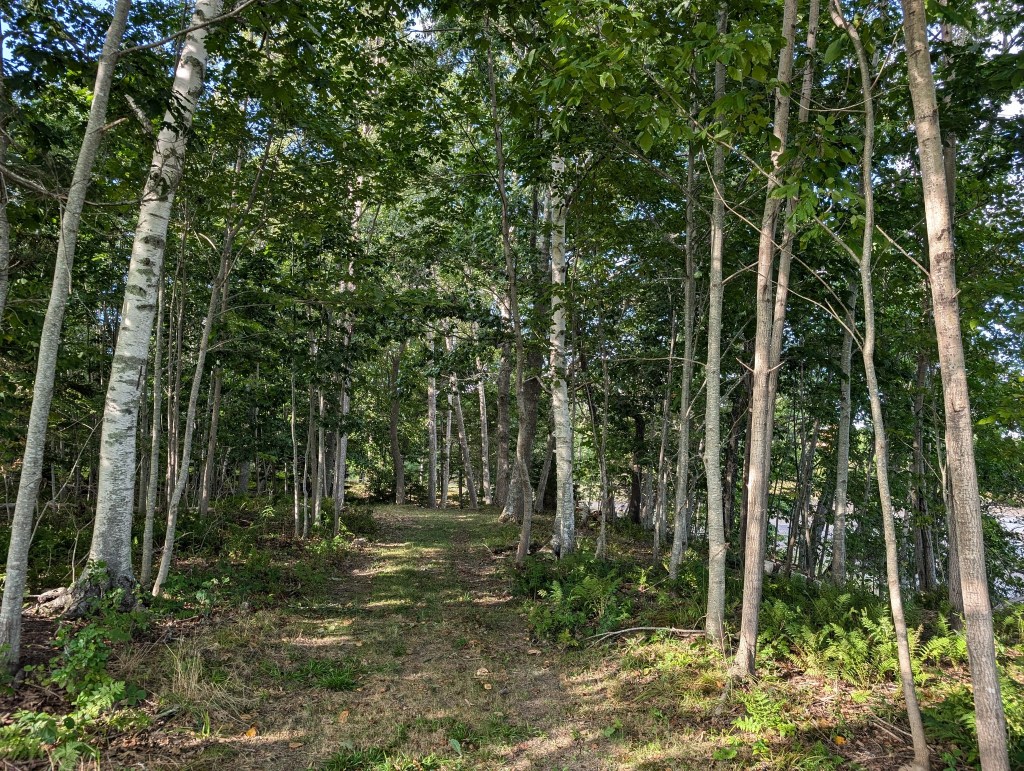
I love my little pond. It was the source of incredible joy for both my Mother in Law and my Father, in their eighties. So, every time I walk around it I feel their presence. It attracts strange characters, between herons, ospreys, kingfishers, snakes, and gazillion frogs.
Sometimes, walking around at night can be beautiful. However, I worry about the coyotes and bears that are too real around here. The Pepe Le Pews I can handle. Skiddle doo. And the porcupines: am ashamed to say I only learnt recently that they don’t hurl the quills; that’s cartoon nonsense. HAH! I believed the cartoons, and am a bit deflated knowing that it was nonsense.
Yet, the big bucks have butted heads with our benches, hurling them into the pond… not once, nor twice… (by the way, all old saltwater little farms in this area must have a pond, because there are no fire hydrants around!).
My Father would stare at the great blue heron and ask me for the umpteenth time: “Barbara, what is heron in Spanish?” “Garza,” I would reply. “Oh, my, watch that garza, how stealthily it walks…” And on and on. How I wish he were here today with me asking the same question, over and over again. I never got tired of it. I loved it.
It is this dear little pond with its many bullfrogs and frogs, that finally made me understand a beautiful Argentine folk song, which I have loved since I was a 7 year old. Because, whenever there is a moon, it rises and reflects on this little pond.
Isn’t it weird that a little pond in the far away North of the USA, close to the Canadian border, helped me fully understand the poignancy of a folk song that originated way, way South, in the southern tip of the Americas, close to Antarctica?
I identify with the toad, and now realize that my melancholy about the lyrical toad song was prescient. Life’s trials and tribulations have confirmed to me that the moon can be cold, because it gave its blood to form the stars, and that life can be dismal if we don’t live it with any hope.
Toad of the night, lyrical toad, Who lives dreaming next to your lagoon, Tenor of the puddles, grotesque troubadour, You're bewitched by your love for the moon.
I know of your life devoid of glory; And know the tragedies of your restless soul Likewise, that madness of loving the moon Is the eternal madness of every poet.
Lyrical toad, Sing your song, Because life is dismal If we don't live it with any hope
You know that you're ugly, ugly and misshapen; That's why by day you hide your ugliness And by night you sing your melancholy And your song resounds as a litany.
Your voices ring out in candid obstinacy; Your verses are in vain for their striking beauty; Don't you know, perchance, that the moon is cold, Because it gave its blood to form the stars?
Lyrical toad Sing your song, Because life is dismal If we don't live it with any hope.





 Dum Spiro Spero