Seeing The World in Manichean Terms? Not All Have The Gift of Gab

UNSOLICITED ADVICE to my grandchildren, when they are old enough:

Have you ever been told that you see the world in “Manichean terms”? I have, many a time, and with derision. Which sent me on an expeditionary travel down the proverbial rabbit hole to understand exactly what this meant, other than the simplistic dualistic way of seeing things good or evil.

Through a bit of research, historical and theological, I was reminded that it is a heresy: the Episcopal Church has a short description, and the Catholic Church delves deeper into history and philosophy. St. Augustine dappled with it and in it (and no, I don’t mean dabble!).

I realized that if someone tells you you see the world in “Manichean terms”, they are, in essence, sophists looking for an easy and superficial way to insult your intelligence and bring you down. Don’t be fooled and fall for it! Not all of us have the gift of gab, so it can be difficult to have a quick and clever retort. It is especially so for those of us who speak more than 1 language! Trust me on this.

In general, lawyers are always labeled as sophists, because they are seen as engaging in the whys and what-ifs and what-thens, and as the devil’s advocates. Again, it is a superficial rendering of a profession that, although flawed, provides an alternative to war!

However, I also concluded that the reality is that modern-day sophists (who have no clue of the Platonic/Socratic/Protagoras discourses) have no real knowledge: they are just clever users of arguments that are presented as true but are really false, in order to deceive others. (If you like simpler rabbit holes, check Britannica).

They are obfuscators, who know how to lie and confuse with great finesse, use clever words, ominous labels, or grandiose terminology because they know the average person may not necessarily understand the whole context.

In other words, they are what the Argentines used to call “chantapufis”. So there! There’s nothing new under the sun…
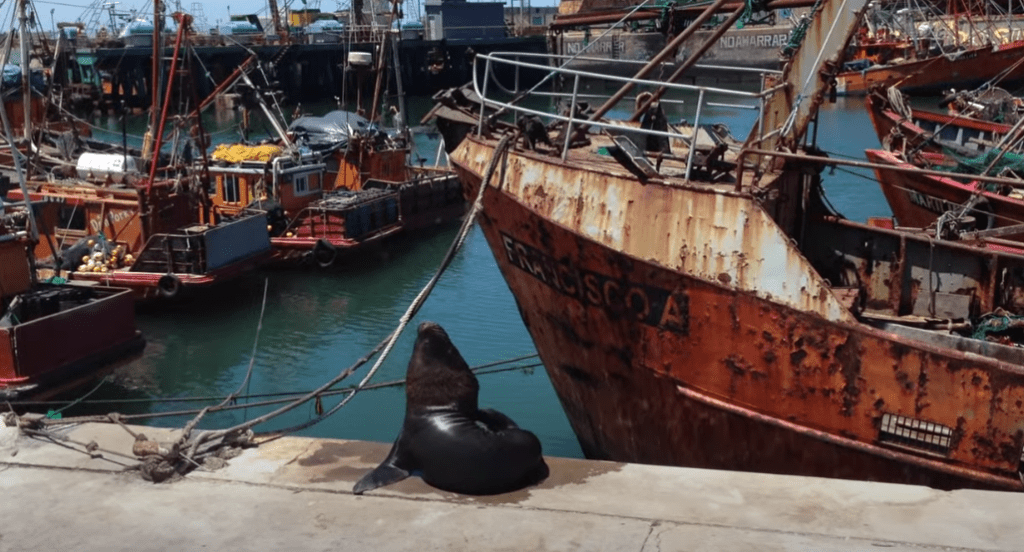
Unmoorings

This old photo that I had taken long ago, of a dilapidated boat with a beautiful sea lion by its side, made me think about death, loss and hope.  Go figure!  

In my own experience with loss, I recognize how important it is for those who remain behind to share in the suffering of the stricken one. The dénouement that sometimes is slow in coming, and which eventually affects us all, can help us prepare for the inevitability of death, of shuffling off our mortal coils, and put things in perspective: that is, truly understand what is significant and what is not. This is something that I, for certain, have failed to distinguish repeatedly.

The sufferer may not realize it, in the midst of his pain and suffering, but the impact of his predicament has a ripple effect on those who love him, and, for the most part, makes the witness a better person for it.

In my experience, faith does play an integral part in all of this. Nihilism brings only despair.  The back pages of my memory of heady college days discussing Nietsche’s nihilism, and other philosophers’ perspectives on death and dying, confirm this to me.

My own reaction to reading others’ descriptions of coming to grip with their mortality validates to me that, as the antidote to nihilism, John Donne aptly meditated:  “No man is an island, entire of itself; every man is a piece of the continent, a part of the main; if a clod be washed away by the sea, Europe is the less…any man’s death diminishes me, because I am involved in mankind…”

However, I have discovered that death does not just involve a human body that withers away.  Death can come in a myriad of ways. 

Sometimes we are dealt blows that seem insurmountable:  a major disease, estranged relationships, abuse, betrayals, financial woes and other traumatic events, and our lives are unmoored, like a boat being tossed aimlessly in a sea of trouble.

But, every now and then, the boat does not crack open and sink.  Miraculously, sometimes it finds a place of shelter, and maybe, maybe it can even be salvaged.  The thread of life that is unwound by the Fates may not necessarily end up severed…frayed, maybe, but not severed, and life goes on.

Ah, but I was so much older then

I’m younger than that now