This last Sunday brought back many memories of long lost family members and friends, some exceedingly beautiful, some heart wrenchingly sad.
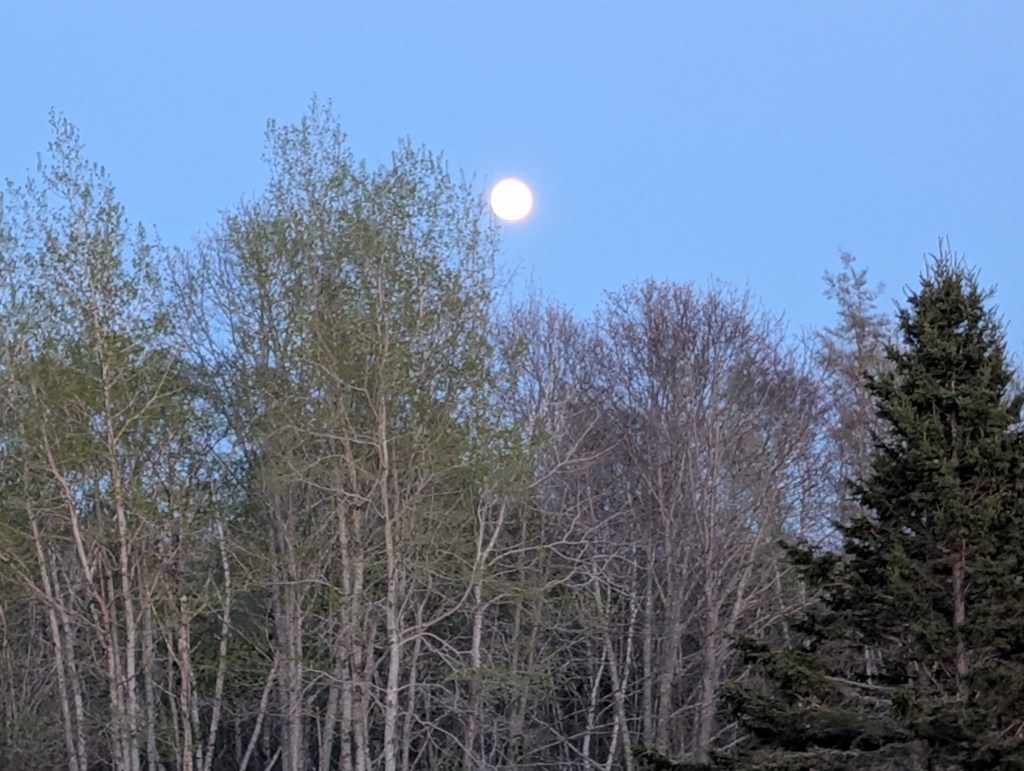
A magnificent Flower Moon rose up from the trees and, beneath its tender glow, I pondered how fragile and fleeting life is —here one breath, gone the next.
Because someone dear to my heart – who a few months ago was a total stranger whom I met through a purely business transaction, but soon reached out to me with a gentle and comforting hand – suffered a life altering traumatic experience that very Sunday: a shattered backbone.
As I looked at that Flower Moon I realized how insignificant our own problems can be. How a freak accident alters the course of our lives and makes us stumble under fate’s cruel weight. Sometimes the pain we survive comes from a broken body. Other times, from a broken soul.
There’s not much I can do, other than provide encouragement and trivial support. I find prayer has always helped me cope, heal and recuperate.
Last year, when I found out someone was facing a major health downturn, I discovered that the patron saint of sick people and doctors and surgeons is St. Luke. Yes, the one who wrote one of the Gospels. I know, I know. Leave it to the Catholic Church to have a patron saint or two for anything that ails us or spooks us. Yeah, yeah, yeah. I get it.
However, I had forgotten that St. Luke had been the “beloved physician”. So he is not just an à-la-carte saint du jour. So, in the spirit of ecumenical brotherhood, since Luke was most likely a Jew and my friend is a Jew, I told my friend I would reach out to the patron saint of surgeons before the delicate operation. What do we have to lose, right? And as my friend said, at this juncture, we take all the help coming from any which way.
As I stared at my Flower Moon I reflected on how fleeting life is and on how we can navigate a moonlit maze of sorrows while dancing the eternal dance between life, love and death.
Silence everywhere Like that of a birds’ nest bereft of birds On the bough of a songless tree. With the lifeless light of the waning moon was now blended The pallor of dawn Spreading itself over the greyness of my empty life. I walked towards your bedroom For no reason. Outside the door Burnt a smoky lantern covered with soot, The porch smelt of the smouldering wick. Over the abandoned bed the flaps of the rolled-up mosquito-net Fluttered a little in the breeze. Seen in the sky outside through the window Was the morning star, Witness of all sleepless people Bereft of hope. From “At the Last Watch“.
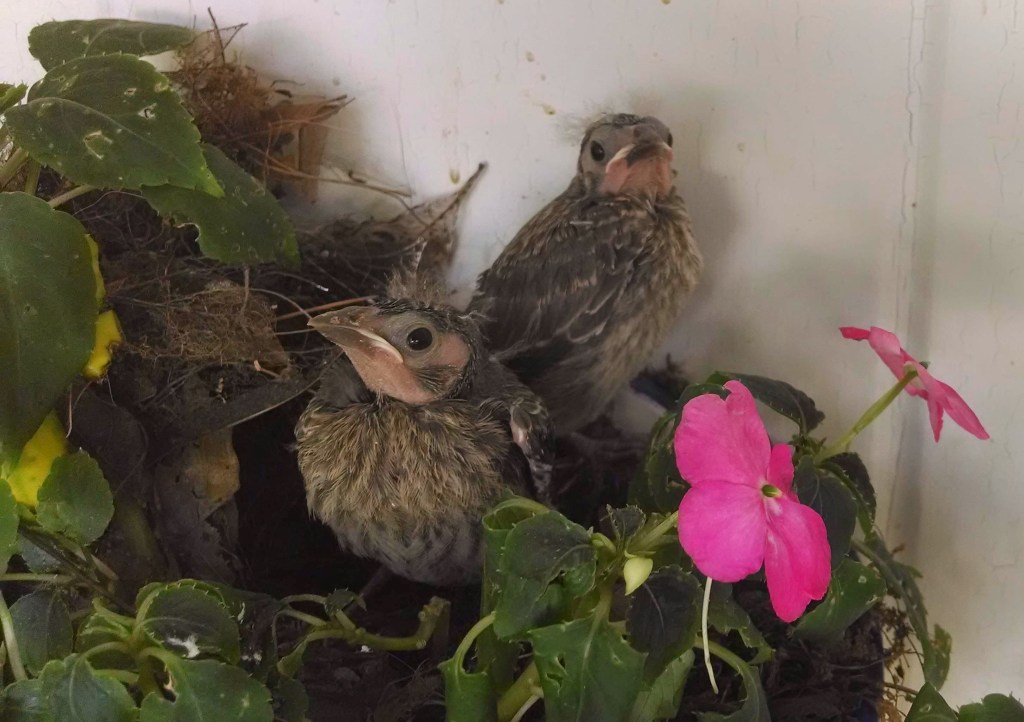
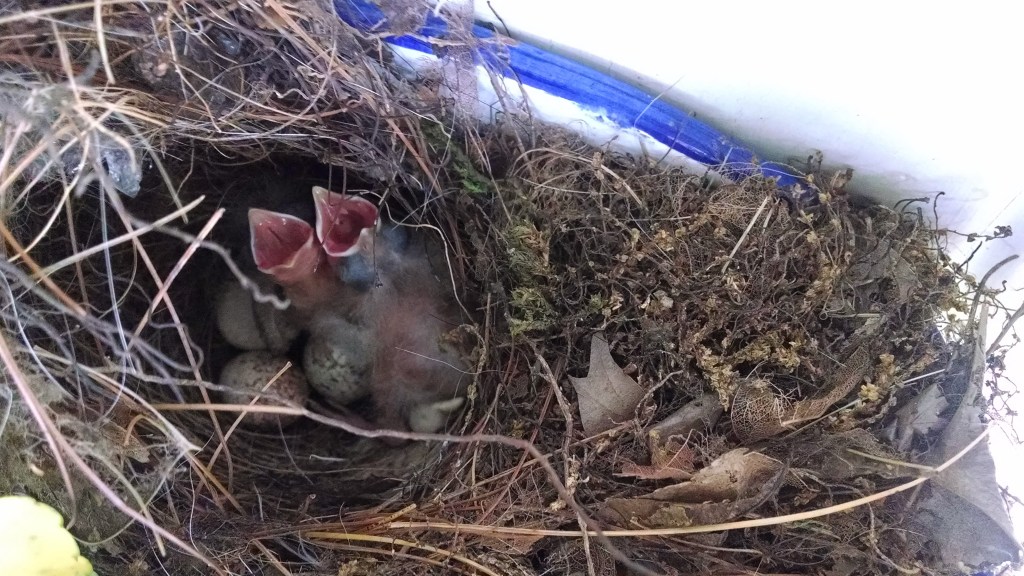
My image of what is a home has always been that of a nest. A carefully protected nest meant to hold fragile beings. I always balked at the idea of having to host individuals of dubious or unsavory character, because I felt the urge to guard my nest against prying eyes, and other ugly intrusions. I was not always successful, and people whom I trusted -or was willing to give them the benefit of the doubt- betrayed my trust, harmed my family, and essentially tried to dismantle my nest. Sometimes, life in the Foreign Service produces some negative personal results. There were some unfortunate incidents abroad. But then, a few nasty surprises also have occurred here at home as well. No one is immune to nefarious behavior.
My Mother kept “mothering” not just her children, but her grand-children as well. And, thanks to her efforts to expose them to what she thought was an important life message, I discovered a rare gem of an author and movie.
My Mother sought to use books and film as a way to expose her grand-children to philosophical, moral, cultural, and historical debate. Ever the perspicacious pedagogue, she realized that movies, accurately chosen, could expand a youngster’s horizon. She undertook this cinematographical pursuit with gusto, and my children were the recipients of her indefatigable research and search for the ultimate examples of the “morals of a story”.
Which brings me back to my strange remembrance of a forgotten author – poet, philosopher, Nobel laureate- of whom I had no deep knowledge. By happenstance, American TV had aired a beautiful Indian film and my Mother recorded it and shared it with us. We were living abroad at the time. The film was based on Rabindranath Tagore‘s novel, Nastanirh or The Broken Nest.
Until that time, I did not know much about Rabindranath Tagore, a friend of Ghandi’s, other than he had been a recipient of the 1913 Nobel Prize in Literature and had visited Argentina, in 1924 before my parents were born. A world famous Argentine poet and writer, Victoria Ocampo, hosted Tagore while he was recovering from influenza, and in their Autumn-Spring differences, they developed a love tenderness, a platonic relationship that resulted in a burst of literary exchanges. To understand this Indo-Argentine experience, the Edinburgh University Press has a fascinating article describing the ethos of the times.
My Mother had read Rabindranath Tagore. In researching about the man and his writings, I can now fully understand why my parents were culturally so immersed in his poetry and prose.
She made us watch the film “Charulata” (The Lonely Wife). I must confess, I was not too keen to watch the movie, since I had seen a few Indian movies in the USSR in the late 1980′s and I just could not relate to them. The USSR primarily showed Indian movies in those days, and I now realize I was too immature to want to spend the time to understand them.
The story of Charulata triggers some odd memories. Why? Because I remember my Mother’s intensity when she told us that it was this author that made her realize that, regardless of culture, when distilling the human essence, one discovers that human beings are all the same, feeling the same passions, suffering the same betrayals. This is not to say that we all behave, morally, the same.
Charulata, the film, transcends cultural barriers. It exquisitely and delicately captures the eternal themes of loneliness, contumacious neglect, good intentions that go awry, the yearning for understanding and compassion and companionship, a budding love affair that transcends consummation, the tenderness and harshness of youth, betrayal, and maybe, maybe, the possibility of redemption.
‘Sesh Basanta’ (The Last Spring) by Rabindranath Tagore, 1924 You will experience many springs in your life, Let me beg one of it… Have no misgivings; In your blossoming flower garden I’ll not linger endlessly Nor look back When the day ends and it’s time for leave-taking.”
I would like to know that one day my children and grandchildren might remember me for my sprinkling some lyrics, or melody, or story because I sometimes go off on what some believe are tangents going nowhere, though I just see my perambulations as always returning to where I left off, albeit taking a bit of a long and windy way. It’s because I lack my Mother’s wonderful way with quotes of proverbs, poems, and sayings that had a concise application to whatever topic we were discussing.
Of all the memories I have of my Mother, I always return to her dear Charulata movie. Her protection of our nest was paramount. Her fledglings are old birds now. More or less, we have weathered the storms of life. If only I could give my children a legacy such as my Mother’s…

 Dum Spiro Spero