The Broken Nest

Silence everywhere
Like that of a birds’ nest bereft of birds
On the bough of a songless tree.
With the lifeless light of the waning moon was now blended
The pallor of dawn
Spreading itself over the greyness of my empty life.
I walked towards your bedroom
For no reason.
Outside the door
Burnt a smoky lantern covered with soot,
The porch smelt of the smouldering wick.
Over the abandoned bed the flaps of the rolled-up mosquito-net
Fluttered a little in the breeze.
Seen in the sky outside through the window
Was the morning star,
Witness of all sleepless people
Bereft of hope.

From “At the Last Watch“.

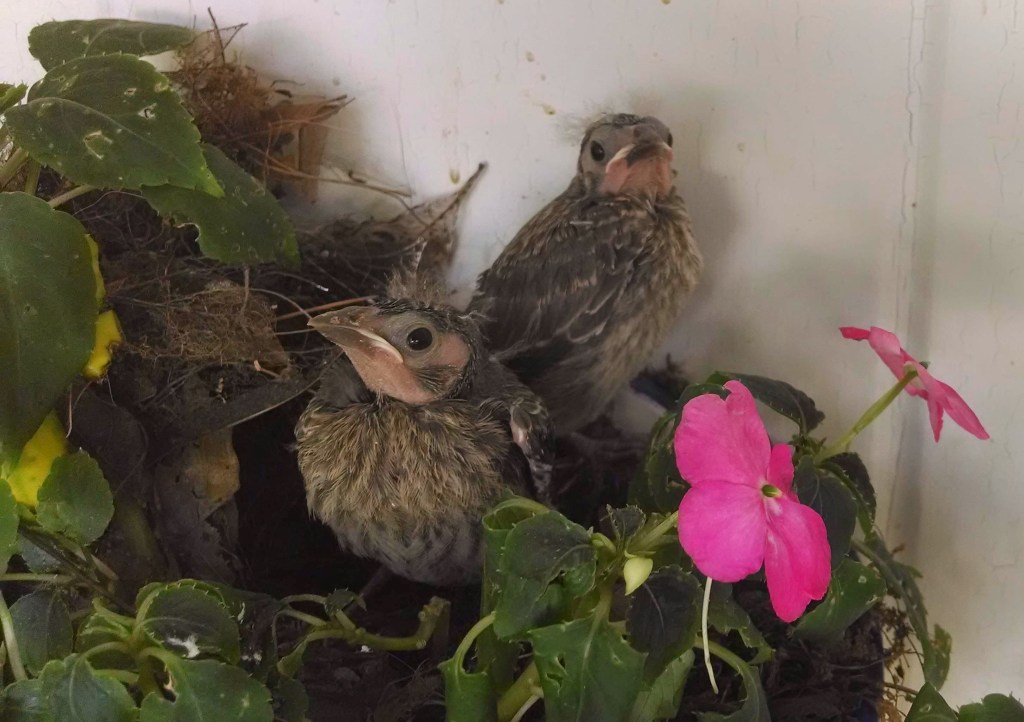
My image of what is a home has always been that of a nest. A carefully protected nest meant to hold fragile beings. I always balked at the idea of having to host individuals of dubious or unsavory character, because I felt the urge to guard my nest against prying eyes, and other ugly intrusions. I was not always successful, and people whom I trusted -or was willing to give them the benefit of the doubt- betrayed my trust, harmed my family, and essentially tried to dismantle my nest. Sometimes, life in the Foreign Service produces some negative personal results. There were some unfortunate incidents abroad. But then, a few nasty surprises also have occurred here at home as well. No one is immune to nefarious behavior.

My Mother kept “mothering” not just her children, but her grand-children as well. And, thanks to her efforts to expose them to what she thought was an important life message, I discovered a rare gem of an author and movie.

My Mother sought to use books and film as a way to expose her grand-children to philosophical, moral, cultural, and historical debate. Ever the perspicacious pedagogue, she realized that movies, accurately chosen, could expand a youngster’s horizon. She undertook this cinematographical pursuit with gusto, and my children were the recipients of her indefatigable research and search for the ultimate examples of the “morals of a story”.

Which brings me back to my strange remembrance of a forgotten author – poet, philosopher, Nobel laureate- of whom I had no deep knowledge. By happenstance, American TV had aired a beautiful Indian film and my Mother recorded it and shared it with us. We were living abroad at the time. The film was based on Rabindranath Tagore‘s novel, Nastanirh or The Broken Nest.

Until that time, I did not know much about Rabindranath Tagore, a friend of Ghandi’s, other than he had been a recipient of the 1913 Nobel Prize in Literature and had visited Argentina, in 1924 before my parents were born. A world famous Argentine poet and writer, Victoria Ocampo, hosted Tagore while he was recovering from influenza, and in their Autumn-Spring differences, they developed a love tenderness, a platonic relationship that resulted in a burst of literary exchanges. To understand this Indo-Argentine experience, the Edinburgh University Press has a fascinating article describing the ethos of the times.

My Mother had read Rabindranath Tagore. In researching about the man and his writings, I can now fully understand why my parents were culturally so immersed in his poetry and prose.

She made us watch the film “Charulata” (The Lonely Wife). I must confess, I was not too keen to watch the movie, since I had seen a few Indian movies in the USSR in the late 1980′s and I just could not relate to them. The USSR primarily showed Indian movies in those days, and I now realize I was too immature to want to spend the time to understand them.

The story of Charulata triggers some odd memories. Why? Because I remember my Mother’s intensity when she told us that it was this author that made her realize that, regardless of culture, when distilling the human essence, one discovers that human beings are all the same, feeling the same passions, suffering the same betrayals. This is not to say that we all behave, morally, the same.

Charulata, the film, transcends cultural barriers. It exquisitely and delicately captures the eternal themes of loneliness, contumacious neglect, good intentions that go awry, the yearning for understanding and compassion and companionship, a budding love affair that transcends consummation, the tenderness and harshness of youth, betrayal, and maybe, maybe, the possibility of redemption.
‘Sesh Basanta’ (The Last Spring)
by Rabindranath Tagore, 1924
You will experience many springs in your life,
Let me beg one of it…
Have no misgivings;
In your blossoming flower garden
I’ll not linger endlessly
Nor look back
When the day ends and it’s time for leave-taking.”

I would like to know that one day my children and grandchildren might remember me for my sprinkling some lyrics, or melody, or story because I sometimes go off on what some believe are tangents going nowhere, though I just see my perambulations as always returning to where I left off, albeit taking a bit of a long and windy way. It’s because I lack my Mother’s wonderful way with quotes of proverbs, poems, and sayings that had a concise application to whatever topic we were discussing.
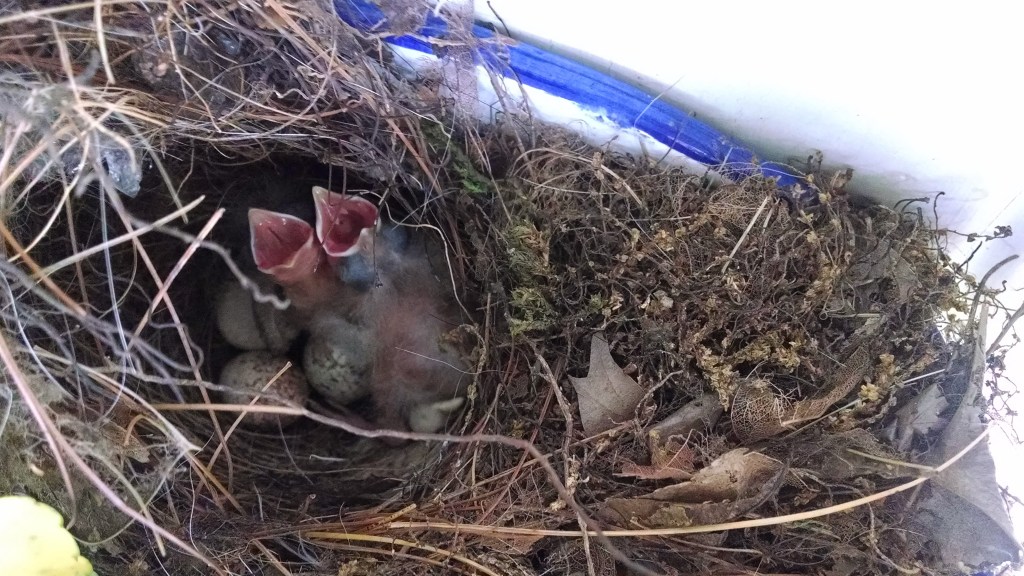
Of all the memories I have of my Mother, I always return to her dear Charulata movie. Her protection of our nest was paramount. Her fledglings are old birds now. More or less, we have weathered the storms of life. If only I could give my children a legacy such as my Mother’s…

Sir Nicholas Winton, a Hero for the Ages

winton

Once upon a time, circa 2008, I was lucky to be invited by a friend to visit her in Paris.  My stay there coincided with the visit of one of those rare individuals who –in his unassuming way- was a giant of his era. He made an incredible contribution to mankind and is known as the British Schindler.

Sir Nicholas Winton, “Nicky” to his friends, was in France for a special program on anti-Semitism.  He hailed from Maidenhead (UK), was a lover of gardens, a gentle, kind, no-nonsense man who stressed that he was not a diplomat.

His story is one for the ages. In 1939, as an English stockbroker, Sir Nicholas Winton  spent some time in Prague and he became a “living angel” by rescuing 669 Czech children from their doomed fate in the Nazi death camps. Most of the saved children never saw their parents again. These unfortunate souls perished in the German Nazi concentration camps.

Nicholas Winton’s feat was unrecognized for more than 50 years, and most of the children he saved were totally unaware who their savior had been.  His story came to light when his wife Greta, rummaging through their attic, found an old leather briefcase that contained lists of the children and letters from their parents.  

Sir Nicholas’ perspicacity made him aware that something was terribly wrong. Unlike so many others, he was courageous enough to do something to right what was so terribly wrong at the time.  Because he was born of Jewish parents who later converted to Christianity, he was not recognized as one of the Righteous Gentiles at Yad Vashem.

The impact of Sir Nicholas’ remarkable achievement was so striking that there has even been a movie made of him, One Life, with Anthony Hopkins playing him. There also is a children’s book written and illustrated by Peter Sís called Nicky & Vera: A Quiet Hero of the Holocaust and the Children He Rescued. Below are 3 videos that tell his poignant story better than me.

I had the privilege, honor, and great fortune to meet a living legend, who lived to be 106 years and died in 2015.  I spent a few times with Sir Nicholas and heard the harrowing experiences from the man himself. He had a sparkle in his eye and a most beautiful smile. I think of him often, and how it is so true that one person can make an enormous difference.

Sir Nicholas Winton never thought what he did was outstanding. It was just the right thing to do.


Poland, a Mystical Land.

Poland is a land of contrasts, incredible beauty, sad history, and unique resilience.
Driving from the Czech Republic to Warsaw, it is easy to understand why it is a land that has been ravaged by enemies from all over… It is largely flat, like the pampas of Argentina.

While Prague is a magical city, that basically remained intact, Warsaw is a ravaged city (more than 85% of it was razed to the ground in World War II) that rebuilt itself from the smoldering ruins catapulted by the retreating Germans and gleefully observed by the Soviet army across the river.

Many have forgotten the cruelty that the Poles experienced 60+ years ago. But when you live in Poland, it is palpable (every street corner or so has a plaque memorializing the execution of Polish citizens by the Nazi Germans –the formula was for one German killed, 10 Poles would die-).

The Poles are a proud people, and rightly so. After all, the Poles were the only Europeans to mount a counterattack within its occupied country.  It is amazing how little anyone knows of this uprising.   People in general confuse it with the Jewish Ghetto uprising. The Poles are perplexed that the world doesn’t know that about 200,000 Poles died in the Warsaw uprising.

While there were some resistance movements among occupied European nations, none rose to the level of the Poles. How many people today remember that the Poles played a crucial role in the battle of Monte Cassino (1943), and that so many of them died there? It was on the fourth assault of the monastery, led by the Poles, that the Germans were defeated. The graveyard in Monte Cassino is numbing, and, in the context of history, it is overwhelming, because it was thanks to this assault that the road to Rome was opened and Rome was liberated 3 weeks later.  There is a sad last stanza of a famous Polish poem, dedicated to those who shed their blood in the battle for Monte Cassino:

D`you see this row of white crosses?
Polish soldiers did honour there wed.
The further you go, the higher,
The more of such crosses you’ll meet.
This soil was won for Poland,
Though Poland is far away,
For Freedom is measured in crosses
When history from justice does stray.

But I digress… As I said, Poland is a land of contrasts and, in many ways, it is a land that puts many of us to shame. Beginning in early November, we have no real sunny days in Warsaw. In fact, the sun may shine a few hours a couple of days, but, for the most part, the days are gray, cold, and very short. Sunlight creeps its way around 8AM and decides to disappear by 3:30PM. Luckily, the rainy days soon give way to snowy days.  One has to have a happy heart, and a strong backbone, not to be depressed or enter into a state of perennial hibernation during the winter months.  It takes great effort to get up in the morning and be ready to go.

I cannot help but be reminded every single time I walk through the streets of Warsaw that this is a city that, against all odds, fought the Germans only to be stomped by the Soviets, and had more than 85% of its buildings razed to the ground only to be re-built, brick by brick. There is not one Pole who has not said to me that theirs is an ugly city that it cannot compare to other cities, especially Prague, in its beauty. In many ways, it is true that you cannot compare Warsaw to Prague.   Prague is a small jewel that reminds the visitor that sometimes time can stay still. Warsaw, on the other hand, screams out -at least to me- that no matter how horrible life turned out for the Poles, they defied their state in life and literally came up from the ashes.

I cannot help but be awed by the Poles, when I think of all the beautiful spots on Earth that I have seen or lived in, where the weather is beautiful, the sun shines all the time, where food grows wild, without the harshness of the cold, and yet everybody complains about everything, that their problems are caused by “them” and never by “us”.

The amazing thing for me is how little we have ever been taught about Poland, and how quickly the world forgot what Poland went through. 

In a Kafkaesque moment, I had a young Russian telling me that she found Warsaw ugly, with all the dull gray buildings (built under communism), and that, compared to a Budapest or a Prague or a Paris, it was a hideous city. Some chutzpah! I just sat there, looking at her a bit wild-eyed, and tersely mentioned to her that, of course, the city had been all but destroyed by the retreating Germans, adding that the destruction had been done while the Russians watched across the Vistula river, and that communism’s legacy in the architectural field left a lot to be desired (the same hideous panelak buildings are seen all over Russia and Europe, especially in those countries that were enamored of social planning…the barren projects in Paris where the Muslim youth rioted come to mind).

Taking the train all the way to the Baltic Sea, I often visited the largest Gothic fort in the world, that was the seat of the Teutonic Knights, those pesky Crusaders who were invited to come to Poland by a Polish king, and overstayed their welcome by a couple of hundred years. Malbork Castle is a beauty, and it is astonishing to see how efficient in their engineering ingenuity these knights were. They actually had central heating!

I’m sure the Germans who returned during WWII truly enjoyed their stay there, recapturing -so to speak- what they believed was rightfully theirs… Unfortunately, half of Malbork had to be re-constructed after the war. Today, it is a UNESCO protected spot.

An hour or so away from Malbork is the city of Gdansk, the birthplace of Solidarity.  It is a marvelous city and the architecture is delightful.

Visiting the boatyard, where Lech Walęsa became famous, I had a mixture of emotions… Shock at how much has happened in such a short time; admiration at what a few individuals were able to do against the odds; awe at the mystery of what makes people leaders for a good cause; sadness at how quickly we all forget what the world was like before Pope John Paul II and Solidarity; and happiness knowing that Poland finally after WWII and the Cold War is now enjoying what it should have had after V-day and did not. 

So, echoing the Gdansk exhibit, it was thanks to Solidarity (with the Pope’s blessing, when he told them not to be afraid) that Hungary, Czechoslovakia, Latvia, Lithuania, Estonia, Bulgaria, Romania, Croatia, Serbia & Montenegro, Albania, Moldova, Slovenia, Macedonia, Georgia, Ukraine are free from the communist yoke. The Poles started it all!  I did not know that the famous gigantic ballpoint pen that Walęsa had used to sign the agreement with General Jaruzelski to end the strike had a big photo of the Pope.  The influence of this man on the Poles, as well as the impact of Catholicism in the lives of the Poles, are monumental and I believe it is what keeps the Poles forging ahead with patience and optimism, against all odds.

It is also what annoys the rest of Europe about them as well, because Europeans have lost their Christian roots.

poland-225.jpg poland-152.jpg poland-157.jpg poland-209.jpg poland-204.jpg

The crooked house in Sopot

Malbork Castle

A Teutonic Knight

Gdansk

Lech Walęsa helps a suffering Jesus on the way to Golgotha


Life in the Foreign Service -War, Natural Disasters, They Obliterate the “Things”. Memories Last a Lifetime.

No photo description available.

So…instead of enjoying the beautiful Autumn Leaves in Virginia, or spending a leisurely Sunday Skypeing with children and grandchildren… Or delving into a good book… I spent the weekend sorting out various and sundry “stuff”, wondering why on earth I have accumulated so many things.

The problem that I have is that every little item I discover holds a tender memory, of my parents, my parents-in-law, my grandparents, my grandparents-in-law, my siblings and their families, my 2nd grade teacher, etcetera, etcetera, etcetera. How do you discard those memories? I need them. I want them in my life. Yet, they contribute to a clutter that I am trying to resolve.

When I start packing a little cup (and I am chock-full of little cups), I remember vividly the occasion of receiving that little cup. My Polish teacher who first taught me Russian (when I was young and so excited about going to the USSR), gave me a Polish cup so that I would never forget about Poland – even though that happened about 20 years before I ever moved to Poland!

I once knew a lady who took her life in the Foreign Service as an opportunity to de-clutter her home every 3 years or so, including all her children’s stuffed animals and toys. She told me -many years ago- that her kids never, ever forgave her for being so callous. I was horrified then. Today, I am looking at Ninja turtles, lego critters, baseball cards, and wondering. Mmmm. Sometimes one needs to be heartless.

As I continue the process of filling up boxes and making decisions, I finally understand the significance of the Gospels, and why the Apostles were told -basically- drop everything and join “me”. Material things weigh heavily and draw us down. I also think about all those people who have suffered total losses with the California fires and the hurricanes. Am trying to understand my need to cling to objects that bring me close to my memories and to those whom I left behind or who have left me. War, natural disasters, they obliterate the “things”. Memories last a lifetime.

Going through old papers I found this little sketch that I had made. It brought back memories of the Czech forestry students who decorated the grounds. It also brought memories of the happy times my daughter Adriana and I spent in Prague: the times we shared with visitors (family and friends), the defining moments we shared with new friends -who have become lifelong friends-, the dead boar (THAT is another story for another day).

Oh well. I need to get back to the de-cluttering and packing. There is light at the end of the tunnel, I know. But, my tunnel is S-shaped, and I can’t see it now. But I know it’s there. I hope so!

(Originally journaled exactly 7 years ago, but it still applies! I am still grappling with de-cluttering and packing. “Plus ça change, plus c’est la même chose”!).