Ever since I was a little girl I have been enthralled with etymology. Maybe it was studying Latin, which I had to learn in school in Argentina, when I was around 10…for 3 years! I was sick and tired of all the “hic haec hoc” and “amo amas amat” and all the declensions that we had to repeat by rote. It was bad enough to learn Spanish and English verbs. Life seemed complicated then.
All that effort paid off my Senior year of High School in the US. I happened to use the word “triturate” with one of my teachers, and he bet me a steak dinner that it did not exist. I knew I had him. He challenged me in front of many classmates, so I accepted the bet. He went to the dictionary and BINGO I had won. (He never had to deliver on the bet since I ended up leaving the school a few weeks later).
Fast forward to my attempts to communicate in Russian. When I was desperate, I would take a word with a Latin base and give it a Russian accent, and again, BINGO, most times the Russians would understand because there are many Latin-based words adopted into Russian. A few decades later, it was Cyrillic that helped me read menus and train station signs in Greece, so I could maneuver a little and not be a bumbling fool. It came in useful to find the entry and exit signs.
So, recently, I was reading some obscure article, that led me to a fascinating discovery. Well, for me. I know. My mind works in convoluted ways.
It turns out that metabolism, ballistic, emblem, hyperbole, embolism, parable, problem, all these words stem from the Greek word “diaballein”. Same with symbolic -which means to bring together- and diabolic, which comes from “diabolos”, or to tear apart. “Diabolos” is derivative of “diaballein”, which means to throw, scatter, rend asunder, hence the origin of the word “devil”, that derives from “diabolos”.
I am contemplating either getting a Greek/English dictionary just for fun, or spending some time learning Greek. After all, I’m at that stage in my life where they do recommend that you exercise your brain to keep it from atrophying. I certainly can identify with Mr. Portokalos!
Someone asked me about my legal work involving Afghanistan. Her question triggered old memories of an enthralling time that appears to have been lost, at least for a while. However, my propensity for keeping diaries and writing e-mails and letters, developed during elementary school in Buenos Aires, preserved memories of my impressions visiting and working in Kabul a decade ago.
I was new to the country, but an old hand in what we used to call “development work in the Rule of Law”. What follow are my personal impressions, as written then, updated with a couple of edits. All the work mentioned here can be found in the myriad of inspection reports, evaluation reports and other documents that the US Government makes available to the public.
February 17, 2012:
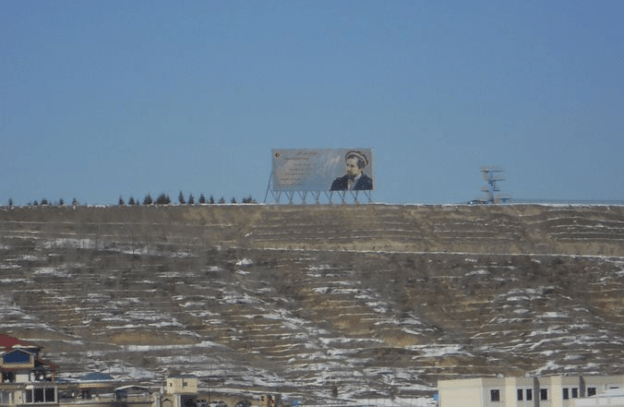
It was a gloriously sunny day, clear blue skies, with not a hint of cloud or haze. So much so that I could see, for the first time, the little houses built on the denuded slopes of the Hindu Kush.
I had no idea that Hindu Kush actually means Hindu Slaughter. I need to do more research about this.
So, two days ago I was up by 6:30am and by 7:45am we were all in 3 vehicles going from Camp X, where I live, to Compound Y, where we work (some of us live and work in the same sites, which can become quite onerous. Can you imagine having breakfast, lunch and dinner with the same people you work with day in and day out? For a year or two or more?).
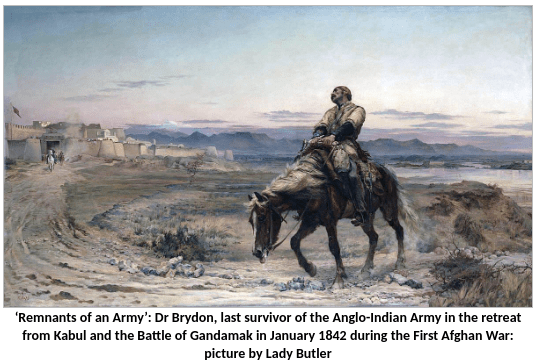
Compound Y is situated in the most exclusive neighborhood of Kabul. It consists of villas walled in. It is no different than all the other villas around (some held by Embassies, others by international organizations, and others by the ministers and sundry government officials). The movie The Kite Runner apparently was filmed in this neighborhood called Wazir Akbar Khan. Wazir Akbar Khan was the leader who fought during the famous First Anglo-Afghan War that ended in a monumental defeat of the British army in Gandamak. At one point the highest governmental award that the Afghan Government could bestow was an eponymous medal.
What is noticeable, though, is that -apparently- all the streets are unpaved, (I cannot tell right now because of the snow), have barriers across them that are always up, and can compete with the rest of the roads in terms of the deep craters that destroy cars. Rumor has it that the residents don’t want these holes repaired because it protects them from nefarious sorts: these craters don’t allow for a quick getaway.
I took the opportunity to go to the roof of my building to take photos of the city and the surrounding mountains, because I was told that it is very, very rare to get such a clear glimpse of the mountains that encircle the city.
I met a young lady, from abroad, with a Masters in Business Administration, who is a “procurement advisor” at a major Ministry and is helping them set up a system for tracking, budgeting for and storing, inventory. She has been in Kabul for 3 years and loves the Afghans and her job.
One of the aims of my program is to train Afghan judges, prosecutors, lawyers and criminal investigators to clinically apply the law. Among the several courses we offer, one lasts 8 weeks, and another 4 weeks. Since 2007 there have been more than 14 thousand individuals trained by us!
Another aspect of the project is to have the Attorney General’s and the Ministry of Justice’s Offices identify promising Afghan lawyers who are then trained for 1 year before sending them to University of Washington’s Law School for a 1 year LLM program. Why University of Washington? Because they have, apparently, the best legal clinic that provides pro bono work for Native American tribes. And this is the closest one can get to understanding the tension between the formal justice sector (courts and the power of the state) and the informal justice sector that handles tribal issues and customary law.
There are so many things that are happening here that one never hears about! I shared a cup of tea with an engineer with the US Corps of Engineers, who has been managing construction projects all around Afghanistan. Example: building generators in remote villages (that have no roads) and that, through the use of little streams, generate the first electricity these people have ever had! They have also built small schools in these small villages, so that, again, for the first time, children have a place to go and sit down to attend classes taught by Afghans who have been trained by the international community.
I share the pics of the mountains that form the Kabul bowl, and you can get a sense for the architecture of the place. We cannot drink the water, so bottles are stored, en masse, everywhere.
And we have a little kitty that sits by the front door of the building.
We are, of course, in a state of alert, and, for good reason, the security task force here takes it very seriously.
I leave you with a comment a wise advisor made to me:
In Afghanistan, 2012 is the Persian year 1390, which, if one compares it to our Western world’s 1390, not much has changed: there are still feudal lords or barons (the Afghan warlords) fighting each other with the vast majority of the people being illiterate serfs.
“Wojtek had the look of a bear but indeed had the heart of a Pole.”
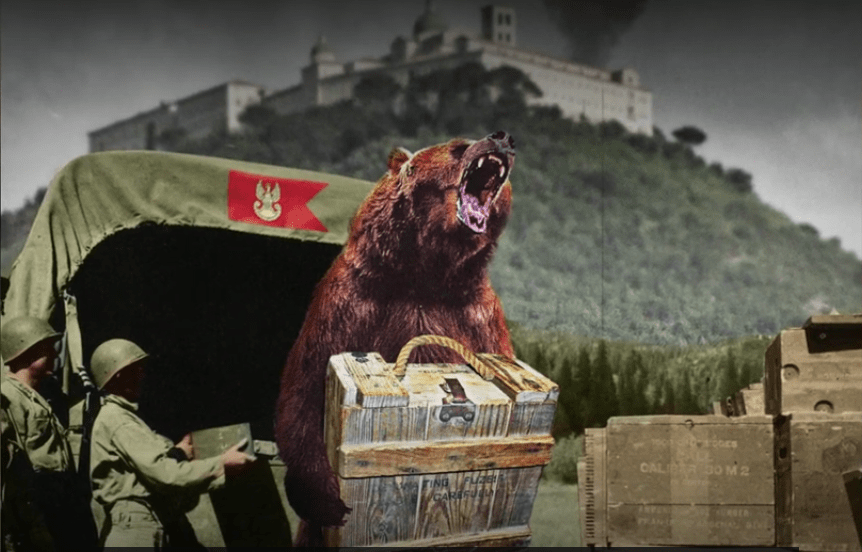
I love learning something new every day, and discovering the story of Wojtek, the Polish bear soldier, was one of the most remarkable surprises I ever had. He was born in Iran, was adopted by the Polish army, lived in Iraq and Egypt among other places, went to Italy and died in Scotland.
A magnificent 500lb military bear, he liked beer and cigarettes! Wojtek’s greatest moment may have been at the Battle of Monte Cassino in 1944.
In order to stay with the Polish Army when they joined the Allied military campaign in Italy, Wojtek was officially enlisted as a private, given a serial number, and was able to remain with his comrades in arms, the Polish soldiers. He not only carried artillery shells and ammunition crates between trucks and troops engaged in combat, but wounded soldiers as well. He received a promotion, to corporal. There was a documentary done about him in 2011.
How many people today remember that the Poles played a crucial role in the battle of Monte Cassino (1943), and that so many of them died there? It was on the fourth assault of the monastery, led by the Poles, that the Germans were defeated. The graveyard in Monte Cassino is numbing, and, in the context of history, it is overwhelming, because it was thanks to this assault that the road to Rome was opened and Rome was liberated 3 weeks later.
One of my favorite French words is “coquelicots“. Nowadays, I think of the jolie coquelicots, The Red Poppies of Monte Cassino, with a sadness and enduring admiration for all who fought there.
Wojtek, the Polish soldier, the bear that had the “heart of the Pole”, became emblematic of the determination and devotion to carry through against all odds, including the ultimate sacrifice.
Poland is a land of contrasts, incredible beauty, sad history, and unique resilience. Driving from the Czech Republic to Warsaw, it is easy to understand why it is a land that has been ravaged by enemies from all over… It is largely flat, like the pampas of Argentina.
While Prague is a magical city, that basically remained intact, Warsaw is a ravaged city (more than 85% of it was razed to the ground in World War II) that rebuilt itself from the smoldering ruins catapulted by the retreating Germans and gleefully observed by the Soviet army across the river.
Many have forgotten the cruelty that the Poles experienced 60+ years ago. But when you live in Poland, it is palpable (every street corner or so has a plaque memorializing the execution of Polish citizens by the Nazi Germans –the formula was for one German killed, 10 Poles would die-).
The Poles are a proud people, and rightly so. After all, the Poles were the only Europeans to mount a counterattack within its occupied country. It is amazing how little anyone knows of this uprising. People in general confuse it with the Jewish Ghetto uprising. The Poles are perplexed that the world doesn’t know that about 200,000 Poles died in the Warsaw uprising.
While there were some resistance movements among occupied European nations, none rose to the level of the Poles. How many people today remember that the Poles played a crucial role in the battle of Monte Cassino (1943), and that so many of them died there? It was on the fourth assault of the monastery, led by the Poles, that the Germans were defeated. The graveyard in Monte Cassino is numbing, and, in the context of history, it is overwhelming, because it was thanks to this assault that the road to Rome was opened and Rome was liberated 3 weeks later. There is a sad last stanza of a famous Polish poem, dedicated to those who shed their blood in the battle for Monte Cassino:
D`you see this row of white crosses? Polish soldiers did honour there wed. The further you go, the higher, The more of such crosses you’ll meet. This soil was won for Poland, Though Poland is far away, For Freedom is measured in crosses When history from justice does stray.
But I digress… As I said, Poland is a land of contrasts and, in many ways, it is a land that puts many of us to shame. Beginning in early November, we have no real sunny days in Warsaw. In fact, the sun may shine a few hours a couple of days, but, for the most part, the days are gray, cold, and very short. Sunlight creeps its way around 8AM and decides to disappear by 3:30PM. Luckily, the rainy days soon give way to snowy days. One has to have a happy heart, and a strong backbone, not to be depressed or enter into a state of perennial hibernation during the winter months. It takes great effort to get up in the morning and be ready to go.
I cannot help but be reminded every single time I walk through the streets of Warsaw that this is a city that, against all odds, fought the Germans only to be stomped by the Soviets, and had more than 85% of its buildings razed to the ground only to be re-built, brick by brick. There is not one Pole who has not said to me that theirs is an ugly city that it cannot compare to other cities, especially Prague, in its beauty. In many ways, it is true that you cannot compare Warsaw to Prague. Prague is a small jewel that reminds the visitor that sometimes time can stay still. Warsaw, on the other hand, screams out -at least to me- that no matter how horrible life turned out for the Poles, they defied their state in life and literally came up from the ashes.
I cannot help but be awed by the Poles, when I think of all the beautiful spots on Earth that I have seen or lived in, where the weather is beautiful, the sun shines all the time, where food grows wild, without the harshness of the cold, and yet everybody complains about everything, that their problems are caused by “them” and never by “us”.
The amazing thing for me is how little we have ever been taught about Poland, and how quickly the world forgot what Poland went through.
In a Kafkaesque moment, I had a young Russian telling me that she found Warsaw ugly, with all the dull gray buildings (built under communism), and that, compared to a Budapest or a Prague or a Paris, it was a hideous city. Some chutzpah! I just sat there, looking at her a bit wild-eyed, and tersely mentioned to her that, of course, the city had been all but destroyed by the retreating Germans, adding that the destruction had been done while the Russians watched across the Vistula river, and that communism’s legacy in the architectural field left a lot to be desired (the same hideous panelak buildings are seen all over Russia and Europe, especially in those countries that were enamored of social planning…the barren projects in Paris where the Muslim youth rioted come to mind).
Taking the train all the way to the Baltic Sea, I often visited the largest Gothic fort in the world, that was the seat of the Teutonic Knights, those pesky Crusaders who were invited to come to Poland by a Polish king, and overstayed their welcome by a couple of hundred years. Malbork Castle is a beauty, and it is astonishing to see how efficient in their engineering ingenuity these knights were. They actually had central heating!
I’m sure the Germans who returned during WWII truly enjoyed their stay there, recapturing -so to speak- what they believed was rightfully theirs… Unfortunately, half of Malbork had to be re-constructed after the war. Today, it is a UNESCO protected spot.
An hour or so away from Malbork is the city of Gdansk, the birthplace of Solidarity. It is a marvelous city and the architecture is delightful.
Visiting the boatyard, where Lech Walęsa became famous, I had a mixture of emotions… Shock at how much has happened in such a short time; admiration at what a few individuals were able to do against the odds; awe at the mystery of what makes people leaders for a good cause; sadness at how quickly we all forget what the world was like before Pope John Paul II and Solidarity; and happiness knowing that Poland finally after WWII and the Cold War is now enjoying what it should have had after V-day and did not.
So, echoing the Gdansk exhibit, it was thanks to Solidarity (with the Pope’s blessing, when he told them not to be afraid) that Hungary, Czechoslovakia, Latvia, Lithuania, Estonia, Bulgaria, Romania, Croatia, Serbia & Montenegro, Albania, Moldova, Slovenia, Macedonia, Georgia, Ukraine are free from the communist yoke. The Poles started it all! I did not know that the famous gigantic ballpoint pen that Walęsa had used to sign the agreement with General Jaruzelski to end the strike had a big photo of the Pope. The influence of this man on the Poles, as well as the impact of Catholicism in the lives of the Poles, are monumental and I believe it is what keeps the Poles forging ahead with patience and optimism, against all odds.
It is also what annoys the rest of Europe about them as well, because Europeans have lost their Christian roots.
The crooked house in Sopot
Malbork Castle
A Teutonic Knight
Gdansk
Lech Walęsa helps a suffering Jesus on the way to Golgotha
I have just discovered this Russian television miniseries “In the First Circle”, which is based on Solzhenitsyn’s Gulag Archipelago, and Solzhenitsyn himself was the playwright and narrator. I just finished watching it, and it is fascinating.
Many years ago, I had discovered a Russian film adaptation of Alexander Solzhenitsyn’s autobiographical novel “In the First Circle”. And, before I could watch it, life hurried by me, and I forgot all about it.
While perusing old musings of mine, I found my reference to this gold nugget of a Russian TV miniseries in my defunct blog. I finally started watching it a couple of nights ago and went through the ten 45-minute episodes in two sittings.
It is profoundly beautiful, poignant, sad and, despite the anguish presented, it is deeply hopeful and redemptive. No wonder! Solzhenitsyn himself worked on the adaption of his novel for the series, and wrote its screenplay.
It is a 2006 beautiful series directed by Gleb Panfilov, who had been thinking of adapting Solzhenitsyn for over 30 years. The music score is perfection. The composer, Vadim Bibergan’s romance at the end evoked memories of Ashokan Farewell of Ken Burns’ Civil War series.
The actors are amazing in their portrayals of the characters, and how I wish I knew Russian well enough to understand the intricacies of the dialogue. Their eyes, their faces capture the turmoil of a disastrous time in Russia and the moral dilemma they all face, whether victim or foe, while attempting to survive under a draconian and unjust episode of history.
The portrayal of the eternal conflict between good and evil and the moral choice between escaping horror and inhumanity and not compromising one’s own principles and conscience is deeply moving.
While some people hate all things Russian nowadays, it is interesting to note that Solzhenitsyn himself was half Russian and half Ukrainian.
The English subtitles are not optimal. For those who have never heard of Solzhenitsyn or have not read the book, it might be frustrating initially. Give it more than 15 minutes.
This is not your typical boom-boom/ka-boom series. It is not a documentary, although Stalin seems so real in the film! It is a lyrical series, with intertwining historical and philosophical dialogue that invites retrospection.
Am sharing because I found it to be a gem of a film. I am still searching for my own “ataraxia”. Come to think of it, I did not realize that it was “ataraxia” I was chasing, until I delved into In The First Circle!
“They could look forward to nothing but the worst. Yet in their hearts they were at peace with themselves. They were gripped by the fearlessness of people who have lost absolutely everything-such fearlessness is difficult to attain, but once attained it endures.” In the First Circle.
On May 8, 2009 I discovered Ramblings from a Painter, a painter’s ramblings of his Iraq military tour of duty. At the time I had noted in my defunct old blog that artist Skip Rhode had a wonderful gift, and made some ugly landscapes look delightful! For example, his painting of a Containerized Housing Unit or CHU (a shipping container used for living quarters by the US military in Iraq and Afghanistan) makes it seem inviting and cozy.
What got my attention was just how normal these drawings are. They could have been done by any kid in the United States. Here are happy families with little houses in the countryside with flowers and trees and puffy clouds. I’m not quite sure what that thing is in the sky in the bottom picture – a bird? a bug? – but for sure it isn’t threatening. All the figures have big happy smiles on their faces. These are happy drawings from happy kids.
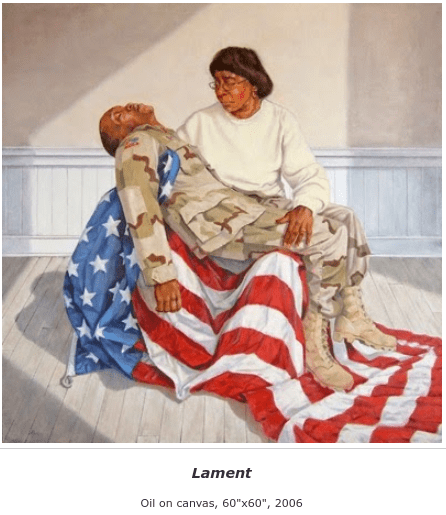
Lament, the Pietà-like painting above, evokes a sorrow, an anguish that is hard to fathom. It is the inescapable grief of a Mother who has lost her son, seemingly forever. The Mother’s pained look displays some determination, in my humble opinion. This Lament makes me think that she is a woman of faith, so that beyond the sadness there is a glimmer of hope.
What a poignant painting that encapsulates the senseless horrors of feckless times.
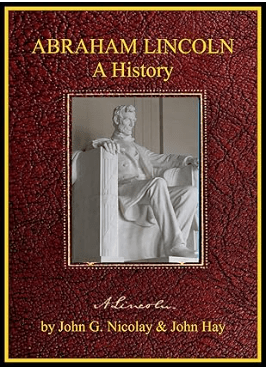
Authored by Lincoln’s two private secretaries, this massive work has been described by Lincoln historians as a “most complete biography”
A good man, my brother. I am his older sister. I carry “old” memories of days gone by, of family lore, of some of the old matriarchs and patriarchs who are no more.
He is a true intellectual. He knows more about Abraham Lincoln, history, philosophy, theology, the law, than anyone I have ever met.
The sophists I know, and have been associated with for years, have no clue of the depth of his knowledge and the extent of his work, because my brother doesn’t brag, is not a know-it-all, and is unassuming and humble beyond belief. The sophists always think they are too clever and know more. Experts on everything. Ruperts the Experts, as the Spaniards like to say. HAH. Not really. They are parochial fools.
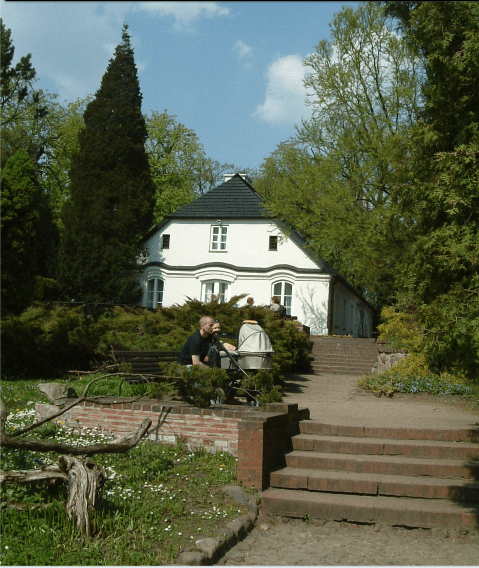
My brother has taken care of me in my most dire moments. He was with me at the worst of times when we were used and duped by fools, and at the best of times, when we celebrated Chopin in Poland and my nephew’s coming of age.
Lo and behold, chatting with my brother this summer, I discovered he had edited the 10 volumes and had published the set through his Lex de Leon Publishing house! It was a labor of love, done in his spare time (he has a busy law practice) and it took him about 10 months to edit and re-introduce a historical record. Lex de Leon Publishing has already sold almost 1,000 copies of the 10-volume set. Not bad for a “hobby”!
He and I read a blog written by a former Constitutional Law professor, Ann Althouse, and coincidentally, she discussed the latest book she was reading and noted:
His “beach book” for the season was Nicolay and Hay’s Abraham Lincoln: A History, in ten volumes. Unfazed, he read it straight through, along with his usual supply of dime novels and periodicals.
My curiosity was piqued, because in the Spring I had been reading reviews about Morris’ Theodore Roosevelt biography and was considering getting it as a Christmas present for someone who loves history.
Originally published in 1890 by The Century Co. (New York) as a ten-volume account of the life and times of Abraham Lincoln, this kindle edition includes all ten volumes fully edited with a linked comprehensive table of contents and a linked table of contents for each of the ten volumes. There are over 4,600 linked endnotes, consisting of the original footnotes and side notes (marginalia) found in the 10-volume hard copy. It also includes over 365 original illustrations and maps, all uniformly sized and edited.
I am sharing this because I am proud of my younger brother!
Some of the things that have amazed me about Poland: A vignette.
I had been listening to the radio and the music score of the movie The Great Escape was playing. What a score! It always makes me feel good. Yet, this time, it triggered some memories.
Many years ago I did have my Great Escape encounter. I could understand the frustration of the then survivors of the horrific event to realize that most people would only recall what happened 65 years earlier through a fictionalized account of the real feat, starring Steve McQueen, who played a character that presumably was an amalgamation of many of the heroes who were murdered by the Nazis.
The movie, to this day, is still one of the most entertaining and chilling portrayals of World War II incarcerations and man’s longing to be free from brutal restraint. But it is Hollywood. Based on a real event, Hollywood took liberties. There was no Steve McQueen character in real life.
Yet, despite the tale woven out of real events, the basic story told was true.
All the real life characters who were involved in the daring escape, and subsequently executed by the Nazi Germans, are buried in a beautiful and serene cemetery in Poland: in Poznan, to be exact.
I walked through the cemetery with my young daughter and spent a long time finding the grave of the main character of that feat, Roger Bushell, and regaled her with some of the facts that I had learnt along the way. What a hero and what an ill-fated deed.
I have always found solace in the peaceful beauty of a wonderful landmark in my neck of the woods, the little Catholic Chapel called Our Lady of Holy Hope in Castine. It is unpretentious but commands a most spectacular view. Someone once made a disparaging comment that it was an afterthought built for the “help” of the more affluent citizens of the town. Maybe. But I have my doubts.
The little Church sits where Fort Pentagoet was, and an old plaque inscribed in Latin showed that the French had built it. “A University of Maine archaeological team recently established that a Catholic chapel was originally built by the French in 1635 on the site of the present Our Lady of Holy Hope chapel in Castine. From all indications this mission was one of the first in Maine and in the United States.”
I have gone to this place many a time to think, meditate, ponder about the joys and vicissitudes of life, feel closer to my parents and other dead relatives, and reflect on the role that the French Catholic priests of the day played in establishing relationships with the indigenous population.
In fact, it was a Jesuit priest, Father Sebastien Râle, who spent most of his life among the Abenaki, who produced an Abenaki-French dictionary that is recognized as an opus because it helped preserve the language.
I perused that dictionary and it is why I came up with the name “K’chi Casco” for our little farm (meaning Great Heron).
Earlier on a breezy summer day, wondering when or if children and grandchildren might visit, fishing and hiking trips might end, thinking about the University of Maine end-of-summer picnic we were hosting, anticipating an upcoming trip to Europe to reunite with friends (and how I hate to fly, which is a real curse for me), I came across the two sailing ships. Lo and behold, thank God for the phone. I caught them competing with each other and then the Cross providing a magnificent frame…(I think so!).
And now, uploading these photos, I remembered an ancient song based on Charles Kingsley‘s poem, that I had learnt as a kid, thanks to my formidable Great-Aunts, who were steeped in old English literature and lore. I used to sing it with them, and it was the saddest of tunes and lyrics.
However, one day, when I was 10 or so, I heard a young Joan Baez singing it mournfully like a loon, the way I thought ought to be sung. I still do.
I sometimes wonder if I am the only one who takes these labyrinthine journeys through the memories in my heart and mind.
Three fishers went sailing away to the West, Away to the West as the sun went down; Each thought on the woman who loved him the best, And the children stood watching them out of the town; For men must work, and women must weep, And there's little to earn and many to keep, Though the harbor bar be moaning.
Three wives sat up in the lighthouse tower, And they trimmed the lamps as the sun went down; They looked at the squall, and they looked at the shower, And the night-rack came rolling up ragged and brown. But men must work, and women must weep, Though storms be sudden, and waters deep, And the harbor bar be moaning.
Three corpses lay out on the shining sands In the morning gleam as the tide went down, And the women are weeping and wringing their hands For those who will never come home to the town; For men must work and women must weep, And the sooner it's over, the sooner to sleep; And goodbye to the bar and its moaning.
PROLOGUE: Because I thrive on music and philosophy and an insatiable curiosity (my own Balm of Gilead), and am trying to make sense of the river of life, I discovered a little slice of what I wrote in my now defunct blog on July 19, 2010, which I thought I would share. Am re-constructing my blog, which used to be a repository of things that maybe some of my friends and family and colleagues would have found of interest. So, here it goes, with a couple of updates:
————————————————–
What a lovely way to perpetuate the legacy of a young musician and composer, Gideon Klein, whose life was destroyed in the German concentration camps of World War II. Thrice he wrote in a letter smuggled out of Auschwitz, “Don’t Forget About Me.” How many of us have had this thought?
Birkenau, or Auschwitz II, is where all the Jews from the Terezin Ghetto were sent. Terezin is also known for the devastating loss of children… Among the many who perished in Auschwitz and other extermination camps after having “transited” in Terezin was Peter Ginz, an 11-year old boy, who drew his vision of travel in space in the early 1940’s. Ironically, his drawing survived him; it eventually ended up in the national museum in Israel.
It was a replica of this particular drawing that Ilan Ramon, the Israeli astronaut who died in the Columbia shuttle accident, took with him on his fateful journey. More than 50 years after this boy’s life was snuffed, this replica was destroyed in an overwhelmingly dramatic accident, a terribly sad tribute to the boy’s violent death! Amazingly, the shuttle flight happened on February 1, 2003: Peter Ginz would have celebrated his 75th birthday.
Below is a short video from Radio Free Europe/Radio Liberty that attests that despite his short life, Gideon Klein was never forgotten. Watch this special short story – it is so poignant:.
“Terezin’s Musical Legacy: A recent Prague Spring concert honored musicians and artists in the Terezin concentration camp who died in the Holocaust. Terezin Music Foundation founder Mark Ludwig pays special homage to composer Gideon Klein, who died aged 26.”






 Dum Spiro Spero