Afghanistan: Reflections of a Not-so-Long Ago Era
Someone asked me about my legal work involving Afghanistan. Her question triggered old memories of an enthralling time that appears to have been lost, at least for a while. However, my propensity for keeping diaries and writing e-mails and letters, developed during elementary school in Buenos Aires, preserved memories of my impressions visiting and working in Kabul a decade ago.
I was new to the country, but an old hand in what we used to call “development work in the Rule of Law”. What follow are my personal impressions, as written then, updated with a couple of edits. All the work mentioned here can be found in the myriad of inspection reports, evaluation reports and other documents that the US Government makes available to the public.
February 17, 2012:
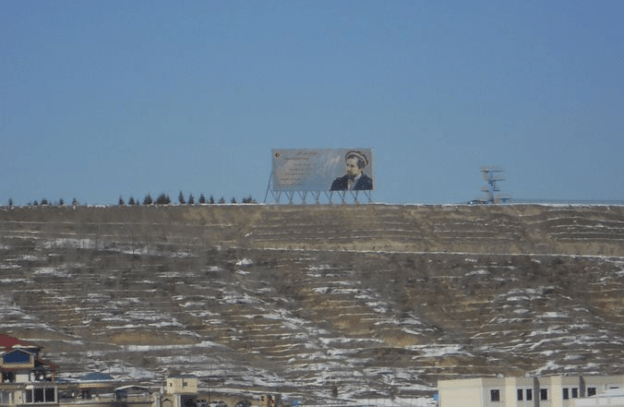
It was a gloriously sunny day, clear blue skies, with not a hint of cloud or haze. So much so that I could see, for the first time, the little houses built on the denuded slopes of the Hindu Kush.
I had no idea that Hindu Kush actually means Hindu Slaughter. I need to do more research about this.
So, two days ago I was up by 6:30am and by 7:45am we were all in 3 vehicles going from Camp X, where I live, to Compound Y, where we work (some of us live and work in the same sites, which can become quite onerous. Can you imagine having breakfast, lunch and dinner with the same people you work with day in and day out? For a year or two or more?).
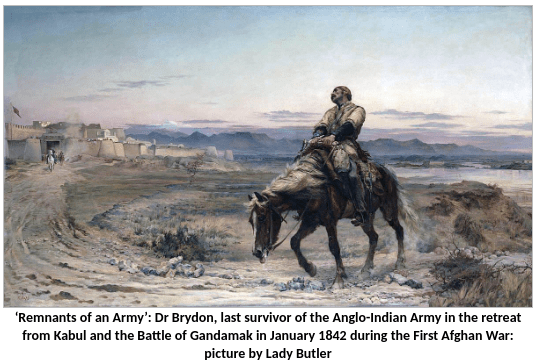
Compound Y is situated in the most exclusive neighborhood of Kabul. It consists of villas walled in. It is no different than all the other villas around (some held by Embassies, others by international organizations, and others by the ministers and sundry government officials). The movie The Kite Runner apparently was filmed in this neighborhood called Wazir Akbar Khan. Wazir Akbar Khan was the leader who fought during the famous First Anglo-Afghan War that ended in a monumental defeat of the British army in Gandamak. At one point the highest governmental award that the Afghan Government could bestow was an eponymous medal.
What is noticeable, though, is that -apparently- all the streets are unpaved, (I cannot tell right now because of the snow), have barriers across them that are always up, and can compete with the rest of the roads in terms of the deep craters that destroy cars. Rumor has it that the residents don’t want these holes repaired because it protects them from nefarious sorts: these craters don’t allow for a quick getaway.
I took the opportunity to go to the roof of my building to take photos of the city and the surrounding mountains, because I was told that it is very, very rare to get such a clear glimpse of the mountains that encircle the city.

I met a young lady, from abroad, with a Masters in Business Administration, who is a “procurement advisor” at a major Ministry and is helping them set up a system for tracking, budgeting for and storing, inventory. She has been in Kabul for 3 years and loves the Afghans and her job.
One of the aims of my program is to train Afghan judges, prosecutors, lawyers and criminal investigators to clinically apply the law. Among the several courses we offer, one lasts 8 weeks, and another 4 weeks. Since 2007 there have been more than 14 thousand individuals trained by us!
Another aspect of the project is to have the Attorney General’s and the Ministry of Justice’s Offices identify promising Afghan lawyers who are then trained for 1 year before sending them to University of Washington’s Law School for a 1 year LLM program. Why University of Washington? Because they have, apparently, the best legal clinic that provides pro bono work for Native American tribes. And this is the closest one can get to understanding the tension between the formal justice sector (courts and the power of the state) and the informal justice sector that handles tribal issues and customary law.
There are so many things that are happening here that one never hears about! I shared a cup of tea with an engineer with the US Corps of Engineers, who has been managing construction projects all around Afghanistan. Example: building generators in remote villages (that have no roads) and that, through the use of little streams, generate the first electricity these people have ever had! They have also built small schools in these small villages, so that, again, for the first time, children have a place to go and sit down to attend classes taught by Afghans who have been trained by the international community.
I share the pics of the mountains that form the Kabul bowl, and you can get a sense for the architecture of the place. We cannot drink the water, so bottles are stored, en masse, everywhere.

And we have a little kitty that sits by the front door of the building.

We are, of course, in a state of alert, and, for good reason, the security task force here takes it very seriously.
I leave you with a comment a wise advisor made to me:
In Afghanistan, 2012 is the Persian year 1390, which, if one compares it to our Western world’s 1390, not much has changed: there are still feudal lords or barons (the Afghan warlords) fighting each other with the vast majority of the people being illiterate serfs.
 Dum Spiro Spero