Poland, a Mystical Land.
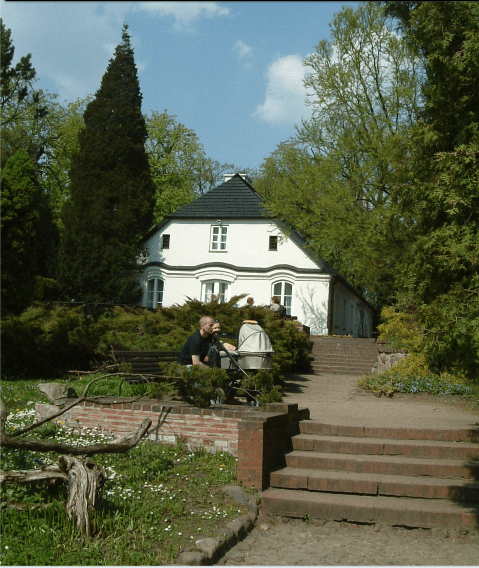
Poland is a land of contrasts, incredible beauty, sad history, and unique resilience.
Driving from the Czech Republic to Warsaw, it is easy to understand why it is a land that has been ravaged by enemies from all over… It is largely flat, like the pampas of Argentina.
While Prague is a magical city, that basically remained intact, Warsaw is a ravaged city (more than 85% of it was razed to the ground in World War II) that rebuilt itself from the smoldering ruins catapulted by the retreating Germans and gleefully observed by the Soviet army across the river.
Many have forgotten the cruelty that the Poles experienced 60+ years ago. But when you live in Poland, it is palpable (every street corner or so has a plaque memorializing the execution of Polish citizens by the Nazi Germans –the formula was for one German killed, 10 Poles would die-).
The Poles are a proud people, and rightly so. After all, the Poles were the only Europeans to mount a counterattack within its occupied country. It is amazing how little anyone knows of this uprising. People in general confuse it with the Jewish Ghetto uprising. The Poles are perplexed that the world doesn’t know that about 200,000 Poles died in the Warsaw uprising.
While there were some resistance movements among occupied European nations, none rose to the level of the Poles. How many people today remember that the Poles played a crucial role in the battle of Monte Cassino (1943), and that so many of them died there? It was on the fourth assault of the monastery, led by the Poles, that the Germans were defeated. The graveyard in Monte Cassino is numbing, and, in the context of history, it is overwhelming, because it was thanks to this assault that the road to Rome was opened and Rome was liberated 3 weeks later. There is a sad last stanza of a famous Polish poem, dedicated to those who shed their blood in the battle for Monte Cassino:
D`you see this row of white crosses?
Polish soldiers did honour there wed.
The further you go, the higher,
The more of such crosses you’ll meet.
This soil was won for Poland,
Though Poland is far away,
For Freedom is measured in crosses
When history from justice does stray.
But I digress… As I said, Poland is a land of contrasts and, in many ways, it is a land that puts many of us to shame. Beginning in early November, we have no real sunny days in Warsaw. In fact, the sun may shine a few hours a couple of days, but, for the most part, the days are gray, cold, and very short. Sunlight creeps its way around 8AM and decides to disappear by 3:30PM. Luckily, the rainy days soon give way to snowy days. One has to have a happy heart, and a strong backbone, not to be depressed or enter into a state of perennial hibernation during the winter months. It takes great effort to get up in the morning and be ready to go.
I cannot help but be reminded every single time I walk through the streets of Warsaw that this is a city that, against all odds, fought the Germans only to be stomped by the Soviets, and had more than 85% of its buildings razed to the ground only to be re-built, brick by brick. There is not one Pole who has not said to me that theirs is an ugly city that it cannot compare to other cities, especially Prague, in its beauty. In many ways, it is true that you cannot compare Warsaw to Prague. Prague is a small jewel that reminds the visitor that sometimes time can stay still. Warsaw, on the other hand, screams out -at least to me- that no matter how horrible life turned out for the Poles, they defied their state in life and literally came up from the ashes.
I cannot help but be awed by the Poles, when I think of all the beautiful spots on Earth that I have seen or lived in, where the weather is beautiful, the sun shines all the time, where food grows wild, without the harshness of the cold, and yet everybody complains about everything, that their problems are caused by “them” and never by “us”.
The amazing thing for me is how little we have ever been taught about Poland, and how quickly the world forgot what Poland went through.
In a Kafkaesque moment, I had a young Russian telling me that she found Warsaw ugly, with all the dull gray buildings (built under communism), and that, compared to a Budapest or a Prague or a Paris, it was a hideous city. Some chutzpah! I just sat there, looking at her a bit wild-eyed, and tersely mentioned to her that, of course, the city had been all but destroyed by the retreating Germans, adding that the destruction had been done while the Russians watched across the Vistula river, and that communism’s legacy in the architectural field left a lot to be desired (the same hideous panelak buildings are seen all over Russia and Europe, especially in those countries that were enamored of social planning…the barren projects in Paris where the Muslim youth rioted come to mind).
Taking the train all the way to the Baltic Sea, I often visited the largest Gothic fort in the world, that was the seat of the Teutonic Knights, those pesky Crusaders who were invited to come to Poland by a Polish king, and overstayed their welcome by a couple of hundred years. Malbork Castle is a beauty, and it is astonishing to see how efficient in their engineering ingenuity these knights were. They actually had central heating!
I’m sure the Germans who returned during WWII truly enjoyed their stay there, recapturing -so to speak- what they believed was rightfully theirs… Unfortunately, half of Malbork had to be re-constructed after the war. Today, it is a UNESCO protected spot.
An hour or so away from Malbork is the city of Gdansk, the birthplace of Solidarity. It is a marvelous city and the architecture is delightful.
Visiting the boatyard, where Lech Walęsa became famous, I had a mixture of emotions… Shock at how much has happened in such a short time; admiration at what a few individuals were able to do against the odds; awe at the mystery of what makes people leaders for a good cause; sadness at how quickly we all forget what the world was like before Pope John Paul II and Solidarity; and happiness knowing that Poland finally after WWII and the Cold War is now enjoying what it should have had after V-day and did not.
So, echoing the Gdansk exhibit, it was thanks to Solidarity (with the Pope’s blessing, when he told them not to be afraid) that Hungary, Czechoslovakia, Latvia, Lithuania, Estonia, Bulgaria, Romania, Croatia, Serbia & Montenegro, Albania, Moldova, Slovenia, Macedonia, Georgia, Ukraine are free from the communist yoke. The Poles started it all! I did not know that the famous gigantic ballpoint pen that Walęsa had used to sign the agreement with General Jaruzelski to end the strike had a big photo of the Pope. The influence of this man on the Poles, as well as the impact of Catholicism in the lives of the Poles, are monumental and I believe it is what keeps the Poles forging ahead with patience and optimism, against all odds.
It is also what annoys the rest of Europe about them as well, because Europeans have lost their Christian roots.


The crooked house in Sopot
Malbork Castle
A Teutonic Knight
Gdansk
Lech Walęsa helps a suffering Jesus on the way to Golgotha
 Dum Spiro Spero