For the Life of Me, I Know for a Fact that I Would Not Like to be Remembered as a Featherless Rooster!
Many a time I reflect on the true meaning of a cultural divide.  It is so much more than one loving cilantro and spicy foods, the other loving bland and simple concoctions.  Or preferring novels to autobiographies.  Or fancying opera to rock and roll. 

We dismiss that cultural divide to our peril.  Sometimes, it can easily be bridged.  But other times, we don’t realize that, while the crack to cross appears narrow, when you get close to it you discover it is an abyss, wider and deeper than expected. 

Take the Argentine tango.  Al Pacino in A Scent of a Woman, Arnold Scharzenegger in True Lies, for example.  The truth is that the famous Argentine singer of yore, Carlos Gardel, composed this song, which actually refers to a gambler losing a horse’s race “por una cabeza”(by just a head)

Today, some would say the Hollywood movies engaged in “cultural appropriation” and some would be crying crocodile tears.  The truth is that beautiful music transcends cultures and is universal.  However, while we all can appreciate the rhythm, the exotic movements, the bandoneon, we might have a harder time fully understanding the meaning behind the lyrics.  

Which leads me to another rumination of mine.  Many times I find that certain melodies, lyrics, stories and poems that I used to love or made me ponder then, were somewhat pointing me to “something” that only now, at this stage in my life, I can finally begin to understand.  

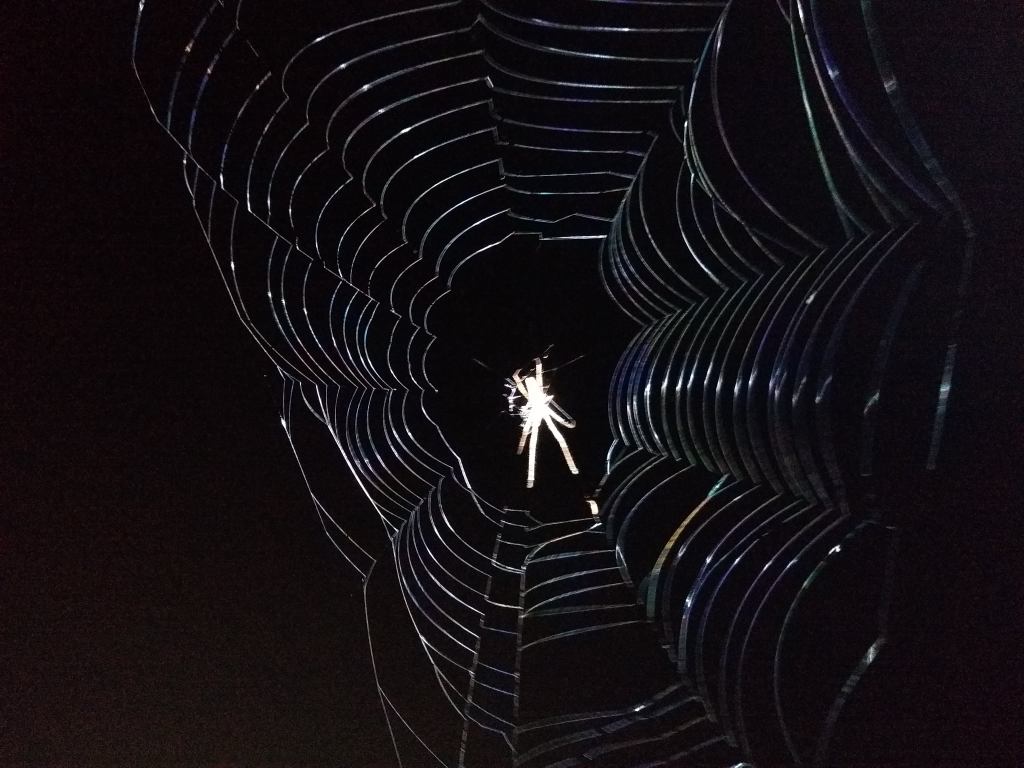
Were they part of what I call the tender tendrils of the cobweb of life that we don’t see until the sun hits the morning dew on that cobweb and then, BINGO, it appears in all its majesty?  I’ve encountered this phenomenon countless times, ergo my conclusion that we, life, experiences are all linked in some way through those almost unseen tendrils until that light gives me that “Eureka” moment.

Such is the case with vintage Argentine tangos, with lyrics that hit you where it hurts… For example, Esta Noche Me Emborracho (Tonight I get Drunk).

The song, raw and brutal, is the realization that a betrayal brought forth depredation.  That devastation does not end in a “Hah, revenge is best served cold” moment.  It only highlights the horrors of Dorian Gray.  

The tango crooner (Carlos Gardel) cannot handle the awareness that he is now without friends, having lived a wrong and wicked moment, without honor.  And the object of his downfall is devastatingly pitiful. 

Whether man or woman, I think we can understand the angst.  At the end of it all, I guess, when we sow with meanness and lies we reap bitterness, sadness and sorrow, and when reality hits it is but the awareness that its genesis is the grotesque and rotten fruit of an obsessive and wrongful yearning.

Unfortunately, no English translation captures the essence of the words.  You have to understand the language, the slang, the setting, the idiosyncrasies.  However, I merged a couple of translations below, to try and convey the tango’s ferocious punch to the solar plexus. 

And, for the life of me, I know for a fact that I would not like to be remembered as a featherless rooster!

(Talking about bridging cultural divides, thanks to the Smithsonian, I was tickled pink to find out the US honored Carlos Gardel with a Forever stamp!).

Tonight I Get Drunk
(Esta Noche Me Emborracho)

Alone, faded, worn out, 
I saw her this dawn
Leaving a cabaret,

A full yard long of neck and 
A hanger of a neckline under the chin.
Bow-legged, dressed like a young broad, 
Dyed and flirting her nudity.

Seemed like a featherless rooster
Mockingly showing off her pecked hide.

I, that know when I can't take it anymore,
Just ran away from there seeing her like that, 
Trying not to cry.

And to think that ten years ago she was my madness
That I went as far as betrayal for her beauty.
That what is now a wreck
Was my sweetheart, where I lost my dignity.

That nuts for her beauty, I stole my mother's bread
I became mean and sinful.
That I was left without a friend, 
That I lived in bad faith.

That she had me on my knees
Without morals, like a beggar when she left.
I never thought I would see her in a requiescat in pace
As cruel as today.

Look, if it's not to commit suicide, that for that old junk
I was left as what I am now.
Fierce revenge that of time
That makes you see destroyed what you loved.

This encounter has hurt me so much
That if I think about it more, I end up poisoned,
Tonight I get drunk well,
Thoroughly drunk,
So I wont think..

The Broken Nest

Silence everywhere
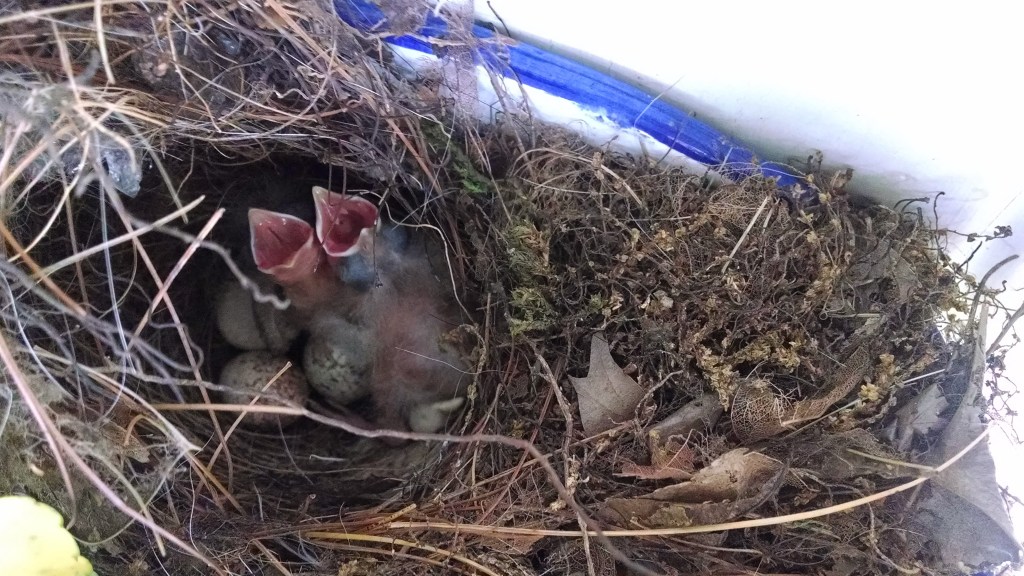
Like that of a birds’ nest bereft of birds
On the bough of a songless tree.
With the lifeless light of the waning moon was now blended
The pallor of dawn
Spreading itself over the greyness of my empty life.
I walked towards your bedroom
For no reason.
Outside the door
Burnt a smoky lantern covered with soot,
The porch smelt of the smouldering wick.
Over the abandoned bed the flaps of the rolled-up mosquito-net
Fluttered a little in the breeze.
Seen in the sky outside through the window
Was the morning star,
Witness of all sleepless people
Bereft of hope.

From “At the Last Watch“.

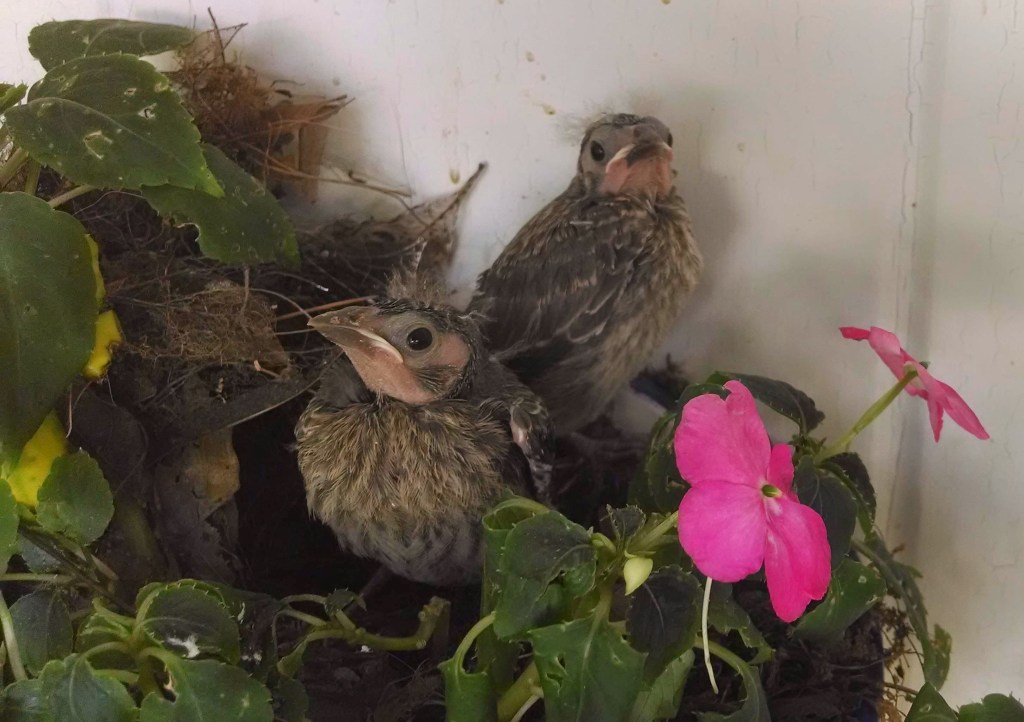
My image of what is a home has always been that of a nest. A carefully protected nest meant to hold fragile beings. I always balked at the idea of having to host individuals of dubious or unsavory character, because I felt the urge to guard my nest against prying eyes, and other ugly intrusions. I was not always successful, and people whom I trusted -or was willing to give them the benefit of the doubt- betrayed my trust, harmed my family, and essentially tried to dismantle my nest. Sometimes, life in the Foreign Service produces some negative personal results. There were some unfortunate incidents abroad. But then, a few nasty surprises also have occurred here at home as well. No one is immune to nefarious behavior.

My Mother kept “mothering” not just her children, but her grand-children as well. And, thanks to her efforts to expose them to what she thought was an important life message, I discovered a rare gem of an author and movie.

My Mother sought to use books and film as a way to expose her grand-children to philosophical, moral, cultural, and historical debate. Ever the perspicacious pedagogue, she realized that movies, accurately chosen, could expand a youngster’s horizon. She undertook this cinematographical pursuit with gusto, and my children were the recipients of her indefatigable research and search for the ultimate examples of the “morals of a story”.

Which brings me back to my strange remembrance of a forgotten author – poet, philosopher, Nobel laureate- of whom I had no deep knowledge. By happenstance, American TV had aired a beautiful Indian film and my Mother recorded it and shared it with us. We were living abroad at the time. The film was based on Rabindranath Tagore‘s novel, Nastanirh or The Broken Nest.

Until that time, I did not know much about Rabindranath Tagore, a friend of Ghandi’s, other than he had been a recipient of the 1913 Nobel Prize in Literature and had visited Argentina, in 1924 before my parents were born. A world famous Argentine poet and writer, Victoria Ocampo, hosted Tagore while he was recovering from influenza, and in their Autumn-Spring differences, they developed a love tenderness, a platonic relationship that resulted in a burst of literary exchanges. To understand this Indo-Argentine experience, the Edinburgh University Press has a fascinating article describing the ethos of the times.

My Mother had read Rabindranath Tagore. In researching about the man and his writings, I can now fully understand why my parents were culturally so immersed in his poetry and prose.

She made us watch the film “Charulata” (The Lonely Wife). I must confess, I was not too keen to watch the movie, since I had seen a few Indian movies in the USSR in the late 1980′s and I just could not relate to them. The USSR primarily showed Indian movies in those days, and I now realize I was too immature to want to spend the time to understand them.

The story of Charulata triggers some odd memories. Why? Because I remember my Mother’s intensity when she told us that it was this author that made her realize that, regardless of culture, when distilling the human essence, one discovers that human beings are all the same, feeling the same passions, suffering the same betrayals. This is not to say that we all behave, morally, the same.

Charulata, the film, transcends cultural barriers. It exquisitely and delicately captures the eternal themes of loneliness, contumacious neglect, good intentions that go awry, the yearning for understanding and compassion and companionship, a budding love affair that transcends consummation, the tenderness and harshness of youth, betrayal, and maybe, maybe, the possibility of redemption.

‘Sesh Basanta’ (The Last Spring)
by Rabindranath Tagore, 1924
You will experience many springs in your life,
Let me beg one of it…
Have no misgivings;
In your blossoming flower garden
I’ll not linger endlessly
Nor look back
When the day ends and it’s time for leave-taking.”

I would like to know that one day my children and grandchildren might remember me for my sprinkling some lyrics, or melody, or story because I sometimes go off on what some believe are tangents going nowhere, though I just see my perambulations as always returning to where I left off, albeit taking a bit of a long and windy way. It’s because I lack my Mother’s wonderful way with quotes of proverbs, poems, and sayings that had a concise application to whatever topic we were discussing.

Of all the memories I have of my Mother, I always return to her dear Charulata movie. Her protection of our nest was paramount. Her fledglings are old birds now. More or less, we have weathered the storms of life. If only I could give my children a legacy such as my Mother’s…

Maine and The Lyrical Toad

No photo description available.

I love my little pond. It was the source of incredible joy for both my Mother in Law and my Father, in their eighties. So, every time I walk around it I feel their presence. It attracts strange characters, between herons, ospreys, kingfishers, snakes, and gazillion frogs.

Sometimes, walking around at night can be beautiful. However, I worry about the coyotes and bears that are too real around here. The Pepe Le Pews I can handle. Skiddle doo. And the porcupines: am ashamed to say I only learnt recently that they don’t hurl the quills; that’s cartoon nonsense. HAH! I believed the cartoons, and am a bit deflated knowing that it was nonsense.

Yet, the big bucks have butted heads with our benches, hurling them into the pond… not once, nor twice… (by the way, all old saltwater little farms in this area must have a pond, because there are no fire hydrants around!).

My Father would stare at the great blue heron and ask me for the umpteenth time: “Barbara, what is heron in Spanish?” “Garza,” I would reply. “Oh, my, watch that garza, how stealthily it walks…” And on and on. How I wish he were here today with me asking the same question, over and over again. I never got tired of it. I loved it.

It is this dear little pond with its many bullfrogs and frogs, that finally made me understand a beautiful Argentine folk song, which I have loved since I was a 7 year old. Because, whenever there is a moon, it rises and reflects on this little pond.

Isn’t it weird that a little pond in the far away North of the USA, close to the Canadian border, helped me fully understand the poignancy of a folk song that originated way, way South, in the southern tip of the Americas, close to Antarctica?

I identify with the toad, and now realize that my melancholy about the lyrical toad song was prescient. Life’s trials and tribulations have confirmed to me that the moon can be cold, because it gave its blood to form the stars, and that life can be dismal if we don’t live it with any hope.

The Lyrical Toad
By Los Chalchaleros

Toad of the night, lyrical toad,
Who lives dreaming next to your lagoon,
Tenor of the puddles, grotesque troubadour,
You're bewitched by your love for the moon.

I know of your life devoid of glory;
And know the tragedies of your restless soul
Likewise, that madness of loving the moon
Is the eternal madness of every poet.

Lyrical toad,
Sing your song,
Because life is dismal
If we don't live it with any hope

You know that you're ugly, ugly and misshapen;
That's why by day you hide your ugliness
And by night you sing your melancholy
And your song resounds as a litany.

Your voices ring out in candid obstinacy;
Your verses are in vain for their striking beauty;
Don't you know, perchance, that the moon is cold,
Because it gave its blood to form the stars?

Lyrical toad
Sing your song,
Because life is dismal
If we don't live it with any hope.


Argentina and Afghanistan: a root discovery.

Meet Argentina’s famous tree:  the ombú (Phytolacca dioica), that conjured in me images of a long-ago childhood, and poems that I did not appreciate -then- the beauty of their cadences. For example, a famous Argentine writer and statesman, wrote an ode to the tree:

Every region of the planet
Has a feature of importance:
Has Brazil its sun of ardor,
Mines of silver has Peru,
Montevideo its hillock,
Buenos Aires, land of beauty,
Has its grandiose spreading pampa,
And the pampa the ombu.

Or, in its original Spanish: 

Cada comarca en la tierra
Tiene un rasgo prominente:
El Brasil, su sol ardiente;
Minas de plata el Pera,
Montevideo, su cerro;
Buenos Aires, patria hermosa,
Tiene su pampa grandiosa;
La pampa tiene el ombú…

The ombú’s magnificence is in its intricate roots and the thick foliage that protects cattle and man alike from the harsh elements.  Yet the tree’s sap is poisonous.

Reconnecting with a friend of mine, whom I had not seen in decades, I discovered -to my amazement – that Afghanistan produces the one root that has medicinal powers and is widely used for flavoring: licorice (Glycyrriza glabra).  In fact, licorice from Afghanistan used to be one of Afghanistan’s biggest exports to Europe and the United States. (Today, doing a cursory search, I could not find much data).

My last journal entry was a hopeful one: “Next time I visit Afghanistan I shall explore more about their abundant and unique root.  In the meantime, I am enjoying reconnecting with the beautiful roots that, in my travels, I have only seen in Argentina:  the ombu’s.”

Imaginary Fears and the “Chantapufi”.

This year alone will end for me, yet again, with many, many experiences with worthless but dangerous “chantapufis”.   I periodically revisit an old journal entry, because I keep encountering these unsavory human beings all the time! So, here it goes:

Chantapufis are totally worthless because their only contribution to society is bullying.  But they are dangerous because, when cloaked under the mantle of authority, they can turn regular decent individuals into cowards and servile vassals.  

The latest example of a chantapufi that I have experienced is an obnoxious type, someone who wields power because of his/her position, who issues “orders” like a master to his dog:  “Come”… And who resents what he/she perceives to be an underling who ought not to have better access to information and/or powerful individuals than he/she.  Yet, as always, when the chantapufi is revealed, he/she crawls back into the shell of isolation, like one of those crabs that move into another crab’s shell.  

I ought to feel benign at this juncture, because I like to think I am a better person.  But, right now, I want to squish the chantapufi like the cockroach that he/she is.  Not very noble nor charitable. Shame on me.

Sometimes we are our own worst enemies, especially when doubt in one’s principles and abilities creeps in. Everyone is prone to tsk-tsk clichés and proverbs and fables alike (though not many seem to have heard of Aesop or La Fontaine nowadays), because they sometimes invoke stereotypes.  But, stereotypes are not necessarily all evil and sometimes they do help identify a certain character or characteristic, based on the cumulative knowledge that we amass through the centuries of experience.

One particular such stereotype is what the Argentines refer to as a “chantapufi”, a slang term that means someone who has no qualms lying or deceiving in order to gain something.  More specifically, it is a person whose word has no value because he or she has no honor.

There are many “chantapufis” in this world, and I have come across them quite often, though -in some cases- it took me a long time to figure some of them as such.  The problem is that these “chantapufis” are hard to decipher initially, because they are master liars and obfuscators. They are very dangerous when they come cloaked in the veneer of reputable professions and organizations.

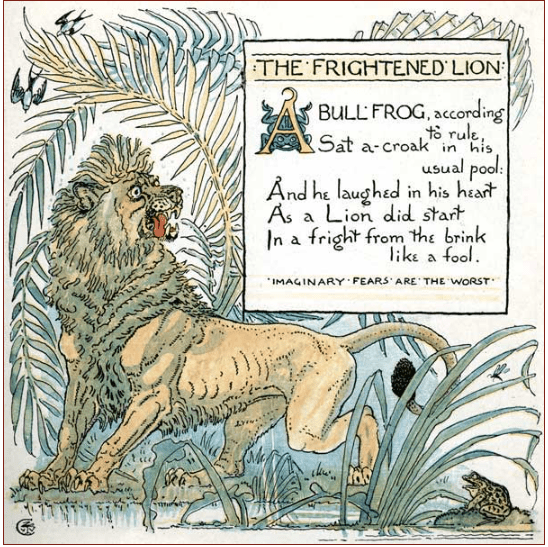
But “chantapufis” will forever be “chantapufis” so, when we are afraid of our imaginary fears, it makes sense to figure out who or what is originating that fear.  If it comes from a “chantapufi”, chances are we are hearing from a charlatan, like the fox in the Aesop’s fable….

The Fox without a Tail, by Aesop

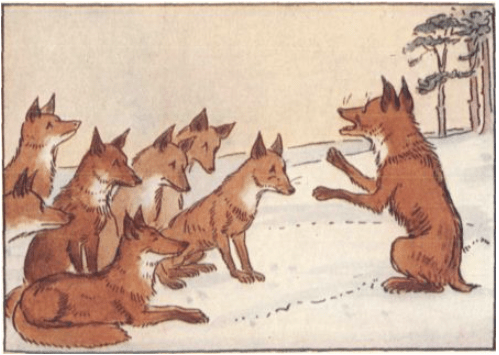
A fox lost his tail in escaping from a steel trap. When he began to go about again, he found that every one looked down upon or laughed at him. Not liking this, he thought to himself that if he could persuade the other foxes to cut off their tails, his own loss would not be so noticeable.

Accordingly he called together the foxes and said: “How is it that you still wear your tails? Of what use are they? They are in the way, they often get caught in traps, they are heavy to carry and not pretty to look upon. Believe me, we are far better without them. Cut off your tails, my friends, and you will see how much more comfortable it is. I for my part have never enjoyed myself so much nor found life so pleasant as I have since I lost mine.”

Upon this, a sly old fox, seeing through the trick, cried, “It seems to me, my friend, that you would not be so anxious for us to cut off our tails, if you had not already lost yours.”

(Journal entry May 5, 2013)