A Masterpiece of My Engineering

Trying to light a fire in the fireplace reminded me of the myriad of recommendations from the various males in my family, none of which I -as a female- ever paid any close attention to, until one night when I tried to have a warm and cozy fire, only to have a thick gray haze of cancer-causing smoke invade the house. Why? The chimney flue was closed.

I could hear the various voices of male ghosts reminding me what an idiot I was.

Don’t you check the flue BEFORE starting a fire????“.

Duh. No. Not really. Not instinctually. I didn’t think of it. I had other things on my mind. Well, I didn’t go to Boy Scouts.

You don’t need to have gone to Boy Scouts. You don’t have to be a genius. It’s just plain common sense. Look at what you’ve done. You can’t breathe here.

Well, we learn from our mistakes. The smoke will dissipate. It’s never too late to learn a lesson. Why make such a big deal? Why can’t we laugh about it? Etcetera, etcetera, etcetera.

As I tried to fix the problem, I smashed my middle finger -blood everywhere- and it was still throbbing, 24 hours later. Tetanus? Well, I had had the shot before going to Kabul.

But a Dillon is never dissuaded. With the throbbing finger to remind me of the previous day’s debacle, I took a flashlight and laid down on my back, with my head inside the fireplace -first put in place more that 200 years ago- , to figure out the flue. I worried about birds, bats, racoons, squirrels. None landed on my face.

I am not an engineer as my nephew and brother-in-law, but, as Plato noted, necessity is the mother of invention. I should note that necessity and stubborness are the mothers of challenge and perseverance and, oh boy, it took me a while, but I did figure out that flue despite it’s broken chains and rusted mechanical gizmos.

The end result was a wonderful sense of accomplishent as I stared at the masterpiece of my engineering, and the satisfaction that the only mockery I heard came from the ghosts of my memory.

A Renascence

Millie having fun with the apples

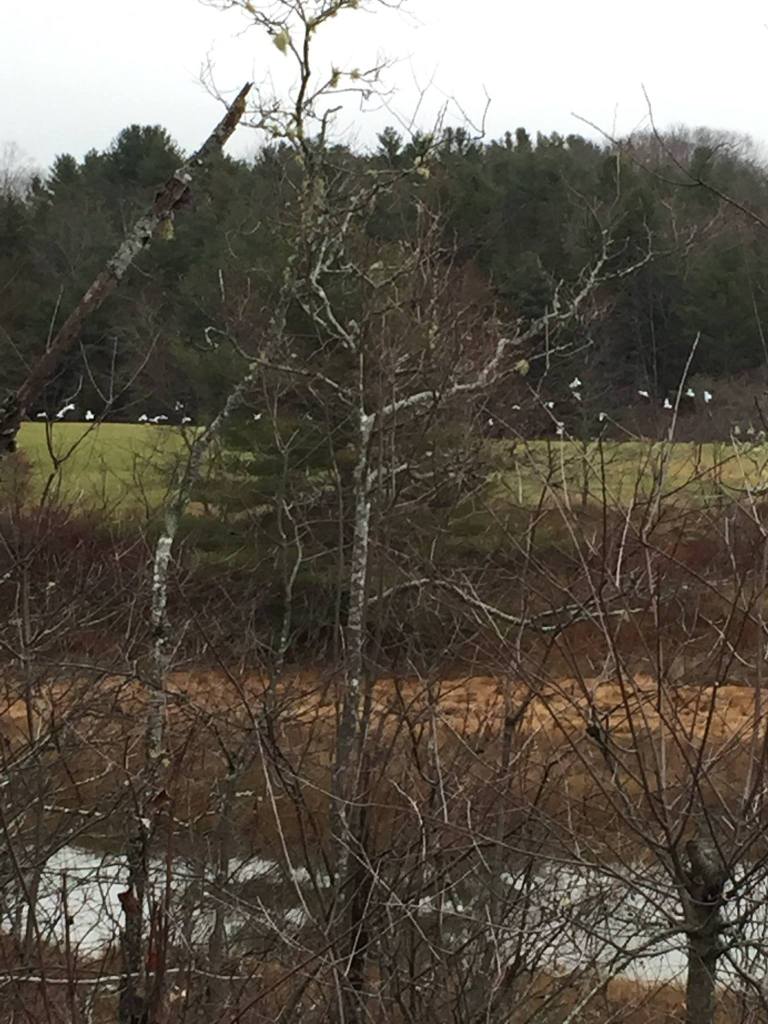
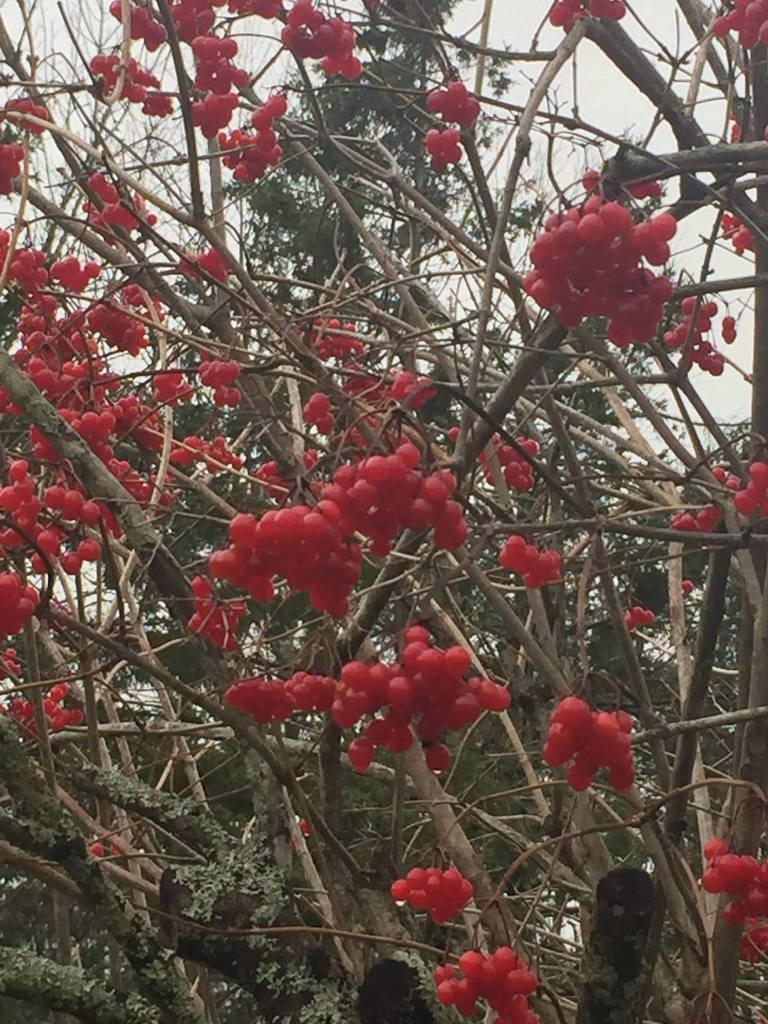
A lifetime ago, November 30, 2016, it was a bit gloomy in Maine. A few berries still sparkled, Millie was a pup having fun with the apples, and a bunch of snow geese were flocking around a little inlet. Millie is older, and other than the pine tree by the water that has grown taller and taller, not much has changed.

I watched a movie the other night about an old man and his daughter, and someone in it quoted this little poem by Edna St. Vincent Millay, which came back to mind as I saw the geese, Millie, and the dormition of the landscape, which lacked a lovely light:

My candle burns at both ends;

It will not last the night;

But ah, my foes, and oh, my friends

—It gives a lovely light!

I realized I had never studied Millay’s poems, and curiosity made me search. I came across one in particular that struck me as providential, and made me think of the magnificence of the rebirth of Notre-Dame de Paris by mere mortals.

Because while it had burnt like a candle, at both ends, I thought how sad it was to see it turn to rubble, or a lonely grave. But just a few years later we are witnessing its majestic “renascence”, a fitting word that the poet reflected on.

All my musings in an hour, all because of a few melancholy and unartistic photos. Go figure. And all because of a little poem!

Flock of snow geese
Growing little pine tree

Etymology or “It’s All Greek To Me”

Ever since I was a little girl I have been enthralled with etymology. Maybe it was studying Latin, which I had to learn in school in Argentina, when I was around 10…for 3 years! I was sick and tired of all the “hic haec hoc” and “amo amas amat” and all the declensions that we had to repeat by rote. It was bad enough to learn Spanish and English verbs. Life seemed complicated then.

All that effort paid off my Senior year of High School in the US. I happened to use the word “triturate” with one of my teachers, and he bet me a steak dinner that it did not exist. I knew I had him. He challenged me in front of many classmates, so I accepted the bet. He went to the dictionary and BINGO I had won. (He never had to deliver on the bet since I ended up leaving the school a few weeks later).

Fast forward to my attempts to communicate in Russian. When I was desperate, I would take a word with a Latin base and give it a Russian accent, and again, BINGO, most times the Russians would understand because there are many Latin-based words adopted into Russian. A few decades later, it was Cyrillic that helped me read menus and train station signs in Greece, so I could maneuver a little and not be a bumbling fool. It came in useful to find the entry and exit signs.

So, recently, I was reading some obscure article, that led me to a fascinating discovery. Well, for me. I know. My mind works in convoluted ways.

It turns out that metabolism, ballistic, emblem, hyperbole, embolism, parable, problem, all these words stem from the Greek word “diaballein”. Same with symbolic -which means to bring together- and diabolic, which comes from “diabolos”, or to tear apart. “Diabolos” is derivative of “diaballein”, which means to throw, scatter, rend asunder, hence the origin of the word “devil”, that derives from “diabolos”.

I am contemplating either getting a Greek/English dictionary just for fun, or spending some time learning Greek. After all, I’m at that stage in my life where they do recommend that you exercise your brain to keep it from atrophying. I certainly can identify with Mr. Portokalos!

Three Avian Musings from Days at The Beach

One day this summer marked a special series of milestones of mythological proportions in my life: for the first time ever, like this vigilant seagull, I was perched completely on my own, staring at a monumental decision that only affects me…no parents, no spouse, no siblings, no children, no grandchildren, no in-laws, no neighbors, no friends, no teachers, no professors, no dogs, no horses, no lambs, no governments, no embassies, no colleagues, no employers, no contractors, no priests nor priestesses, no nothing!

One of my brothers said, “Wow, go get a gerbil!”

I wonder how many philosophical essays have been written while pondering the uniqueness of making such types of decision? After all, to quote Robert Louis Stevenson,

“Everyone, soon or late, sits down to a banquet of consequences.”

You don’t just reap what you sow. You also sow what you reap.

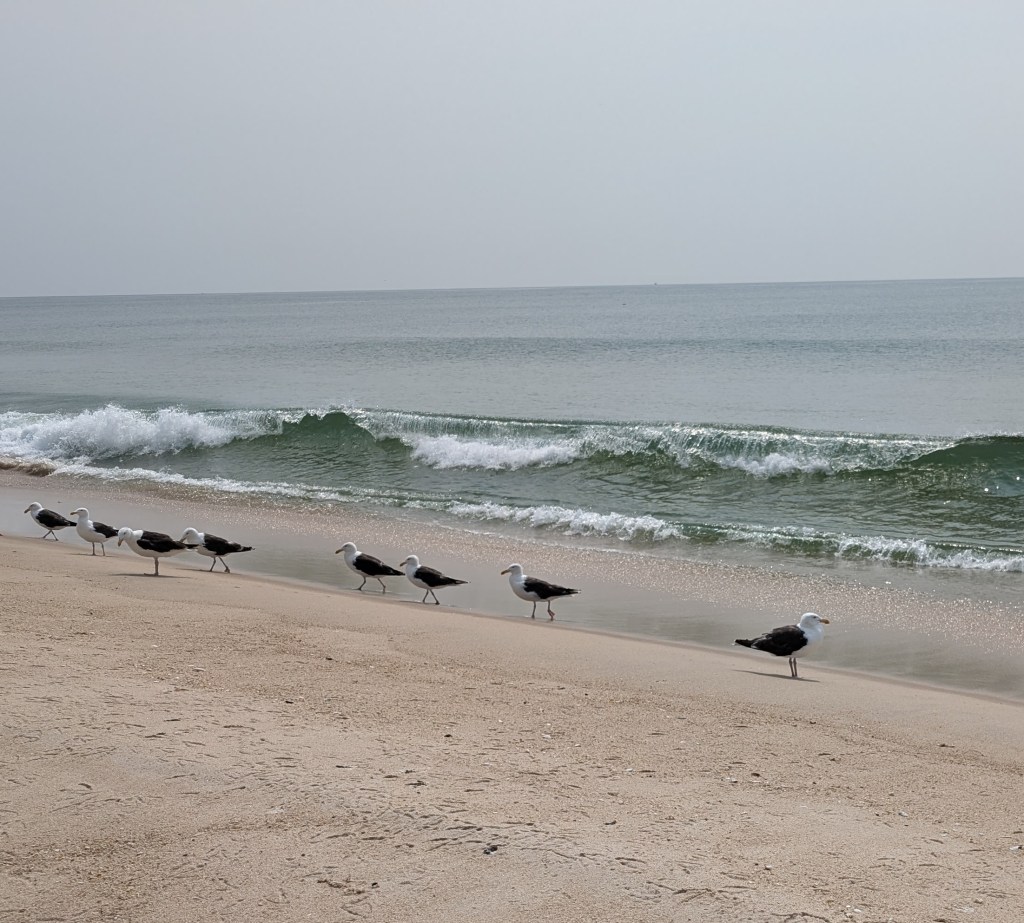
Spending some time in one of the most beautiful beaches around, I came across a colony of seagulls. They didn’t fly away as I walked by. And they gave me food for thought. As I am delving into the Russian authors, I took this photo and thought of Fyodor Dostoevsky:

“Oh, how hard it is to be the only one who knows the truth!”

The more I walked, the more my lovely colony of seagulls made me reflect. Aesop came to mind.

By the way, I didn’t take the shunning personally!!!!!

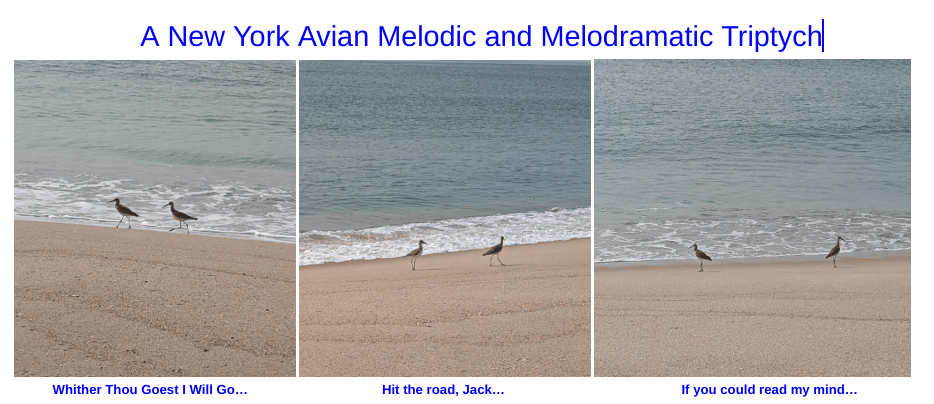
The next day I remembered the New York Avian melodrama above. She flew the coop. Or did she?

Huronia, the Land of Canada’s and North America’s Oldest Christmas Carol

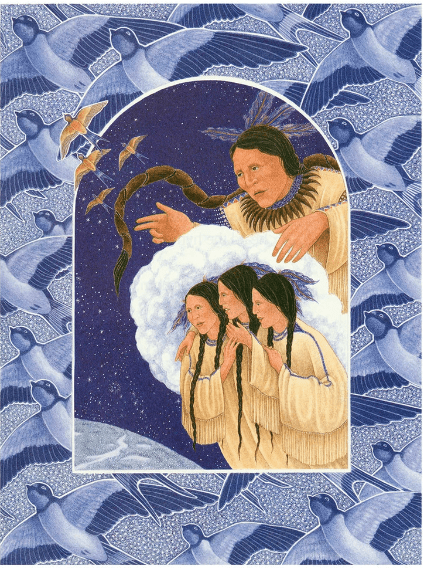
I had long forgotten a delightfully illustrated thin book that I used to read and sing to my children, many moons ago.  It told the story of the Gitchy Manitou

Ah, the cobweb tendrils of my life never cease to amaze me.  I’ve had Québec on my mind for the last couple of months, because it is such a most beautiful city, rich in history, and so near to where I live.

The Sunday before Thanksgiving, I sat in a cold church, and, in the middle of the service, I heard the organist begin a song.  The words and the melody tugged at my memory:  “‘Twas in the moon of wintertime, When all the birds had fled…”  I looked at the program and there it was, The Huron Carol.  

The lyrics of the first Christmas Carol of North America are short and tell a story.  For some it’s a meaningful story.  For others it’s just a tradition that had consequences, bad and good.

However, for me, it was fascinating to discover that the author of this ancient Carol was a French Jesuit priest who hailed from Normandy.  Jean de Brébeuf lived among the Hurons and is recognized as someone who produced so many ethnographic records on the Hurons that his efforts were pivotal in preserving the Huron (Wendat) language.  His accounts were included in a collection of documents referred to as The Jesuit Relations, which are considered an important historical resource. He actually wrote a dictionary, among other things.

Brébeuf paid a dear price for being a missionary.  All accounts (at least the ones I have read) point to his love for the Hurons.  The Hurons’ archenemies were the Iroquois, who destroyed Huronia.  Yet even the Iroquois were so impressed at his bravery in the face of excruciating torture that they ate his heart in a symbolic recognition of his fortitude.  Or so they say.  History is not pretty.  But I can’t help but admire someone who took the time to study and create something that has been acknowledged as a legacy.  

Brébeuf became one of the patron saints of Canada, and, as far as I know, he still remains one, despite modern-day criticisms of how he described some of his encounters with the Hurons.

In my love of etymology, lo and behold, I discovered that Jean de Brébeuf wrote about a game being played among the Hurons in 1636 and it was he who named the game “lacrosse”, because the stick reminded him of a bishop’s shepherd’s staff or crozier.  

The Huron Carol, or Jesous Ahatonhia, beautifully illustrated by Frances Tyrrell, was published in 1991, and sometime soon, after that year, my Mother gave it to my children for Christmas.  They loved the story and the drawings.  It was a gentle introduction to a far away land with familiar concepts.   

At the time, little did my Mother know how one day, 25+ years, a little protestant church in the Blue Hill peninsula of Maine would spark memories of little children, pretty songs, tender memories of Québec, dictionaries and saints. 

The below video was a joint production of the Aboriginal People’s Television Project and the CBC Radio Canada. It aired in 2002.