Well, all I can say is that my daughter Adriana is her Mother’s daughter!. A romantic at heart, a lover of melodic songs, Italian at that!
I laugh because one of the biggest cultural divides I ever faced (and still do) is that I was incessantly mocked for liking French, Italian, Spanish, American, Argentine, Croatian, English and Welsh balladeers of yester year.
I should have been into hard rock. But I never was. Because, although a Boomer by age, I was not culturally a real Baby Boomer, having been raised outside of the USA. I have changed in my old age, and appreciate the old iconoclasts (although I still find Dylan’s voice a bit jarring).
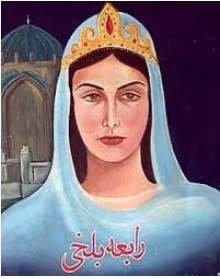
A story of how love still kills in Afghanistan (Author: Nushin Arbabzadah)
Dear Rabia,
I am writing to you across centuries – from the land of the living to the realm of the dead. The year is 2012 and you were murdered exactly a thousand and sixty-nine years ago. You have the dubious privilege of being our first recorded case of honor killing.
I am caught in Love’s web so deceitful None of my endeavors turn fruitful. I knew not when I rode the high-blooded stead The harder I pulled its reins the less it would heed. Love is an ocean with such a vast space No wise man can swim it in any place. A true lover should be faithful till the end And face life’s reprobated trend. When you see things hideous, fancy them neat, Eat poison, but taste sugar sweet.
Rabia Balkhi lived in the 10th century. She fell in love with her brother’s slave. She was imprisoned by her brother and committed suicide after writing the last stanza of her last poem, Love, on her prison wall with her own blood.
There used to be a busy woman’s hospital in Kabul named after the queen. It was supported by the International Committee of the Red Cross (ICRC). The last entry I read about the hospital by the ICRC is from 2022. I can find nothing else. I wonder, what has happened to it? Maybe the Taliban just changed the hospital’s name…
…was one my Father’s recurring refrains, and whenever I stare at the horizon or any body of water deep in thought, it comes back to me bathed in nostalgia, and sometimes with a flash of joy.
In the last year of his life, I remember how he sat on his favorite red leather wing chair, staring deeply into the flames in the fireplace, his big blue eyes lost in thought. When asked “Daddy, what are you thinking?” he would blurt “I am lost in the cradle of the deep”. And that was it. No explanation. Just that.
So yesterday, while I was ruminating about Dante’s circles, I thought of him. And down my rabbit hole I went.
My Father, John Dillon, lost his Father when he was a young 14 year old. The absence of his Father weighed heavily all his life. His Mother, my Grandmother, had worked for RCA Victor in Buenos Aires, and had a collection of old 78s. I believe I found the source of my Father’s saying, although it was not “lost”, but rather, it was “rocked”. The source was an old hymn, the lyrics of which were written by an amazing woman, Emma Willard (1787-1870), of Connecticut.
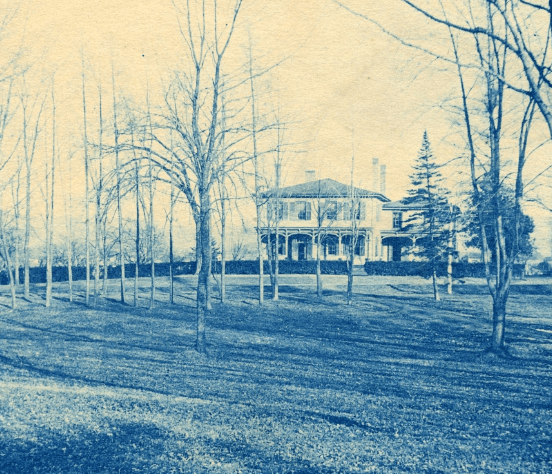
Willard moved to Middlebury, Vermont and had requested to attend classes at Middlebury College, but had been denied the opportunity. A persistent visionary, she was a pioneer in women’s education, and in 1814 started the Middlebury Female Seminary. Irony of ironies, today, her home is the Middlebury College Admissions Office.
Emma Willard’s indefatigable pursuit of women’s education brings to mind my Mother in Law’s own common refrain, of British origin, so in order to rhyme you have to use English pronounciation:
“Patience and perseverance made a Bishop of his Reverence!”
So now, with patience and perseverance, my next project is to edit and publish my Father’s prolific writings which he only did for his children: a history of the Dillons, an autobiography “Don Juan Nadie” (Don Juan Nobody), and a novel “Murder on the Bullet Train”. They are too good to be kept all in the family!
Rocked in the Cradle of the Deep Author: Emma Willard
Rocked in the cradle of the deep, I lay me down in peace to sleep; Secure I rest upon the wave, For Thou, O Lord, hast power to save. I know Thou wilt not slight my call, For Thou dost mark the sparrow’s fall; And calm and peaceful is my sleep, Rocked in the cradle of the deep; And calm and peaceful is my sleep, Rocked in the cradle of the deep.
And such the trust that still were mine, Tho’ stormy winds swept o’er the brine; O, tho’ the temptest’s fiery breath Rous’d me from sleep to wreck and death, In ocean’s cave still safe with Thee, The germ of immortality; And calm and peaceful is my sleep, Rocked in the cradle of the deep; And calm and peaceful is my sleep, Rocked in the cradle of the deep.
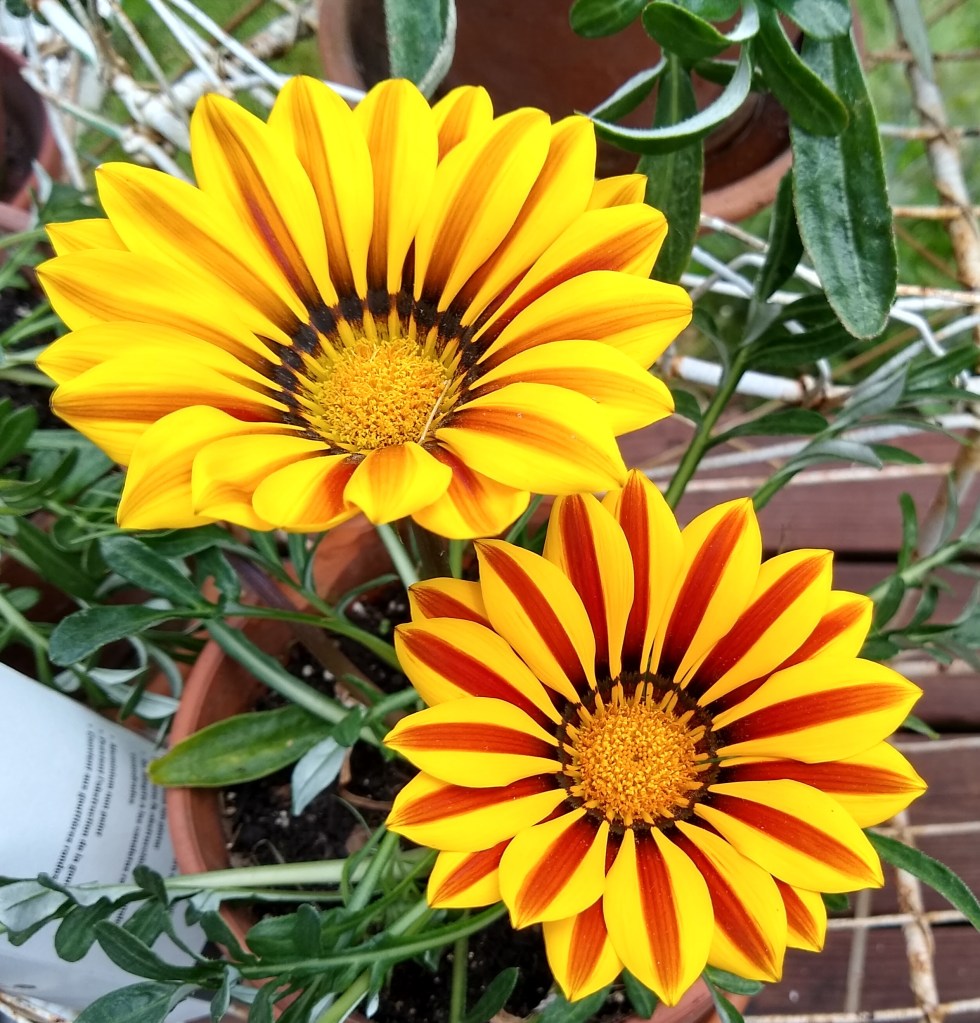
I remember so well the day I discovered these flowers. The promise of eternal summer blossoms (although they closed up after the sun went down or on cloudy days). They never disappointed.
They are called Gazania Rigens, but I like that they are referred to as the treasure flowers. They are native to South Africa, and named after a Greek philosopher, Theodorus of Gaza, who translated Aristotle and others into Latin during the Renaissance.
Summer has ended here in Maine, and with it all the expectations that I was anticipating in spring and which did not materialize for me, like the annual visits of family and friends. Like this flower, that closes up at sundown and in cloudy days, summer closed and then wilted away. The first frost has appeared, and more than ever, I am focused on what lies ahead.
Midway on our life’s journey, I found myself In dark woods, the right road lost. To tell About those woods is hard—so tangled and rough
And savage that thinking of it now, I feel The old fear stirring: death is hardly more bitter.
I am at the sunset of my life, not midway. However, at different stages in my peripatetic life I have been lost and have gone through quite a few dark woods to find the road, so to speak.
Many summers, while the gazinias were at their peak, my life’s journey brought me down to what I perceived to be rock bottom. Crises of family, health, friends, work. In retrospect, these crises were existential in nature and I flowed with the river of life, and eventually always reached a shore. Despite my insecurities and doubts, I retained a buoy of sorts, and never quite felt I was totally adrift.
Nowadays, I am on a quest to seek “clarity of vision, clarity of understanding, clarity of purpose”. So I am trying to read and understand Dante Alighieri, no small feat. I am approaching this adventure by doing research about the man and the epoch before immersing myself into the walk down to hell and back.
For example, why is Dante’s Inferno’s last circle the place reserved for the worst of sinners, who are tortured because of the worst of sins: treachery? Why do the nine circles spiral down, constricting themselves to a narrower and icier place? Isn’t our image of hell a raging fire?
There is a reason why, despite meting out punishment for heinous crimes, even the law recognizes that some of those such crimes and ensuing punishments can be mitigated when the crimes are committed in the heat of passion. There is no premeditation.
Yet, fraudulence and treachery are done deliberately, in cold blood. They are sought out in an icy calculating way: they are a choice usually justified by chewing on past resentments, anger, hatred. At the end of the day, it seems to me, that the evil transgressions we humans engage in, all involve pure and unadeltarted selfishness, thinking only of our own personal pleasures, and not of caring for others. It is the essence of what St. Augustine referred to as homo incurvatus in se, a Latin phrase that means “”humanity curved in on itself”, curving ourselves into our own little and insignificant mini-kingdoms.
I always felt uprooted, and that it was hard to belong somewhere, because of my itinerant life. But, my initial first excursions into researching the Inferno led to my AHA moment: finally understanding the true meaning of deracination. The Cambridge Dictionary’s definition states that to deracinate is “to make someone or something lose their connection to any particular place, background, way of life, etc.”
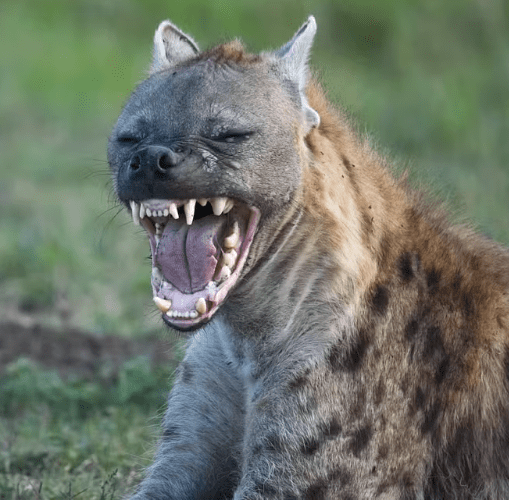
There is a difference between the meanderings of life as they take one on different voyages, and the calculating, callous and cruel dissevering of one’s tethered anchor or the tearing asunder of one’s soul, of all that was, is, and will be. The mind and heart cannot quite understand what is happening as it is happening. The closest description I can think of is the horror of becoming a prey to hyenas that do not kill their prey but, rather, tear them apart and eat them while they are alive. It is a most gruesome fate. Fittingly, the betrayers in Dante’s Ninth Circle are eternally chewed by Satan!
In the end, the only way up is down and an antidote to our transgressions is a good dose of humility. Humility has many synonyms; its etymology brings us to humus – the earth. The word human derives from humus as well. In Hebrew Adam is “man” and Adamah is “from the earth”. So much to learn, so little time left! I better start reading Dante sooner than later…
A long, long time ago I worked at Tiffany & Co., when the archetypal store was the epitome of elegance and grace in everything, from design to service.
I have fond memories of the old Tiffany’s, and was initially shocked and heartbroken to find out that the French had bought the American store.
“In an ever-changing world, perhaps Tiffany & Co.’s most consistent relationship with the public over the last century is its daily advertisement on page A3 of The New York Times, which began running in 1896.”
Alas, Tiffany’s new French owners had a nouveau vision, now that the American quintessential jewel was no more: her own Belle Époque had come to an end.
There may be some who still read the print edition of newspapers, who will feel a pang of nostalgie, and wonder if la mort d’une campagne publicitaire had to be done with such sang-froid.
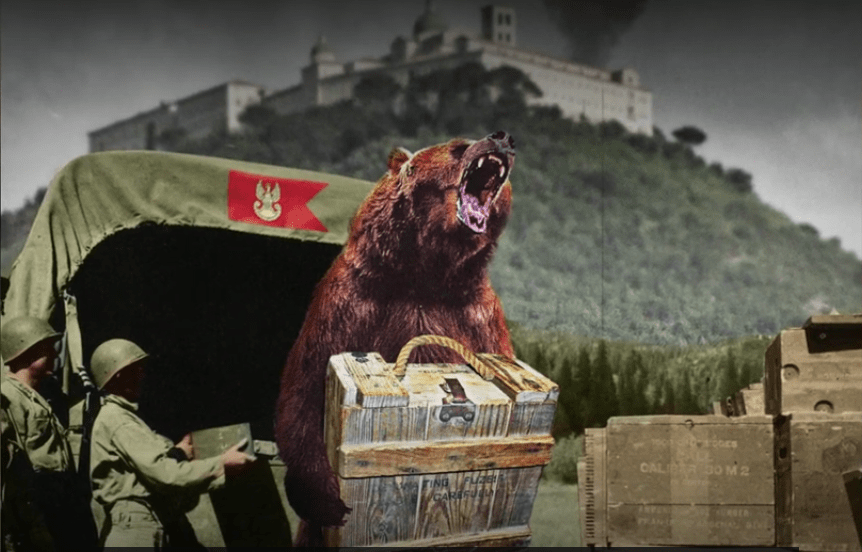
“Wojtek had the look of a bear but indeed had the heart of a Pole.”
I love learning something new every day, and discovering the story of Wojtek, the Polish bear soldier, was one of the most remarkable surprises I ever had. He was born in Iran, was adopted by the Polish army, lived in Iraq and Egypt among other places, went to Italy and died in Scotland.
A magnificent 500lb military bear, he liked beer and cigarettes! Wojtek’s greatest moment may have been at the Battle of Monte Cassino in 1944.
In order to stay with the Polish Army when they joined the Allied military campaign in Italy, Wojtek was officially enlisted as a private, given a serial number, and was able to remain with his comrades in arms, the Polish soldiers. He not only carried artillery shells and ammunition crates between trucks and troops engaged in combat, but wounded soldiers as well. He received a promotion, to corporal. There was a documentary done about him in 2011.
How many people today remember that the Poles played a crucial role in the battle of Monte Cassino (1943), and that so many of them died there? It was on the fourth assault of the monastery, led by the Poles, that the Germans were defeated. The graveyard in Monte Cassino is numbing, and, in the context of history, it is overwhelming, because it was thanks to this assault that the road to Rome was opened and Rome was liberated 3 weeks later.
One of my favorite French words is “coquelicots“. Nowadays, I think of the jolie coquelicots, The Red Poppies of Monte Cassino, with a sadness and enduring admiration for all who fought there.
Wojtek, the Polish soldier, the bear that had the “heart of the Pole”, became emblematic of the determination and devotion to carry through against all odds, including the ultimate sacrifice.
Poland is a land of contrasts, incredible beauty, sad history, and unique resilience. Driving from the Czech Republic to Warsaw, it is easy to understand why it is a land that has been ravaged by enemies from all over… It is largely flat, like the pampas of Argentina.
While Prague is a magical city, that basically remained intact, Warsaw is a ravaged city (more than 85% of it was razed to the ground in World War II) that rebuilt itself from the smoldering ruins catapulted by the retreating Germans and gleefully observed by the Soviet army across the river.
Many have forgotten the cruelty that the Poles experienced 60+ years ago. But when you live in Poland, it is palpable (every street corner or so has a plaque memorializing the execution of Polish citizens by the Nazi Germans –the formula was for one German killed, 10 Poles would die-).
The Poles are a proud people, and rightly so. After all, the Poles were the only Europeans to mount a counterattack within its occupied country. It is amazing how little anyone knows of this uprising. People in general confuse it with the Jewish Ghetto uprising. The Poles are perplexed that the world doesn’t know that about 200,000 Poles died in the Warsaw uprising.
While there were some resistance movements among occupied European nations, none rose to the level of the Poles. How many people today remember that the Poles played a crucial role in the battle of Monte Cassino (1943), and that so many of them died there? It was on the fourth assault of the monastery, led by the Poles, that the Germans were defeated. The graveyard in Monte Cassino is numbing, and, in the context of history, it is overwhelming, because it was thanks to this assault that the road to Rome was opened and Rome was liberated 3 weeks later. There is a sad last stanza of a famous Polish poem, dedicated to those who shed their blood in the battle for Monte Cassino:
D`you see this row of white crosses? Polish soldiers did honour there wed. The further you go, the higher, The more of such crosses you’ll meet. This soil was won for Poland, Though Poland is far away, For Freedom is measured in crosses When history from justice does stray.
But I digress… As I said, Poland is a land of contrasts and, in many ways, it is a land that puts many of us to shame. Beginning in early November, we have no real sunny days in Warsaw. In fact, the sun may shine a few hours a couple of days, but, for the most part, the days are gray, cold, and very short. Sunlight creeps its way around 8AM and decides to disappear by 3:30PM. Luckily, the rainy days soon give way to snowy days. One has to have a happy heart, and a strong backbone, not to be depressed or enter into a state of perennial hibernation during the winter months. It takes great effort to get up in the morning and be ready to go.
I cannot help but be reminded every single time I walk through the streets of Warsaw that this is a city that, against all odds, fought the Germans only to be stomped by the Soviets, and had more than 85% of its buildings razed to the ground only to be re-built, brick by brick. There is not one Pole who has not said to me that theirs is an ugly city that it cannot compare to other cities, especially Prague, in its beauty. In many ways, it is true that you cannot compare Warsaw to Prague. Prague is a small jewel that reminds the visitor that sometimes time can stay still. Warsaw, on the other hand, screams out -at least to me- that no matter how horrible life turned out for the Poles, they defied their state in life and literally came up from the ashes.
I cannot help but be awed by the Poles, when I think of all the beautiful spots on Earth that I have seen or lived in, where the weather is beautiful, the sun shines all the time, where food grows wild, without the harshness of the cold, and yet everybody complains about everything, that their problems are caused by “them” and never by “us”.
The amazing thing for me is how little we have ever been taught about Poland, and how quickly the world forgot what Poland went through.
In a Kafkaesque moment, I had a young Russian telling me that she found Warsaw ugly, with all the dull gray buildings (built under communism), and that, compared to a Budapest or a Prague or a Paris, it was a hideous city. Some chutzpah! I just sat there, looking at her a bit wild-eyed, and tersely mentioned to her that, of course, the city had been all but destroyed by the retreating Germans, adding that the destruction had been done while the Russians watched across the Vistula river, and that communism’s legacy in the architectural field left a lot to be desired (the same hideous panelak buildings are seen all over Russia and Europe, especially in those countries that were enamored of social planning…the barren projects in Paris where the Muslim youth rioted come to mind).
Taking the train all the way to the Baltic Sea, I often visited the largest Gothic fort in the world, that was the seat of the Teutonic Knights, those pesky Crusaders who were invited to come to Poland by a Polish king, and overstayed their welcome by a couple of hundred years. Malbork Castle is a beauty, and it is astonishing to see how efficient in their engineering ingenuity these knights were. They actually had central heating!
I’m sure the Germans who returned during WWII truly enjoyed their stay there, recapturing -so to speak- what they believed was rightfully theirs… Unfortunately, half of Malbork had to be re-constructed after the war. Today, it is a UNESCO protected spot.
An hour or so away from Malbork is the city of Gdansk, the birthplace of Solidarity. It is a marvelous city and the architecture is delightful.
Visiting the boatyard, where Lech Walęsa became famous, I had a mixture of emotions… Shock at how much has happened in such a short time; admiration at what a few individuals were able to do against the odds; awe at the mystery of what makes people leaders for a good cause; sadness at how quickly we all forget what the world was like before Pope John Paul II and Solidarity; and happiness knowing that Poland finally after WWII and the Cold War is now enjoying what it should have had after V-day and did not.
So, echoing the Gdansk exhibit, it was thanks to Solidarity (with the Pope’s blessing, when he told them not to be afraid) that Hungary, Czechoslovakia, Latvia, Lithuania, Estonia, Bulgaria, Romania, Croatia, Serbia & Montenegro, Albania, Moldova, Slovenia, Macedonia, Georgia, Ukraine are free from the communist yoke. The Poles started it all! I did not know that the famous gigantic ballpoint pen that Walęsa had used to sign the agreement with General Jaruzelski to end the strike had a big photo of the Pope. The influence of this man on the Poles, as well as the impact of Catholicism in the lives of the Poles, are monumental and I believe it is what keeps the Poles forging ahead with patience and optimism, against all odds.
It is also what annoys the rest of Europe about them as well, because Europeans have lost their Christian roots.
The crooked house in Sopot
Malbork Castle
A Teutonic Knight
Gdansk
Lech Walęsa helps a suffering Jesus on the way to Golgotha
While time eases anguish for some, I still smart at the thought of all the work, human lives and dreams and treasure lost not so long ago. In August 18, 2021 I reflected having a very hard time engaging in every-day lovely thoughts and things.
Earlier that month had sent me into a spiraling depression. Why? Well… Six years of working with Afghanistan and many more years being engaged with the country.
I don’t think anyone other than those who were so thoroughly engaged with Afghanistan could understand, but maybe I was wrong.
I cannot begin to imagine what family/friends/colleagues of those who fought, worked and died there were feeling then -and even right now-, both in the US and abroad.
Although, for those who question today, “what was the point?”, I can only answer, the point was all the Afghans. We worked hard to make a difference for the Afghans.
Yes, indeed, contractors made a lot of money. There is a monetary value attached to high risk. And the US Government was aloof a lot of times, hiding behind the mighty fortresses of secured buildings in Afghanistan while the hired contractor employees, earning good salaries, risked much.
However, most people I knew who were hands-on (Afghans, Americans, USG employees, international employees), worked hard for a new future for all Afghans, and risked their lives. I didn’t know a lot of them, but I knew a few, who hailed from all over the world. From Colombia to Nepal.
At the time, while I did not visit Facebook that often, I had felt the need to share the overwhelming sadness I felt about Afghanistan.
Let us not forget the ugly corruption surrounding everything we worked on. What else is new? Corruption affects everything and everyone. Here, there and everywhere. The only difference is the Rule of Law as it is meant to be. Justice meted fairly for all. It is corroding around us nowadays. Hopefully, we can help save it the way we should.
Inevitably, the Fall of Afghanistan all ended up being an internecine battle here in the US, which I found not only revolting at that time, but it triggered an anger I have seldom felt.
I leave you with a quote from an email I sent from Kabul to family and friends on February of 2012:
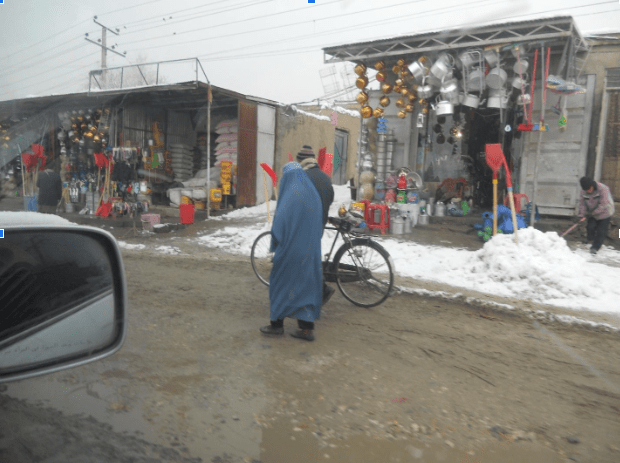
“The snow makes the place more picturesque, but it is grim. I can handle most anything, except seeing the burqa-clad beggars sitting on the side of the roads, in the slush, getting soaked.
Yesterday, I attended for a brief period one of the classes set up for 38 judges, prosecutors, lawyers and investigators. It was fascinating. The Afghans, though loquacious, don’t engage in screaming matches like the Iraqis did. I find that my silver head amuses them a bit.
I am humbled by all the American and international advisors here who work under dire conditions. No one from the outside really knows all the work that these guys are doing. Will all these efforts yield fruit? Or will the country collapse into civil war after we pull out?
It is interesting to get feedback from these advisors who have been in remote locations. They all love working with the Afghans, although they realize that the common refrain here is: “brother against brother, brothers against father, family against tribe, tribe against tribe, tribes against country, country against the world”.”
I love my little pond. It was the source of incredible joy for both my Mother in Law and my Father, in their eighties. So, every time I walk around it I feel their presence. It attracts strange characters, between herons, ospreys, kingfishers, snakes, and gazillion frogs.
Sometimes, walking around at night can be beautiful. However, I worry about the coyotes and bears that are too real around here. The Pepe Le Pews I can handle. Skiddle doo. And the porcupines: am ashamed to say I only learnt recently that they don’t hurl the quills; that’s cartoon nonsense. HAH! I believed the cartoons, and am a bit deflated knowing that it was nonsense.
Yet, the big bucks have butted heads with our benches, hurling them into the pond… not once, nor twice… (by the way, all old saltwater little farms in this area must have a pond, because there are no fire hydrants around!).
My Father would stare at the great blue heron and ask me for the umpteenth time: “Barbara, what is heron in Spanish?” “Garza,” I would reply. “Oh, my, watch that garza, how stealthily it walks…” And on and on. How I wish he were here today with me asking the same question, over and over again. I never got tired of it. I loved it.
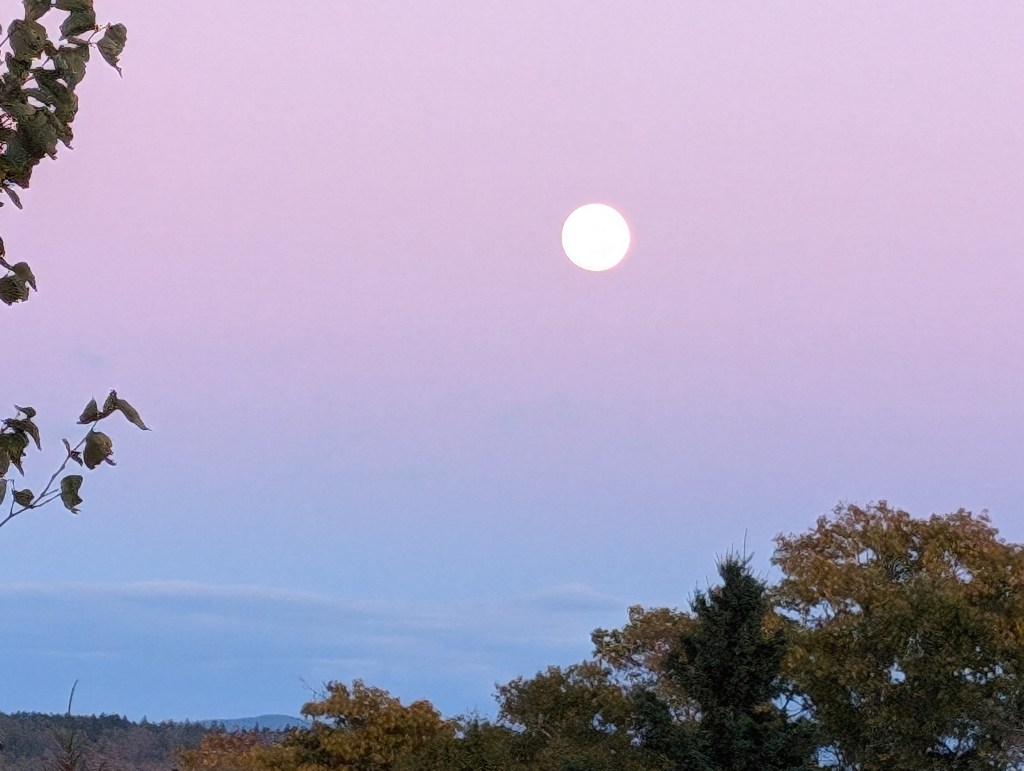
It is this dear little pond with its many bullfrogs and frogs, that finally made me understand a beautiful Argentine folk song, which I have loved since I was a 7 year old. Because, whenever there is a moon, it rises and reflects on this little pond.
Isn’t it weird that a little pond in the far away North of the USA, close to the Canadian border, helped me fully understand the poignancy of a folk song that originated way, way South, in the southern tip of the Americas, close to Antarctica?
I identify with the toad, and now realize that my melancholy about the lyrical toad song was prescient. Life’s trials and tribulations have confirmed to me that the moon can be cold, because it gave its blood to form the stars, and that life can be dismal if we don’t live it with any hope.
Toad of the night, lyrical toad, Who lives dreaming next to your lagoon, Tenor of the puddles, grotesque troubadour, You're bewitched by your love for the moon.
I know of your life devoid of glory; And know the tragedies of your restless soul Likewise, that madness of loving the moon Is the eternal madness of every poet.
Lyrical toad, Sing your song, Because life is dismal If we don't live it with any hope
You know that you're ugly, ugly and misshapen; That's why by day you hide your ugliness And by night you sing your melancholy And your song resounds as a litany.
Your voices ring out in candid obstinacy; Your verses are in vain for their striking beauty; Don't you know, perchance, that the moon is cold, Because it gave its blood to form the stars?
Lyrical toad Sing your song, Because life is dismal If we don't live it with any hope.
So…instead of enjoying the beautiful Autumn Leaves in Virginia, or spending a leisurely Sunday Skypeing with children and grandchildren… Or delving into a good book… I spent the weekend sorting out various and sundry “stuff”, wondering why on earth I have accumulated so many things.
The problem that I have is that every little item I discover holds a tender memory, of my parents, my parents-in-law, my grandparents, my grandparents-in-law, my siblings and their families, my 2nd grade teacher, etcetera, etcetera, etcetera. How do you discard those memories? I need them. I want them in my life. Yet, they contribute to a clutter that I am trying to resolve.
When I start packing a little cup (and I am chock-full of little cups), I remember vividly the occasion of receiving that little cup. My Polish teacher who first taught me Russian (when I was young and so excited about going to the USSR), gave me a Polish cup so that I would never forget about Poland – even though that happened about 20 years before I ever moved to Poland!
I once knew a lady who took her life in the Foreign Service as an opportunity to de-clutter her home every 3 years or so, including all her children’s stuffed animals and toys. She told me -many years ago- that her kids never, ever forgave her for being so callous. I was horrified then. Today, I am looking at Ninja turtles, lego critters, baseball cards, and wondering. Mmmm. Sometimes one needs to be heartless.
As I continue the process of filling up boxes and making decisions, I finally understand the significance of the Gospels, and why the Apostles were told -basically- drop everything and join “me”. Material things weigh heavily and draw us down. I also think about all those people who have suffered total losses with the California fires and the hurricanes. Am trying to understand my need to cling to objects that bring me close to my memories and to those whom I left behind or who have left me. War, natural disasters, they obliterate the “things”. Memories last a lifetime.
Going through old papers I found this little sketch that I had made. It brought back memories of the Czech forestry students who decorated the grounds. It also brought memories of the happy times my daughter Adriana and I spent in Prague: the times we shared with visitors (family and friends), the defining moments we shared with new friends -who have become lifelong friends-, the dead boar (THAT is another story for another day).
Oh well. I need to get back to the de-cluttering and packing. There is light at the end of the tunnel, I know. But, my tunnel is S-shaped, and I can’t see it now. But I know it’s there. I hope so!
(Originally journaled exactly 7 years ago, but it still applies! I am still grappling with de-cluttering and packing. “Plus ça change, plus c’est la même chose”!).






 Dum Spiro Spero