On this Halloween Night, I reflect on All Hallows Eve, a precursor of All Saints Day (or Day of the Dead), which is followed by All Souls Day, when people pray for the souls of the dead.
Since death is the one thing we all have awaiting, and tonight we play spooky games with death props of ghosts, ghouls, skeletons, cemeteries, spiders and flies, I am ever conscious of what the Spaniards like to say, “A cada chancho le llega su San Martín”. This translates to “St. Martin will arrive for every pig” or “every pig gets its own St. Martin”.
The day of St. Martin of Tours was the date of the slaughter of the pigs, a festival to prepare the meat and sausages for the winter.
The popular saying then developed a secondary meaning: “those who do evil, sooner or later, will receive their well-deserved punishment.” In other words: karma.
So, wishing everyone, young and old, ghouls, ghosts, skeletons, grun reapers, devils and saints, a happy evening of fun and horror, I leave you with a few quotes. Enjoy!
“Everyone is a moon and has a dark side, which he never shows to anybody.” – Mark Twain
“We all go a little mad sometimes.”- Wise words from Norman Bates – Psycho
“Is evil something you are? Or is it something you do?” – American Psycho
“Normal is an illusion. What is normal for the spider is chaos for the fly.” – Charles Addams (cartoonist)
“Despite my ghoulish reputation, I really have the heart of a small boy. I keep it in a jar on my desk.” – Robert Block (writer)
“Wendy, darling, light of my life, I’m not gonna hurt you. I’m just gonna bash your brains in.” – Stephen King – Imagine a loving Jack Nicholson in The Shining.
“Hell is empty. All the devils are here.” – Shakespeare – The Tempest
“Demons are like obedient dogs; they come when they are called.” – Rémy de Gourmont (French poet)
“Hope not ever to see Heaven. I have come to lead you to the other shore; into eternal darkness; into fire and into ice.” Dante
I am sorry I never had heard of Lost on a Mountain in Maine when my children were growing up. What a story of perseverance against all odds!
In 1939 a young boy went hiking with his Father and brothers in Ktaadn, Maine’s highest peak. Donn Fendler was his name. Only 12 years old, he lost his way in the wilderness when a fast-moving fog obscured his trail. He traversed about 100 miles in 9 days in 1939.
He wrote a book, which became mandatory reading for 4th graders in Maine. He remembered, from his Boy Scout days, that he needed to follow the stream he had found. Hundreds of people searched for Fendler, including troopers with bloodhounds from his home state of New York.
Recounting his ordeal, Donn Fendler reflected that he survived because of his faith in God and his will to live — along with what he had learnt from the Boy Scouts. His brother later remarked that,
“You know, we’d get together every evening and we’d say prayers and stuff like that. We’re Catholic and the church jumped right in. But for my mother and father it was, it was really tough,”
After his rescue, President Roosevelt presented him with the Army & Navy Legion of Valor’s annual medal for outstanding youth hero of 1939.
He studied Forestry at the University of Maine and served in the Pacific during WWII. He served with the US Navy in the Philippines and China and then. He then served with the U.S. Army for 28 years. He was a Green Beret and served in Vietnam for two tours. He lived to be 90 and died in 2016. Fendler was from “away”, having been born in New York City. He lived in Rye, NY and went to Iona Prep School in New Rochelle, NY.
“…unbelievable that that many people were looking for me…but I’m in Maine; that’s Maine people”.
Oh, and what does Rambo have to do with this story? Well, Sylvester Stallone produced the movie that will be released November 1. I hope my children and nephews get to see it. I sure will, God willing.
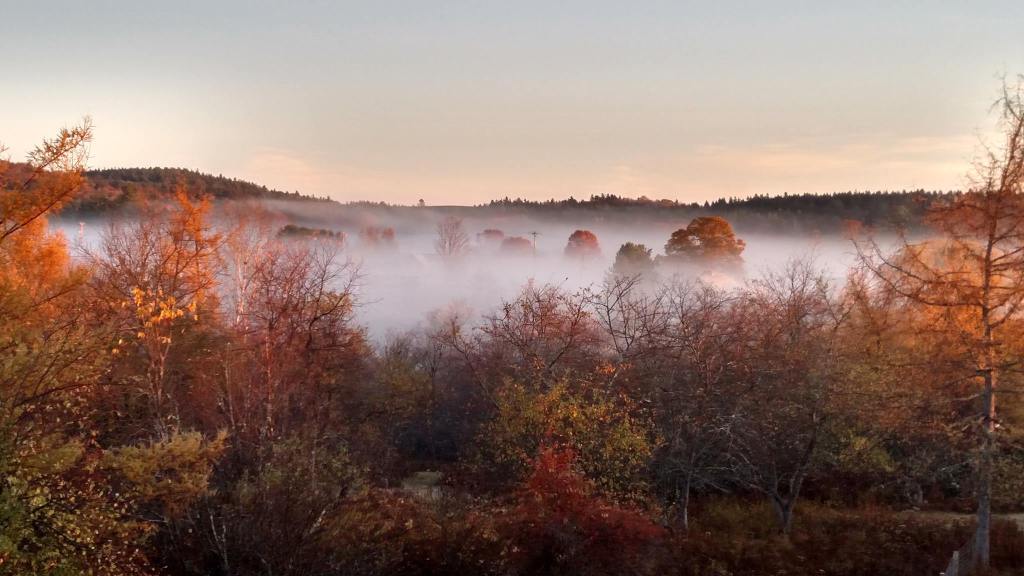
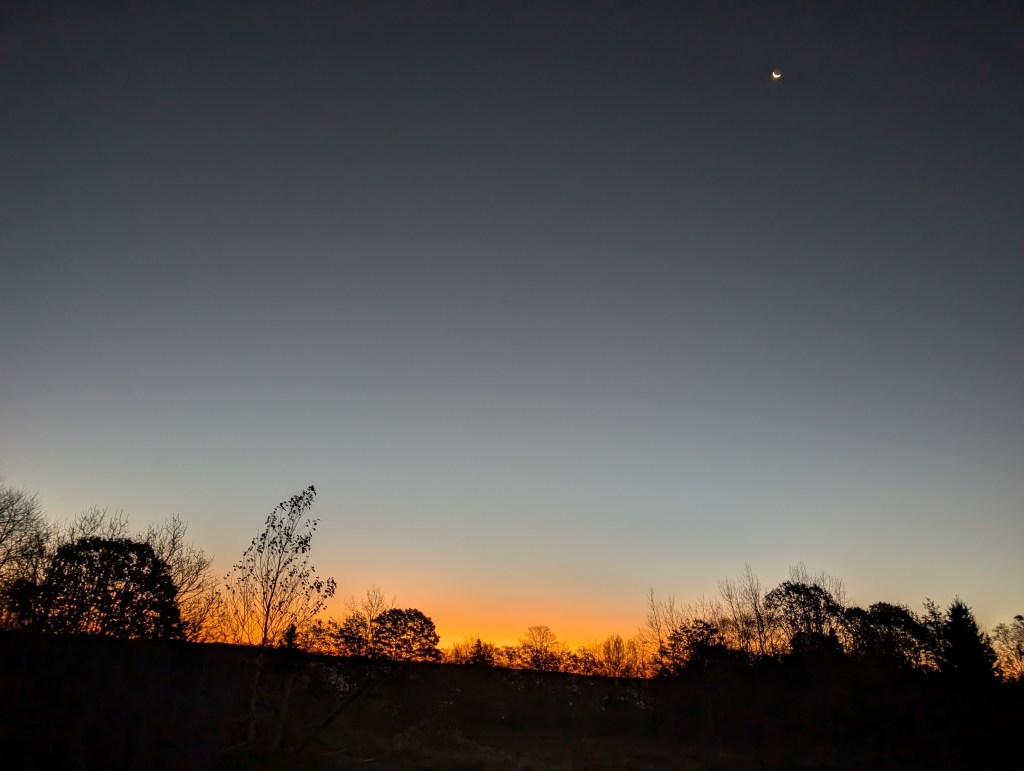
So, after the moon walked the night in her silvery shoon, I caught her last sliver of shine on a gloriously crisp Maine sunrise. I tried to capture the beauty, but the phone did not fulfill its promise. Pretty, yes, but not glorious as I witnessed it. I thought as I stared, how can one be sad peering at such majestic color and scene? And so early in the morning? I am in good company, staring at the moon, with ghost crabs and singing frogs.
Working on a concept paper to help a friend, I had been thinking about what constitutes a “drag” in the business world, as you want to speed things up in order to accomplish as much as you can in the shortest time available. Sometimes you need to do the right thing and get rid of excess baggage, so to speak, whether it is product or humans. As to the latter, it can be quite devastating to contemplate the process. I’ve had my share of having to tell employees that their end date had arrived, and, when the individual was decent and hard working, it was horrible to let go. That’s one of the reasons I opted not to pursue management. As a lawyer, I liked the solitude of research and writing and not the upheaval of directing hiring and firing. It is so very true in one’s personal life as well.
Upon reflection, yesterday morning, I realized that not only am I entering the “death cleanup” stage in my life, trying to sever the balls and chains that tie me to “things” – in itself a huge “drag”- but I am discarding “dead wood” and all that constitutes what I finally see as useless or dangerous detritus. Sometimes, it takes an ugly trauma to accelerate this process. Other times, it just happens.
At the end of the day, I don’t need nor want dead wood, be it memories or people that draw me down to complacency or ennui or despair. More importantly, it is the awareness that some of my dead wood are the so-called “friends” I thought I had, that either were Judas goats and very treacherous, or complete idiots that I put up with because of circumstances of life. I don’t need dead wood, rotten apples belong in composts, and weak idiots are just a drag. It has taken me a long time to finally reach this conclusion, and it is liberating. My only regret is not having figured this out sooner. But then, wisdom sometimes is slow to arrive. Yet, it’s better late than never.
It’s amazing how the above musings are all thanks to staring at the silvery light of the sliver of moon as I savored a serene sunrise and thought of Walter de la Mare!
Silver
Slowly, silently, now the moon Walks the night in her silver shoon; This way, and that, she peers, and sees Silver fruit upon silver trees; One by one the casements catch Her beams beneath the silvery thatch; Couched in his kennel, like a log, With paws of silver sleeps the dog; From their shadowy cote the white breasts peep Of doves in a silver-feathered sleep; A harvest mouse goes scampering by, With silver claws and a silver eye; And moveless fish in the water gleam, By silver reeds in a silver stream.
I noticed the boy keenly observing me through a glass door as I walked to a friend’s house for dinner the other night. I smiled at him, and he darted inside. But after all the initial hellos among the adult guests, the little boy quickly approached me and stared at me. So I introduced myself, and he looked me up and down, and then we began an enchanting conversation that basically lasted a couple of hours!
He is 10 years old, loquacious, inquisitive, and ready to share what he knows. He sat down next to me and proceeded to tell me all about a racist bully he has to contend with in school (the boy, as he explained to me, is a mix of white and black, and that’s why he has light coffee-colored skin and there are very few blacks if any at his school. The bully is 9.).
He then moved on to talk about the video games he enjoys playing, the collection of Pokemon cards that one day will cost $500,000 on Ebay because they are collectors’ items, and the beauty of ghost crabs that only come out at night time to stare at the moon. “They are shy, you know”. He tried to play the ukulele that was on a chair, but with no success. “Hah, I’ve never tried to play the ukulele!”. I told him about my “charango”, an Argentine ukulele-sort of instrument made out of a real armadillo body. “Wow!” I promised him I would show it to him.
He then darted off somewhere and quickly returned with his second most prized trophy: a brown cap with a gold medal insignia that belonged to a member of the military, part of the uniform in World War 2. (I believe it is an USAAF officer’s visor crusher cap with a round insignia). He ruefully admitted it was not in such great shape, but it was ancient he said, so he loved it because he will be joining the Special Operations Command Forces. No ifs, or buts. He can’t wait.
He gave me a side glance and asked me if I liked Snoop Dogg, because he is his favorite rapper. I could genuinely answer yes, miracle of miracles! And he smiled. I told him I didn’t really know the songs, though. “Oh, yes”, he said. “ If you know of him you’ve heard his songs. I will play you some of them next time we see each other”. “It’s a deal”, I said. Dear God, I thought. What are the chances that I would know Snoop Dogg? But the boy was pleased.
He gave me a quizzical look and said, “You are very Christian, huh?” “Well”, I replied, “I do believe in Jesus and that there are good people and bad people who ought to know better. But I probably could be a better Christian”. “Oh! One of my Grandmothers who is not related by blood says she is very Christian but is mean to me, and says she doesn’t like me”. And barely pausing, he then mentioned the poisonous scorpion that he owns, but had to leave with a friend because, well, it’s poisonous and his Mother did not want it in the house. I mentioned the story of Coyotito, who is stung by a scorpion in Steinbeck’s The Pearl. Wide eyes stared at me.
Then, with the biggest smile, the boy said “Well, I want you to meet Curly”. “And who is Curly?” I asked. I thought of a labradoodle or poodle. “Oh, she is my best friend, a curly haired tarantula bigger than my hand. I can bring her over right now”. And with that, I snapped: “Oh, no, you won’t. I have a phobia about spiders. And I am not staring at a hairy thing before bed tonight!”. He burst into peals of laughter and then, calming down, he said he would bring me to his house the next day, during day time, to show me his most valuable possession, Curly, and that she is the sweetest, gentlest creature that ever walked the Earth.
Today, I heard a soft knock on the door, and I opened it surprised, because it was early evening and I was not expecting anyone. There was my new friend, holding a box with a couple of slices of pizza. His Mother was waiting in her car. He smiled and said he had thought of me while having dinner with his Mom and that he knew I would like pizza. “So here! Oh, and by the way, tomorrow I come to take you to meet Curly. You’ll love her!”.
I just found a sermon a Presbyterian pastor once shared with me, because it made such an impact on me after the many deaths I had witnessed. It was his love song about the famous Psalm 23, The Lord is my Shepherd.
Beholding a most beautiful sunrise over calm waters this morning, the serendipitous encounter with the sermon I received in March 2019 made me reflect on a myriad of things. I share one paragraph of a series of many that the Reverend encapsulated as the essence of life:
“Surely goodness and mercy shall follow me all the days of my life”…
So what about the mess I have made of my life from time to time? What about the loved ones I disappointed, the people I deceived, the compromises I made with my conscience, the scars I left on those I harmed? No one likes to be followed, but in this case I take comfort in the possibility that goodness and mercy might not get too far out ahead of me, but might follow me, picking up the broken pieces of my past and putting them back together again. The assurance here is that goodness, which is the benefit of forgiveness; and mercy, which is the basis of every new chance at life, will follow me all the days of my life.
I’ve never been to Mt. Katahdin, but I have heard stories about the place, seen video taken by my nephew via drone, and watched my nephews traverse what’s called (I think) Knife’s Edge. Even today, the Wabanaki look to Katahdin as a sacred place, where the Spirit roams freely and powerfully. Because I was privy to some nightmare stories of scoundrels soiling the beauty of the place and violating the mountain’s sanctity, I sometimes have thought of Edgar Allan Poe and Alfred Hitchcock and what a tale the two combined could tell. Horror and torture.
I hope one day to go explore Ktaadn with someone who is a curious and kind soul, with a lyrical appreciation of majestic beauty and sensitive enough to have read the author and absorb the spell of what Thoreau and others tried to convey. And treat the place with the respect it deserves.
Thoreau climbed Ktaadn, but never made it to the summit. However, he did actually go fishing and caught his own trout!
“In the night I dreamed of trout-fishing; and, when at length I awoke, it seemed a fable that this painted fish swam there so near my couch, and rose to our hooks the last evening, and I doubted if I had not dreamed it all. So I arose before dawn to test its truth, while my companions were still sleeping. There stood Ktaadn with distinct and cloudless outline in the moonlight; and the rippling of the rapids was the only sound to break the stillness. Standing on the shore, I once more cast my line into the stream, and found the dream to be real and the fable true. The speckled trout and silvery roach, like flying-fish, sped swiftly through the moonlight air, describing bright arcs on the dark side of Ktaadn, until moonlight, now fading into daylight, brought satiety to my mind, and the minds of my companions, who had joined me.”
“Corans brûlés”… I read the title doing a Google search, and, for an instance, found it amusing. For a fleeting moment, the term conjured up pleasant, sweet images. Yet, thanks to the “Corans brûlés” we had been on “lockdown” for a couple of days.
Life in Afghanistan, which, according to all expats I had spoken with, could be tediously monotonous, had the capacity of changing course in a blink. I was happily ensconced in our working compound, researching away, when word came out that the Security office of the US Embassy was enforcing a lockdown because it had been told the Korans had been burnt in one of our bases there.
It was odd, traipsing to our SUVs and starting the trek back to our living quarters. All of a sudden, I kept looking at the people standing on the sides of the roads with trepidation. The men one saw on those same roads, carrying weapons, who were they? Presumably, they were policemen. But who were they meant to protect?
We hit some traffic, but all went well.
The next day, the American and international advisors were all ready to leave to our work compound by 7:15AM, but by 9:30AM it became obvious we were not going anywhere (we followed what the US Embassy dictated). So we all stayed in our gilded cages, working from our rooms.
Yet, all the classes for Afghan judges, prosecutors, defense lawyers, and criminal investigators were still being held inside our compound, and all our Afghan staff (instructors, justice advisors, cooks, char force) was still there. The irony of our work environment and the monumental dangers these Afghans faced did not escape me and I marveled at their dedication and strength of spirit.
By the end of the day we knew that the compound called Green Village, where a large group of contractors and other foreigners lived (and where we had been the week before), had been accosted – so much so, that apparently the residents had to stay in the concrete bunkers for a while.
But our own Camp X had been calm, probably because it was right next door to the airport and the airbase out of which US military and State Department flights took off. The areas in my Camp containing what I thought were excess concrete dividers turned out to be where the bunkers had been set up to protect us. There had been no need to use these bunkers until that day.
The previous day, for some strange reason, they had lifted lockdown for a while, so that we ended up going to the office (even though all travel to all places – like ministries – had been cancelled). In the entire time I had been in Kabul, this was the first and only time that I was uncomfortable with the idea, because our Afghan driver was uncomfortable himself. Yet, the trip was uneventful, and we took a completely different route, far away from the madding crowd.
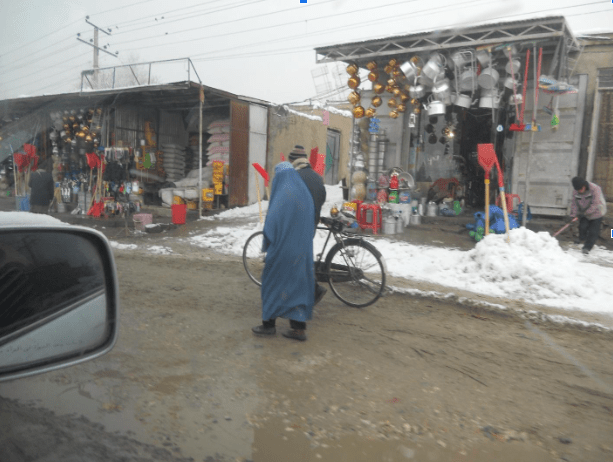
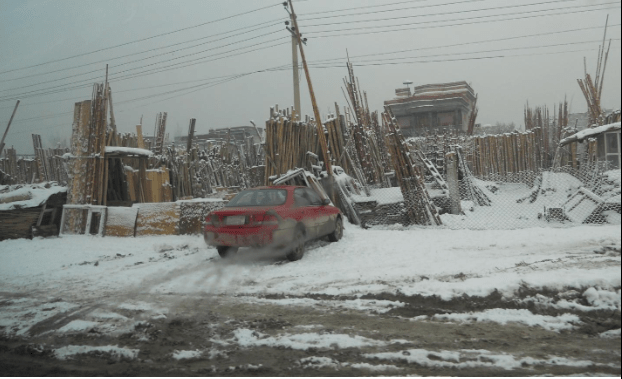
Because we left much later than usual (around 10AM), I noticed the squalid little stores all a-buzz with action: the butcher shops with their mutton carcasses hanging outside; the cobblers sitting on their dilapidated wooden boxes; the men clearing snow off little shelves where wooden planks and poles were kept for construction purposes; the tin pot stores with their glittery gold and silver wares shining pretty in an otherwise bleak setting; and everywhere the women in their burqas, walking with little high heels or heavy boots over filthy slush, or squeezed inside a mini-bus or taxi. I kept thinking I had never seen such pathetic penury with an eclectic whirring of sorts. However, in all the places I had ever been, I had never looked at a city with such sadness.
Despite it all, the morning commute turned into a veritable history lesson, and the 3 of us passengers, and the nervous Afghan driver, had a hilarious conversation that began when I tried to make light of a nerve-wracking trip. I asked my Pakistani Muslim colleague whether kids in Afghanistan had names signifying “barbarian”, like mine.
Thus the driver and my colleague began the story of Babur, a former king of Afghanistan, descendant of Genghis Khan and Tamerlane, who settled in Delhi and began the Moghul Dynasty in India, and whose great-grandson built the Taj Mahal.
They told me that Babur (or Babr in Persian) is very close to Barbara, and that Babur’s name really means “lion”. I pointed out that Babur and I had something in common -the lion- since my surname Dillon originally stems from “De Leon”. There were some guffaws and by the time we entered Compound Y, there was no longer nervous tension in the car, and I was not a “barbarian”, but rather “Barbara the double lion!”. I didn’t quite get why “double”, but maybe it had something to do with my gray hair? It turned out that Babur can also mean “tiger” in Arabic, but the beauty of the laughter that helped alleviate tension was not lost on me. With a sense of relief, I genuinely felt close to my driver and fellow passengers. And so what; tigers and lions (and bears, oh my) at the end of the day conveyed the same image of strength and might.
By late afternoon, we were told the sobering news that 2 US soldiers and countless others had been killed, and we were once again put in our armored SUVs, but this time we had a third SUV with a couple of “shooters” inside, to escort us back. Because it was Thursday afternoon, and the day before the Muslim “Sabbath”, there were few people in the streets, so our ride, thankfully, was uneventful as well, though we could see 3-4 helicopters flying in formation above the US compounds over my own Camp X.
Friday was the only day off at work, and we were also placed on lockdown, because it is the day when the Afghan males go to the mosque, and it was anticipated that the mullahs would be inciting the masses. We were all surely safely ensconced in our little nests inside the gilded cage of our compound. Other than the occasional helicopter flying over us, this was a totally calm and ordinary day in Kabul.
I had no idea what would happen the next day. The assumption was that we would all be getting ready to go to work. But we would not find out until the early morning. It turned out the lockdown continued. Alas, our work in preparing class curricula, presentations, and reports to headquarters and the US Government, was never interrupted.
And so ended another day.
See the water pump to the left and Nan bread to the right.
Silence everywhere Like that of a birds’ nest bereft of birds On the bough of a songless tree. With the lifeless light of the waning moon was now blended The pallor of dawn Spreading itself over the greyness of my empty life. I walked towards your bedroom For no reason. Outside the door Burnt a smoky lantern covered with soot, The porch smelt of the smouldering wick. Over the abandoned bed the flaps of the rolled-up mosquito-net Fluttered a little in the breeze. Seen in the sky outside through the window Was the morning star, Witness of all sleepless people Bereft of hope. From “At the Last Watch“.
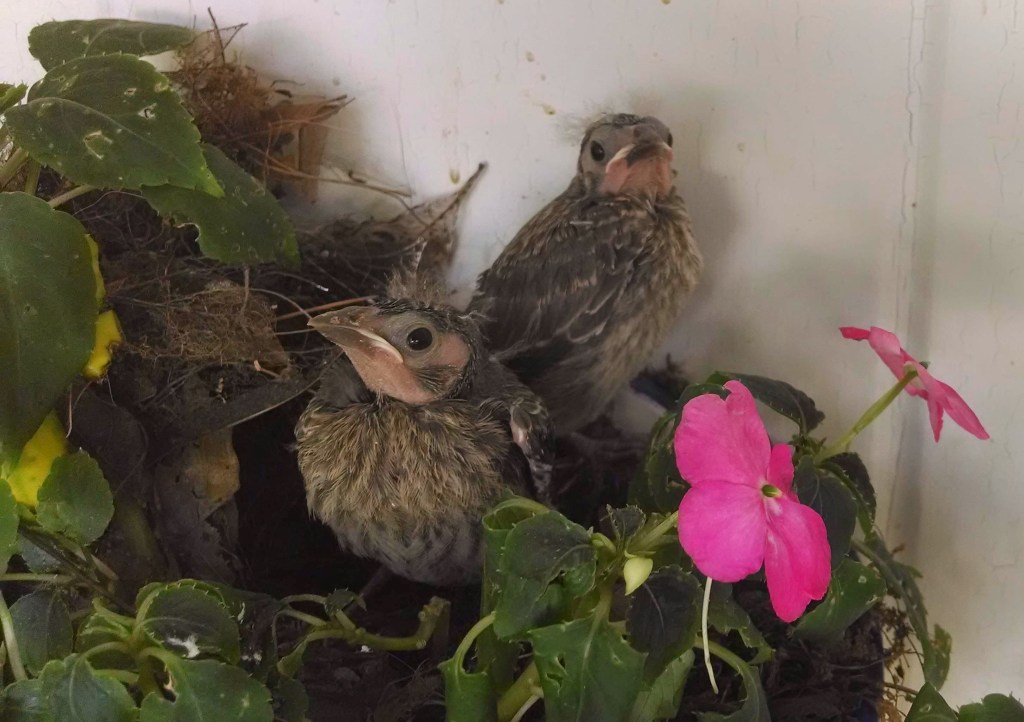
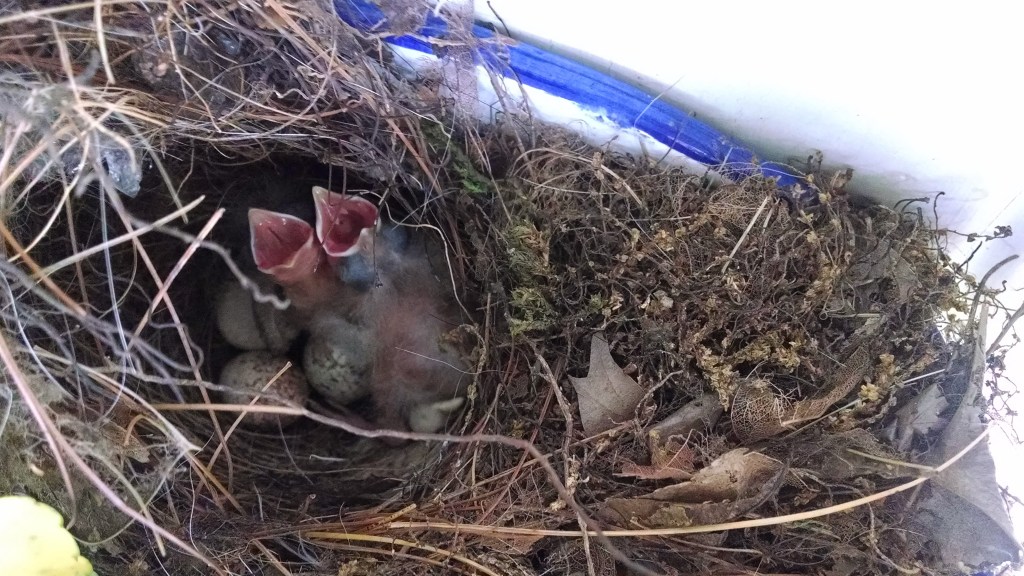
My image of what is a home has always been that of a nest. A carefully protected nest meant to hold fragile beings. I always balked at the idea of having to host individuals of dubious or unsavory character, because I felt the urge to guard my nest against prying eyes, and other ugly intrusions. I was not always successful, and people whom I trusted -or was willing to give them the benefit of the doubt- betrayed my trust, harmed my family, and essentially tried to dismantle my nest. Sometimes, life in the Foreign Service produces some negative personal results. There were some unfortunate incidents abroad. But then, a few nasty surprises also have occurred here at home as well. No one is immune to nefarious behavior.
My Mother kept “mothering” not just her children, but her grand-children as well. And, thanks to her efforts to expose them to what she thought was an important life message, I discovered a rare gem of an author and movie.
My Mother sought to use books and film as a way to expose her grand-children to philosophical, moral, cultural, and historical debate. Ever the perspicacious pedagogue, she realized that movies, accurately chosen, could expand a youngster’s horizon. She undertook this cinematographical pursuit with gusto, and my children were the recipients of her indefatigable research and search for the ultimate examples of the “morals of a story”.
Which brings me back to my strange remembrance of a forgotten author – poet, philosopher, Nobel laureate- of whom I had no deep knowledge. By happenstance, American TV had aired a beautiful Indian film and my Mother recorded it and shared it with us. We were living abroad at the time. The film was based on Rabindranath Tagore‘s novel, Nastanirh or The Broken Nest.
Until that time, I did not know much about Rabindranath Tagore, a friend of Ghandi’s, other than he had been a recipient of the 1913 Nobel Prize in Literature and had visited Argentina, in 1924 before my parents were born. A world famous Argentine poet and writer, Victoria Ocampo, hosted Tagore while he was recovering from influenza, and in their Autumn-Spring differences, they developed a love tenderness, a platonic relationship that resulted in a burst of literary exchanges. To understand this Indo-Argentine experience, the Edinburgh University Press has a fascinating article describing the ethos of the times.
My Mother had read Rabindranath Tagore. In researching about the man and his writings, I can now fully understand why my parents were culturally so immersed in his poetry and prose.
She made us watch the film “Charulata” (The Lonely Wife). I must confess, I was not too keen to watch the movie, since I had seen a few Indian movies in the USSR in the late 1980′s and I just could not relate to them. The USSR primarily showed Indian movies in those days, and I now realize I was too immature to want to spend the time to understand them.
The story of Charulata triggers some odd memories. Why? Because I remember my Mother’s intensity when she told us that it was this author that made her realize that, regardless of culture, when distilling the human essence, one discovers that human beings are all the same, feeling the same passions, suffering the same betrayals. This is not to say that we all behave, morally, the same.
Charulata, the film, transcends cultural barriers. It exquisitely and delicately captures the eternal themes of loneliness, contumacious neglect, good intentions that go awry, the yearning for understanding and compassion and companionship, a budding love affair that transcends consummation, the tenderness and harshness of youth, betrayal, and maybe, maybe, the possibility of redemption.
‘Sesh Basanta’ (The Last Spring) by Rabindranath Tagore, 1924 You will experience many springs in your life, Let me beg one of it… Have no misgivings; In your blossoming flower garden I’ll not linger endlessly Nor look back When the day ends and it’s time for leave-taking.”
I would like to know that one day my children and grandchildren might remember me for my sprinkling some lyrics, or melody, or story because I sometimes go off on what some believe are tangents going nowhere, though I just see my perambulations as always returning to where I left off, albeit taking a bit of a long and windy way. It’s because I lack my Mother’s wonderful way with quotes of proverbs, poems, and sayings that had a concise application to whatever topic we were discussing.
Of all the memories I have of my Mother, I always return to her dear Charulata movie. Her protection of our nest was paramount. Her fledglings are old birds now. More or less, we have weathered the storms of life. If only I could give my children a legacy such as my Mother’s…
Once upon a time, circa 2008, I was lucky to be invited by a friend to visit her in Paris. My stay there coincided with the visit of one of those rare individuals who –in his unassuming way- was a giant of his era. He made an incredible contribution to mankind and is known as the British Schindler.
Sir Nicholas Winton, “Nicky” to his friends, was in France for a special program on anti-Semitism. He hailed from Maidenhead (UK), was a lover of gardens, a gentle, kind, no-nonsense man who stressed that he was not a diplomat.
His story is one for the ages. In 1939, as an English stockbroker, Sir Nicholas Winton spent some time in Prague and he became a “living angel” by rescuing 669 Czech children from their doomed fate in the Nazi death camps. Most of the saved children never saw their parents again. These unfortunate souls perished in the German Nazi concentration camps.
Nicholas Winton’s feat was unrecognized for more than 50 years, and most of the children he saved were totally unaware who their savior had been. His story came to light when his wife Greta, rummaging through their attic, found an old leather briefcase that contained lists of the children and letters from their parents.
Sir Nicholas’ perspicacity made him aware that something was terribly wrong. Unlike so many others, he was courageous enough to do something to right what was so terribly wrong at the time. Because he was born of Jewish parents who later converted to Christianity, he was not recognized as one of the Righteous Gentiles at Yad Vashem.
The impact of Sir Nicholas’ remarkable achievement was so striking that there has even been a movie made of him, One Life, with Anthony Hopkins playing him. There also is a children’s book written and illustrated by Peter Sís called Nicky & Vera: A Quiet Hero of the Holocaust and the Children He Rescued. Below are 3 videos that tell his poignant story better than me.
I had the privilege, honor, and great fortune to meet a living legend, who lived to be 106 years and died in 2015. I spent a few times with Sir Nicholas and heard the harrowing experiences from the man himself. He had a sparkle in his eye and a most beautiful smile. I think of him often, and how it is so true that one person can make an enormous difference.
Sir Nicholas Winton never thought what he did was outstanding. It was just the right thing to do.
Someone asked me about my legal work involving Afghanistan. Her question triggered old memories of an enthralling time that appears to have been lost, at least for a while. However, my propensity for keeping diaries and writing e-mails and letters, developed during elementary school in Buenos Aires, preserved memories of my impressions visiting and working in Kabul a decade ago.
I was new to the country, but an old hand in what we used to call “development work in the Rule of Law”. What follow are my personal impressions, as written then, updated with a couple of edits. All the work mentioned here can be found in the myriad of inspection reports, evaluation reports and other documents that the US Government makes available to the public.
February 17, 2012:
It was a gloriously sunny day, clear blue skies, with not a hint of cloud or haze. So much so that I could see, for the first time, the little houses built on the denuded slopes of the Hindu Kush.
I had no idea that Hindu Kush actually means Hindu Slaughter. I need to do more research about this.
So, two days ago I was up by 6:30am and by 7:45am we were all in 3 vehicles going from Camp X, where I live, to Compound Y, where we work (some of us live and work in the same sites, which can become quite onerous. Can you imagine having breakfast, lunch and dinner with the same people you work with day in and day out? For a year or two or more?).
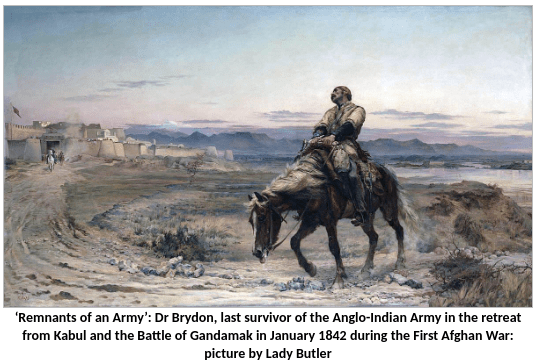
Compound Y is situated in the most exclusive neighborhood of Kabul. It consists of villas walled in. It is no different than all the other villas around (some held by Embassies, others by international organizations, and others by the ministers and sundry government officials). The movie The Kite Runner apparently was filmed in this neighborhood called Wazir Akbar Khan. Wazir Akbar Khan was the leader who fought during the famous First Anglo-Afghan War that ended in a monumental defeat of the British army in Gandamak. At one point the highest governmental award that the Afghan Government could bestow was an eponymous medal.
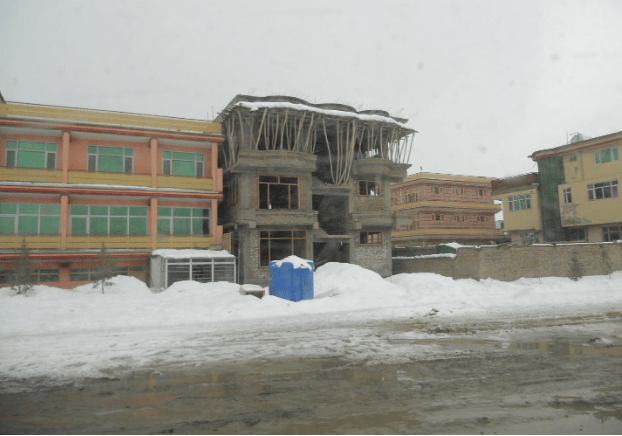
What is noticeable, though, is that -apparently- all the streets are unpaved, (I cannot tell right now because of the snow), have barriers across them that are always up, and can compete with the rest of the roads in terms of the deep craters that destroy cars. Rumor has it that the residents don’t want these holes repaired because it protects them from nefarious sorts: these craters don’t allow for a quick getaway.
I took the opportunity to go to the roof of my building to take photos of the city and the surrounding mountains, because I was told that it is very, very rare to get such a clear glimpse of the mountains that encircle the city.
I met a young lady, from abroad, with a Masters in Business Administration, who is a “procurement advisor” at a major Ministry and is helping them set up a system for tracking, budgeting for and storing, inventory. She has been in Kabul for 3 years and loves the Afghans and her job.
One of the aims of my program is to train Afghan judges, prosecutors, lawyers and criminal investigators to clinically apply the law. Among the several courses we offer, one lasts 8 weeks, and another 4 weeks. Since 2007 there have been more than 14 thousand individuals trained by us!
Another aspect of the project is to have the Attorney General’s and the Ministry of Justice’s Offices identify promising Afghan lawyers who are then trained for 1 year before sending them to University of Washington’s Law School for a 1 year LLM program. Why University of Washington? Because they have, apparently, the best legal clinic that provides pro bono work for Native American tribes. And this is the closest one can get to understanding the tension between the formal justice sector (courts and the power of the state) and the informal justice sector that handles tribal issues and customary law.
There are so many things that are happening here that one never hears about! I shared a cup of tea with an engineer with the US Corps of Engineers, who has been managing construction projects all around Afghanistan. Example: building generators in remote villages (that have no roads) and that, through the use of little streams, generate the first electricity these people have ever had! They have also built small schools in these small villages, so that, again, for the first time, children have a place to go and sit down to attend classes taught by Afghans who have been trained by the international community.
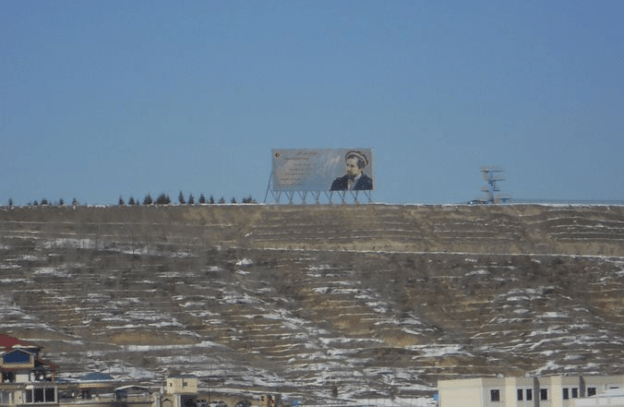
I share the pics of the mountains that form the Kabul bowl, and you can get a sense for the architecture of the place. We cannot drink the water, so bottles are stored, en masse, everywhere.
And we have a little kitty that sits by the front door of the building.
We are, of course, in a state of alert, and, for good reason, the security task force here takes it very seriously.
I leave you with a comment a wise advisor made to me:
In Afghanistan, 2012 is the Persian year 1390, which, if one compares it to our Western world’s 1390, not much has changed: there are still feudal lords or barons (the Afghan warlords) fighting each other with the vast majority of the people being illiterate serfs.










 Dum Spiro Spero